
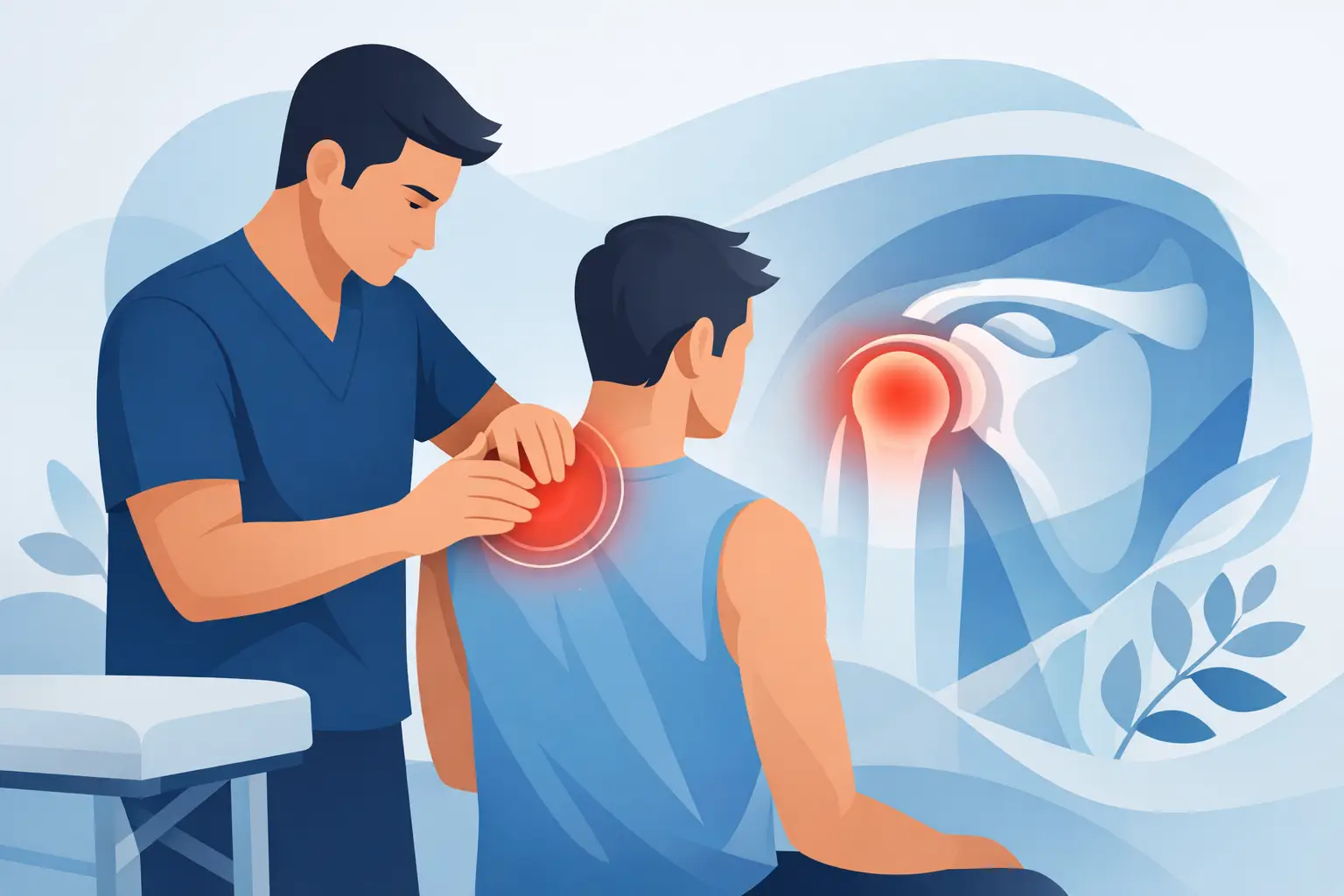
When Manual Therapy for Shoulder Pain Helps
Reaching for a seatbelt, lifting a child, putting dishes away, or sleeping on one side should not require planning around pain. Manual therapy for shoulder pain can help when stiffness, irritation, or poor movement patterns are making everyday tasks difficult. It is a hands-on approach used to reduce discomfort, restore mobility, and help the shoulder move with more control as part of an individualized rehabilitation plan.
Why Shoulder Pain Is Not Always a Shoulder Problem
The shoulder is designed for mobility. It depends on the shoulder blade, collarbone, upper back, neck, rotator cuff, and surrounding muscles working together. When one area is stiff, weak, overworked, or not moving well, the shoulder may begin to compensate. That is why pain at the front, side, or back of the shoulder can have more than one cause.
Pain may develop after a fall, a sports injury, repetitive lifting at work, a motor vehicle accident, or a gradual increase in training. It may also be linked to tendinopathy, bursitis, rotator cuff irritation, shoulder impingement, arthritis, frozen shoulder, or referred pain from the neck. Some people feel a sharp pinch overhead. Others notice a dull ache at night, reduced reach behind the back, weakness, clicking, or a feeling that the shoulder is catching.
A thorough assessment matters because the most painful spot is not always the main source of the problem. A licensed clinician looks at your symptoms, medical history, work and activity demands, range of motion, strength, shoulder blade control, and the movement of nearby joints. This helps guide treatment toward the factors that are limiting your recovery rather than relying on a one-size-fits-all technique.
What Manual Therapy for Shoulder Pain Involves
Manual therapy is a broad term for skilled, hands-on treatment. Depending on your assessment, a physiotherapist, chiropractor, or other qualified practitioner may use gentle joint mobilization, soft tissue techniques, stretching, or movement-based treatment to address restrictions affecting the shoulder complex.
Joint mobilization uses controlled pressure and movement to help improve motion in a stiff shoulder, upper back, rib, or neck. Soft tissue work may be used around muscles and connective tissue that have become tender or guarded, such as the chest, upper back, neck, rotator cuff, or muscles around the shoulder blade. The goal is not to force a painful shoulder through range. It is to make movement more comfortable and create an opportunity to retrain it effectively.
Treatment should feel purposeful and responsive. Some techniques may cause mild, short-lived tenderness, especially in sensitive tissues, but sharp pain, increasing numbness, or symptoms that linger significantly after treatment should be discussed with your clinician. Effective care is adjusted to your comfort, diagnosis, stage of healing, and goals.
It Is More Than Massage
Massage can be helpful for muscle tension, but manual therapy is not simply a relaxing treatment for sore muscles. It is guided by a clinical assessment and often targets how joints, tissues, and movement patterns influence one another. For example, improving upper-back mobility may make it easier to raise the arm without pinching, while addressing chest tightness may help the shoulder blade sit and move more efficiently.
Just as importantly, hands-on treatment is usually most useful when it is paired with active rehabilitation. A shoulder may feel looser after treatment, but lasting improvement depends on helping it tolerate the movements and loads that matter in your life.
Who May Benefit
Manual therapy may be appropriate for people with shoulder stiffness after immobilization, gradual loss of motion, aching associated with repetitive work, sports-related overuse, or discomfort following an accident once serious injury has been ruled out. It can also be valuable for people recovering from a flare-up who are having trouble moving enough to begin strengthening exercises.
For someone with frozen shoulder, gentle hands-on care may help manage discomfort and preserve available movement, though recovery can take time and progress is not always linear. For an athlete with rotator cuff-related pain, manual therapy may reduce symptoms enough to allow a progressive return to lifting, throwing, or training. For an injured worker, treatment may focus on the specific reaches, carries, and overhead tasks required on the job.
It depends on the condition. Manual therapy is not a cure for every shoulder problem, and it cannot repair a complete tendon tear or replace medical assessment for a fracture, dislocation, or severe structural injury. Its value often lies in reducing barriers to movement so that the right exercise, activity modification, and return-to-function plan can take effect.
What a Complete Treatment Plan Looks Like
A strong shoulder rehabilitation plan does not stop at the treatment table. After hands-on treatment, your clinician may guide you through exercises chosen for your current capacity. Early on, these may be gentle range-of-motion drills or isometric exercises that activate the shoulder without aggravating it. As symptoms settle, the program can progress toward rotator cuff strength, shoulder blade control, upper-back mobility, grip strength, and task-specific loading.
Education is another important part of care. You may need short-term changes to how you sleep, lift, train, sit at a desk, or reach overhead. This does not always mean avoiding activity completely. In many cases, the better approach is to find a tolerable level of movement and build from there. Rest can calm an acute flare-up, but too much rest may contribute to stiffness and loss of confidence in the shoulder.
At Panorama Physiotherapy and Chiropractic Clinic, care can be coordinated across services when appropriate. A patient with shoulder pain after a collision, for example, may benefit from a plan that considers the neck, upper back, soft tissue irritation, and gradual return to daily activities. The treatment approach should remain clear: address what is contributing to the problem, measure progress, and modify the plan when your symptoms or function change.
What to Expect From Your First Visits
Your first appointment should begin with questions, not assumptions. Your provider will ask when the pain started, what aggravates or eases it, whether you have had prior injuries, and how the problem affects work, sleep, sports, and home responsibilities. They will then assess movement and may compare both sides to understand where mobility, strength, or control is limited.
You should leave with a clear explanation of the working diagnosis, the treatment options being considered, and what you can do between visits. Some people notice easier movement after the first session. Others improve more gradually, particularly when pain has been present for months or the shoulder has become quite stiff. A realistic plan focuses on meaningful changes, such as sleeping more comfortably, reaching a shelf, returning to the gym, or completing a work shift with less pain.
Consistency matters more than intensity. Completing a manageable home program and attending follow-up appointments as recommended often produces better results than pushing through a demanding routine that repeatedly flares symptoms.
When Shoulder Pain Needs Prompt Medical Attention
Most shoulder pain can be assessed through a non-emergency appointment, but some symptoms need urgent medical evaluation. Seek prompt care after a significant fall or collision if the shoulder looks deformed, you cannot move the arm, or pain is severe and worsening. Sudden weakness after an injury, major swelling, loss of sensation, a cold or pale arm, fever with a hot swollen joint, or chest pain with shortness of breath should also be assessed immediately.
If pain travels down the arm with persistent tingling, numbness, or marked weakness, the neck or nerves may be involved. A clinician can help determine the next appropriate step and coordinate care when imaging or medical referral is needed.
Building a Shoulder That Can Handle Life Again
The best outcome is not simply less pain during a treatment session. It is being able to trust your shoulder while lifting groceries, working overhead, playing with your children, returning to sport, or sleeping through the night. Manual therapy can be a valuable starting point when pain and stiffness are holding you back, but it works best as one part of a plan built around your movement, goals, and recovery timeline.
If shoulder pain is changing how you move through your day, an individualized assessment can give you a clearer path forward and help you take the next step with confidence.