
How Senior Physiotherapy for Balance Problems Helps
A missed curb, a quick turn in the kitchen, or standing up after a long car ride can suddenly feel uncertain. Senior physiotherapy for balance problems helps identify why those moments are becoming difficult and creates a practical plan to make everyday movement feel safer and more confident.
Balance changes are common with age, but they should not simply be accepted as an unavoidable part of getting older. Many contributing factors can be assessed and treated, from reduced leg strength and joint pain to dizziness, vision changes, medication effects, or a loss of confidence after a fall. The right care focuses on the whole picture, not just one symptom.
Why Balance Problems Deserve Attention
Balance is not one skill. It is a coordinated process involving the muscles and joints, the inner ear, vision, sensation in the feet, and the brain’s ability to respond quickly to changing conditions. A limitation in any one of these areas can make walking, stairs, getting out of bed, or turning feel less stable.
For some seniors, the first sign is holding onto furniture while moving through the house. Others begin avoiding uneven sidewalks, social outings, or activities they once enjoyed. That hesitation can gradually reduce activity levels, which can further decrease strength and mobility. Addressing balance concerns early can help interrupt that cycle.
Falls can lead to injuries and a meaningful loss of independence, but prevention is not limited to being careful. A personalized rehabilitation plan can improve the physical skills that support steadier movement while helping a person understand when to slow down, use support, or seek additional medical care.
What Causes Balance Changes in Older Adults?
There is rarely a single explanation. Arthritis in the hips, knees, feet, or spine can change how a person walks and transfers weight. Muscle weakness, especially through the hips, thighs, ankles, and core, may make it harder to recover after a small stumble. Stiffness, chronic pain, or reduced activity after illness can also affect coordination and reaction time.
Dizziness is another important consideration. Some people experience a spinning sensation when rolling in bed, looking up, or bending down. Others feel lightheaded, unsteady, or as if they are walking on a moving surface. Vestibular conditions involving the inner ear may respond well to specific assessment and treatment, but dizziness can also have cardiovascular, neurological, medication-related, or other medical causes. This is why a careful history matters.
Footwear, vision, home layout, and medications can add to the risk. A physiotherapist does not replace a physician, optometrist, or pharmacist, but can recognize concerns that may need coordinated follow-up. The goal is to make sure treatment matches the reason balance has changed.
How a Physiotherapy Assessment Finds the Right Starting Point
A useful assessment begins with the person’s real-life concerns. Is the issue dizziness when getting out of bed? Unsteadiness on stairs? Fear of falling outdoors in winter? Difficulty getting up from a chair without using the arms? These details help shape care around meaningful goals.
The physiotherapist may assess walking pattern, posture, joint range of motion, leg and trunk strength, sensation, coordination, transfers, and the ability to turn or respond to a change in direction. Simple functional tests can provide a starting measure and show progress over time. If dizziness is present, the assessment may include screening of eye movements, head movements, and positional changes to determine whether vestibular rehabilitation may be appropriate.
This process also identifies trade-offs. For example, a person may need to challenge their balance to improve it, but exercises should not be so difficult that they create an unsafe fall risk. Some patients benefit from a cane or walker during recovery, while others need targeted training to use their current device more effectively. The plan should fit the individual, their health history, and their home environment.
Senior Physiotherapy for Balance Problems Is Active and Personalized
Treatment is designed to build practical capacity, not just complete a generic set of exercises. At Panorama Physiotherapy and Chiropractic Clinic, care can combine hands-on treatment, targeted exercise, education, and, when appropriate, vestibular rehabilitation to address the factors limiting safe movement.
Strength and mobility training
Improving leg and hip strength can make standing, climbing stairs, and recovering from a misstep easier. Treatment may include sit-to-stand practice, controlled step work, heel raises, and exercises that improve hip and ankle control. Mobility work may be added when stiffness in the back, hips, knees, or ankles is changing walking mechanics.
Pain does not have to be ignored during rehabilitation. When joint or muscle pain limits movement, hands-on physiotherapy and an adjusted exercise plan may help a patient move more comfortably. The approach should be gradual and responsive, especially for people managing arthritis, osteoporosis, or multiple health conditions.
Balance and gait retraining
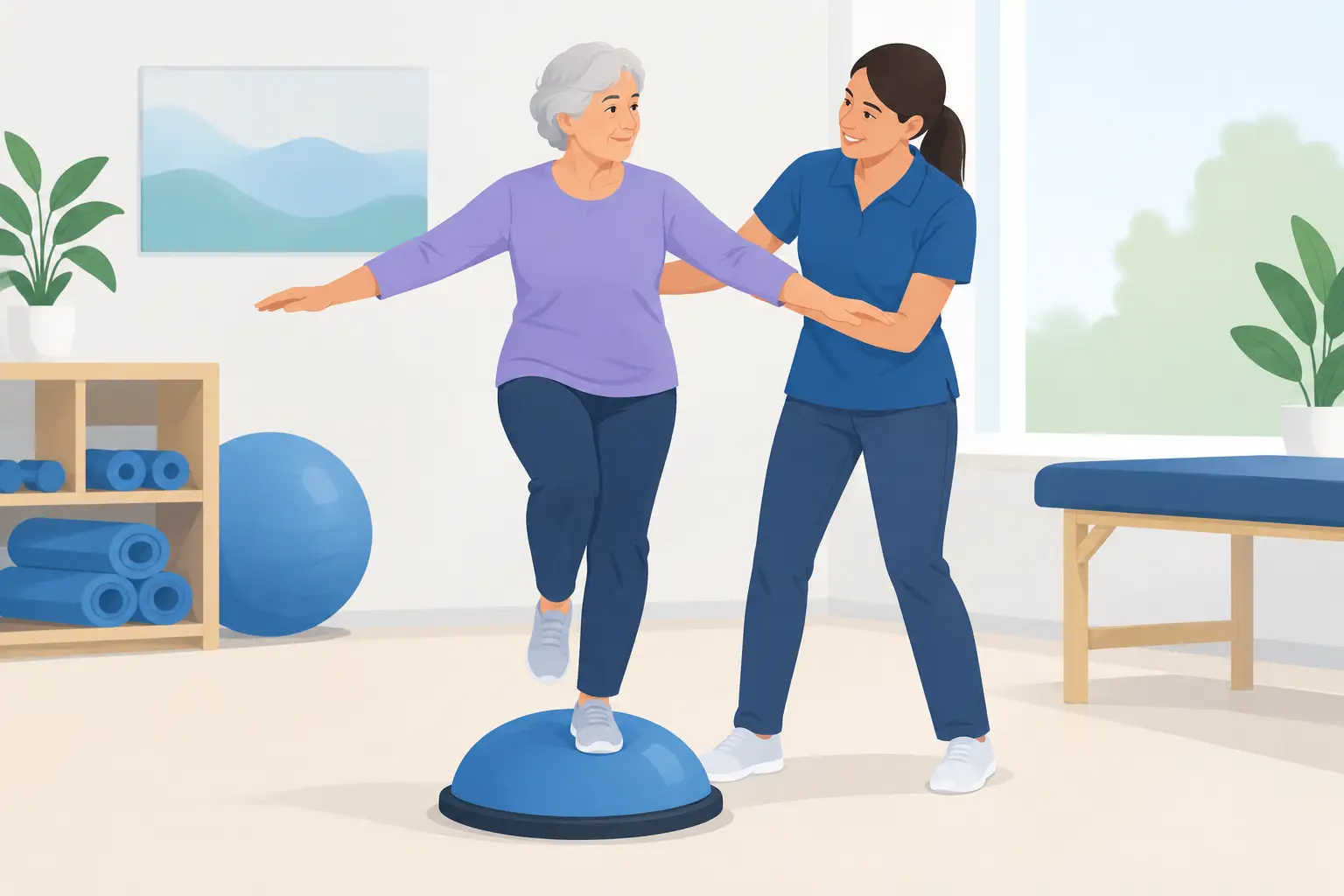
Balance exercises progress based on ability. Early work may focus on stable standing positions near a counter or sturdy support. As confidence and control improve, training can include weight shifts, turning, stepping in different directions, walking around obstacles, or safely managing uneven surfaces.
Gait retraining looks at how a person walks, not just whether they can walk. Small changes in stride length, foot clearance, speed, posture, or use of a mobility aid can reduce the effort and uncertainty of daily movement. The best exercise is often one that closely matches the activity the patient wants to return to.
Vestibular rehabilitation for dizziness-related imbalance
When an inner-ear issue is contributing to symptoms, vestibular rehabilitation may use specific movements and exercises to help the brain and balance system adapt. For positional vertigo, a clinician may use repositioning maneuvers rather than general balance exercise alone. Because treatment depends on the type and cause of dizziness, self-treating from an online video is not always the safest choice.
Progress Continues Between Appointments
Clinic treatment is most effective when it translates to daily habits. A home program should be clear, realistic, and safe enough to perform consistently. For one person, that may mean practicing sit-to-stands before meals. For another, it may be a short walking routine, prescribed head-movement exercises, or stepping practice near a secure counter.
Consistency matters more than doing too much at once. Exercises should be progressed as strength and balance improve, and the plan may need to change after illness, a new medication, pain flare-up, or a fall. Patients and families should feel comfortable asking exactly where and how exercises should be performed safely.
Home safety is also part of fall prevention. Good lighting, clear walkways, secure rugs, supportive footwear, and accessible handrails can reduce avoidable hazards. These changes do not replace physical rehabilitation, but they create a safer environment while physical capacity improves.
When Balance Symptoms Need Urgent Medical Care
Physiotherapy can help many balance-related concerns, but some symptoms require urgent medical assessment. Seek immediate care for sudden or new balance problems accompanied by:
- Facial drooping, weakness, numbness, trouble speaking, or confusion
- A severe, unusual headache or sudden change in vision
- Chest pain, fainting, shortness of breath, or a racing heartbeat
- Inability to walk safely after a fall or a possible head injury
New or worsening dizziness should also be discussed with a health professional, particularly when it follows a medication change, infection, injury, or significant change in hearing. A thorough approach protects safety and prevents important causes from being overlooked.
Confidence Is a Meaningful Treatment Goal
The value of physiotherapy is not measured only by standing longer on one foot. It is measured by being able to get through the grocery store, walk the dog, visit family, use the stairs, or move around the home with less fear. Progress may be gradual, and it depends on the underlying cause, overall health, and consistency with the plan. Even so, better balance skills can create meaningful improvements in independence and quality of life.
If unsteadiness, dizziness, or fear of falling is limiting daily activity, a physiotherapy assessment can provide a clear starting point. A personalized plan can help turn cautious movement into more capable movement, one safe step at a time.