
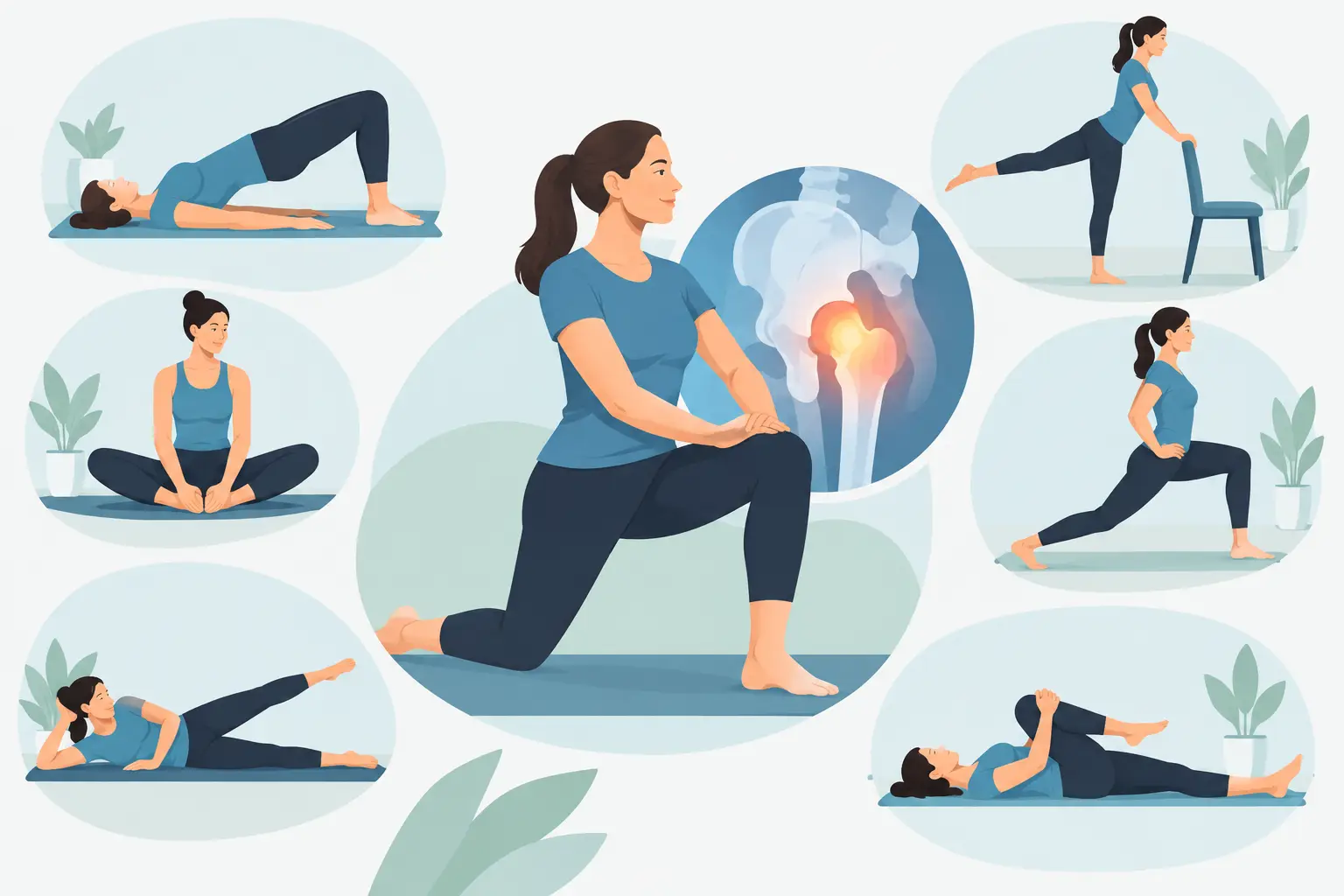
8 Best Exercises for Hip Arthritis Relief
Getting out of a low chair, climbing a few stairs, or taking the first steps after sitting can become surprisingly difficult with hip arthritis. The best exercises for hip arthritis are not necessarily the hardest ones. They are the movements you can perform with good control, tolerate consistently, and progress over time without causing a lasting flare-up.
Hip arthritis can make people understandably cautious about movement. Yet avoiding activity entirely often leads to more stiffness, weaker supporting muscles, and less confidence with daily tasks. A well-chosen exercise program can help maintain joint motion, improve hip and leg strength, reduce strain during everyday movement, and support a more active quality of life.
Why exercise helps an arthritic hip
Arthritis affects the joint surfaces in the hip, but pain is not determined by joint changes alone. Muscle strength, balance, walking habits, sleep, activity levels, and the way the body responds to pain all play a role. Exercise cannot reverse arthritis, but it can improve how the hip functions and how much load your muscles can manage.
The goal is not to push through sharp pain or force the hip into positions it cannot tolerate. It is to find the right dose of movement. For some people, that starts with gentle range-of-motion work. For others, strengthening the glutes and thighs makes standing, walking, and stair climbing feel more manageable.
A brief increase in muscle soreness after a new exercise can be normal. Joint pain that becomes sharp, causes limping, wakes you at night, or remains worse the next day is a sign to reduce the range, repetitions, or resistance. If your symptoms are severe, a physiotherapy assessment can help identify which movements are appropriate for your hip and overall health.
The best exercises for hip arthritis at home
Start with a short warm-up, such as five minutes of easy walking, a stationary bike with low resistance, or gentle marching in place. Move slowly, breathe normally, and use a counter, sturdy chair, or wall for support whenever needed.
1. Supported hip flexion
Stand tall beside a counter and hold it lightly. Slowly lift one knee toward your chest only as far as is comfortable, then lower it with control. Avoid leaning backward or twisting your trunk to make the movement larger.
This exercise keeps the hip moving and strengthens the muscles at the front of the hip. Try 8 to 12 repetitions per side. If standing is uncomfortable, perform the same motion while seated in a firm chair.
2. Seated knee extensions
Sit upright in a supportive chair with both feet on the floor. Straighten one knee until the leg is nearly level with the floor, pause briefly, and lower it slowly. Keep your thigh supported by the chair rather than lifting the whole leg.
Strong thigh muscles help absorb force when you stand, walk, and use stairs. Begin with 8 to 12 repetitions on each side. As it becomes easier, a physiotherapist may recommend adding a light ankle weight or resistance band.
3. Sit-to-stands
Sit near the front of a firm chair with your feet about hip-width apart. Lean your chest slightly forward, press through your feet, and stand up without using your hands if possible. Slowly sit back down, aiming to control the descent rather than dropping into the chair.
Sit-to-stands are especially useful because they train a daily activity that often becomes challenging with hip arthritis. If the movement causes too much pain, raise the chair height with a firm cushion or begin by using your hands on the armrests. Aim for 5 to 10 controlled repetitions.
4. Glute bridges
Lie on your back with your knees bent, feet flat, and arms relaxed by your sides. Gently tighten your buttock muscles and lift your hips until your body forms a comfortable line from shoulders to knees. Pause for a breath, then lower slowly.
Bridges strengthen the glutes, which help stabilize the pelvis during walking and standing. Keep the lift small if you feel pinching at the front of the hip or cramping in the lower back. Start with 6 to 10 repetitions.
5. Side-lying hip abduction
Lie on your side with the more comfortable hip down and your knees straight or slightly bent. Keeping your top leg in line with your body, lift it a short distance toward the ceiling, then lower it slowly. Do not roll your pelvis backward or turn your toes upward excessively.
This targets the muscles on the outside of the hip, which are important for balance and controlling the pelvis when you walk. A small, well-controlled lift is more effective than a high lift with compensation. Try 8 to 12 repetitions per side.
6. Standing hip extension
Hold a counter and shift your weight onto one leg. Move the other leg gently backward while keeping your trunk upright and your knee mostly straight. Return to the starting position without swinging.
This exercise works the glutes and encourages hip movement without requiring a deep bend. Keep the motion modest. If your lower back starts to arch, make the movement smaller. Perform 8 to 12 repetitions on each side.
7. Gentle hip flexor stretch
Stand in a staggered stance with one hand on a counter. Bend both knees slightly and shift your body forward until you feel a mild stretch at the front of the hip on the back leg. Keep your torso tall and gently tuck your pelvis rather than leaning forward from the waist.
Hold for 20 to 30 seconds, then switch sides. Stretching should feel mild and steady, never sharp. This can be helpful after long periods of sitting, although stretching alone will not replace strengthening work.
8. Low-impact walking or cycling
Walking is one of the most practical ways to maintain hip mobility and cardiovascular health. The right starting distance depends on your current tolerance. A five- or ten-minute walk performed regularly may be more helpful than a long walk that leaves you limping for the rest of the day.
A stationary bike is another joint-friendly option, particularly when walking is painful. Set the seat high enough that your knee has a slight bend at the bottom of the pedal stroke. Water exercise can also be a good choice for people who find land-based activity too uncomfortable, as buoyancy reduces the load through the hip.
How often should you exercise with hip arthritis?
Most people benefit from gentle mobility work most days and strength exercises two to three times per week, with a rest day between harder strengthening sessions. That said, the best schedule depends on your pain level, fitness, other joint concerns, and recovery after activity.
Use a simple response check. During exercise, keep discomfort in a tolerable range and avoid sharp or catching pain. Later that day and the next morning, assess whether your symptoms have returned to their usual level. If they have not, reduce the volume next time. Consistency at a manageable level is more valuable than occasional intense sessions.
On a painful day, it may be appropriate to choose shorter walks, seated exercises, or gentle movement rather than a full workout. Complete rest can be useful during a significant flare, but prolonged inactivity tends to make the hip feel stiffer.
When personalized care makes a difference
Hip pain is not always caused by arthritis alone. Pain may also involve the lower back, surrounding tendons, bursae, muscle weakness, previous injuries, or movement patterns that place extra strain on the joint. An individualized assessment helps clarify these factors and prevents you from spending weeks on exercises that do not match your needs.
At Panorama Physiotherapy and Chiropractic Clinic, a physiotherapist can assess your hip mobility, strength, walking pattern, balance, and functional goals. Your program may include hands-on treatment, targeted exercise progression, education on pacing activity, and coordination with other appropriate services when needed. This approach is particularly valuable if hip pain is limiting sleep, work, sports, or independence at home.
Seek medical attention promptly after a fall, if you cannot bear weight, if the hip is hot and swollen, or if pain is accompanied by fever, unexplained weight loss, numbness, or new bowel or bladder changes.
Your hip does not need to feel perfect before you begin moving again. Start with one or two exercises that feel manageable, repeat them consistently, and let your tolerance guide the next step forward.