
Concussion Therapy for Adults: What Helps
A concussion can change the pace of everyday life fast. One day you are working, driving, exercising, and keeping up with family routines. The next, simple tasks may trigger headaches, dizziness, light sensitivity, fatigue, or a sense that your brain is not keeping up. That is why concussion therapy for adults needs to be more than rest and good intentions. It needs a clear plan built around your symptoms, your goals, and how your nervous system is responding.
For many adults, concussion symptoms do not look dramatic from the outside. You may seem fine to other people while dealing with poor concentration, nausea, neck pain, balance problems, irritability, or trouble tolerating screens. This mismatch often leads people to wait too long before getting assessed. Early guidance can make a real difference, especially when symptoms are affecting work, sleep, exercise, or day-to-day confidence.
What concussion therapy for adults actually involves
Concussion care is rarely one single treatment. A good rehab plan starts with a detailed assessment that looks at how the injury is affecting several systems at once. Symptoms can come from the brain, but they can also be influenced by the neck, the vestibular system, eye tracking, sleep disruption, and reduced exercise tolerance.
That is why treatment should be individualized. One adult may mainly struggle with dizziness when turning their head. Another may have persistent headaches driven partly by neck tension and partly by visual overload. Someone else may feel physically better but cannot handle a full workday without exhaustion or brain fog. These are different problems, and they should not be treated the same way.
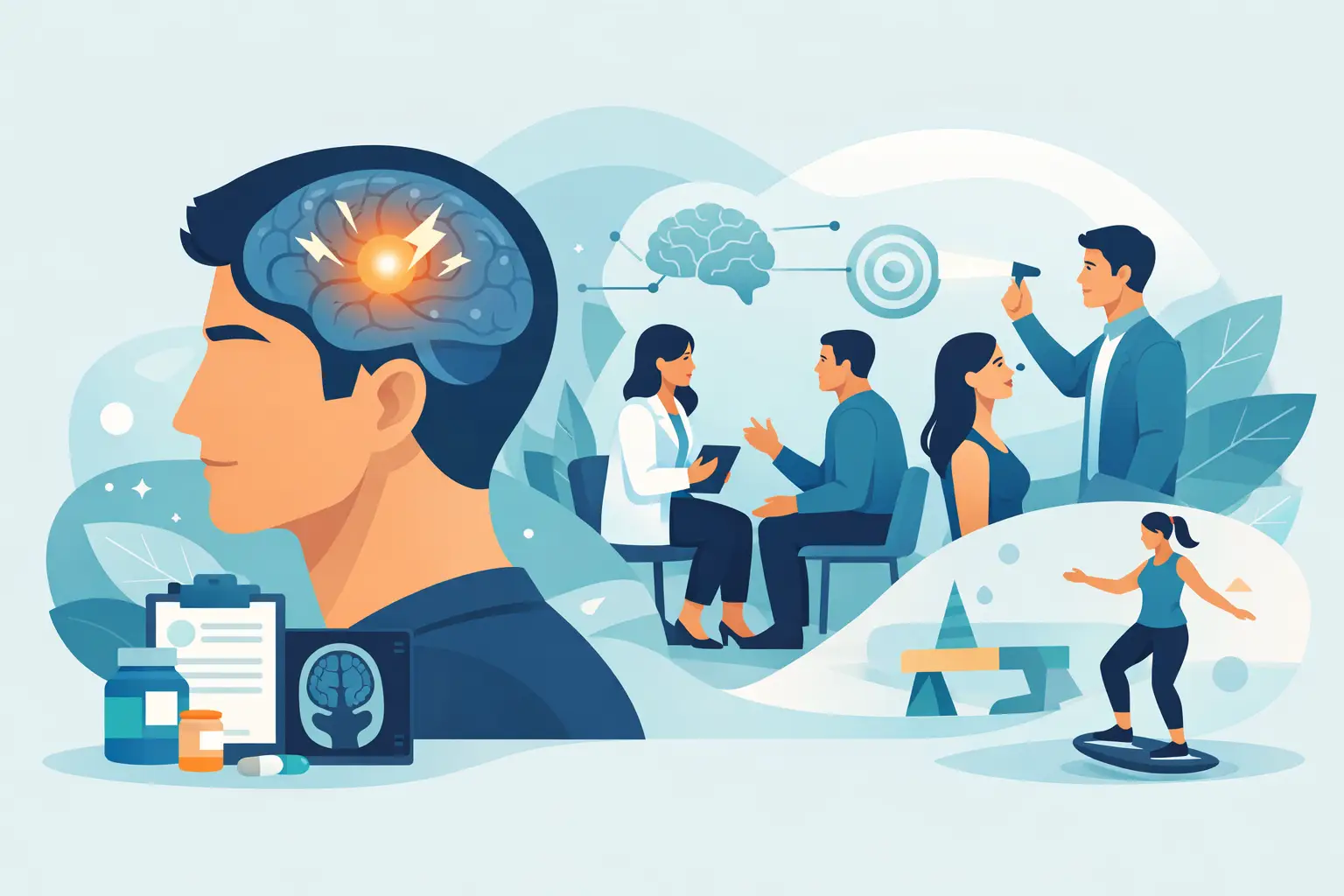
In practice, concussion therapy often includes symptom-guided exercise, vestibular rehabilitation, visual tracking work, manual therapy for the neck, balance retraining, and education on pacing. The goal is not to push through symptoms blindly. The goal is to challenge the system enough to help it recover without creating repeated flare-ups that set you back.
Why adults often need more than rest
Rest matters in the early stage, but prolonged complete rest is usually not the full answer. Many adults hear that they should stay in a dark room and avoid activity until everything feels normal. That advice can be too simplistic, especially after the first short recovery window.
Most current concussion management approaches support a gradual return to activity. That means reducing symptom triggers at first, then reintroducing physical and cognitive demands in a controlled way. This balance matters because too much activity too early can worsen symptoms, but too little activity for too long can also slow progress.
Adults also face pressures that make recovery more complicated. They may need to return to work, care for children, commute, or maintain household responsibilities before they feel fully ready. A treatment plan should reflect real life. If your job requires long hours at a computer, your rehab should address screen tolerance and concentration. If you are active and want to return to the gym or sport, your plan should include a staged progression rather than vague advice to just take it easy.
Common symptoms that guide treatment
No two concussions present exactly the same way, but certain symptom patterns often shape the treatment plan. Headaches are common, especially when there is also neck stiffness or tension. Dizziness may point to vestibular involvement, while blurred vision, difficulty focusing, or eye strain can suggest oculomotor dysfunction. Fatigue, poor sleep, and brain fog often overlap and can make recovery feel slower than expected.
Emotional changes can also be part of the picture. Irritability, anxiety, and low mood are not unusual after a concussion, particularly when symptoms linger and interfere with work or independence. This does not mean the problem is all stress or that symptoms are being exaggerated. It means concussion recovery is multifactorial, and care should reflect that reality.
A thorough assessment helps sort out what is driving your symptoms most. That is one reason self-diagnosing based on internet checklists can be frustrating. The same headache may respond very differently depending on whether the primary issue is neck dysfunction, vestibular sensitivity, visual strain, or overall symptom overload.
Key parts of effective concussion rehabilitation
Vestibular therapy
If you feel dizzy, off balance, motion-sensitive, or uncomfortable in busy environments, vestibular rehabilitation may be an important part of care. This treatment uses specific exercises to improve how your brain processes movement and balance signals. It can help reduce symptoms during walking, turning, bending, driving, or moving through crowded spaces.
The right dose matters. If exercises are too easy, progress may stall. If they are too intense, symptoms can spike. A clinician monitors your response and adjusts the program so you are improving without being pushed beyond a reasonable threshold.
Neck treatment and manual therapy
Neck injuries often accompany concussions, especially after falls, sports impacts, or motor vehicle accidents. Stiffness, reduced mobility, and muscle tension in the neck can contribute to headaches, dizziness, and visual discomfort. Treating the neck may include hands-on therapy, mobility work, postural retraining, and home exercises.
This is one of the more overlooked aspects of recovery. When the neck is involved, addressing only the concussion symptoms without treating cervical dysfunction can leave people stuck.
Graded exercise therapy
Many adults notice that even mild physical activity increases symptoms early on. That does not always mean exercise should be avoided. In many cases, carefully graded aerobic activity can support recovery by improving blood flow regulation, stamina, and tolerance to exertion.
The keyword here is graded. This is not about jumping back into intense workouts. It is about finding a safe starting point, often below the level that significantly aggravates symptoms, and progressing from there over time.
Visual and cognitive retraining
If reading, computer use, or busy visual environments are difficult, treatment may include exercises for eye movement control, focus changes, and visual tracking. Cognitive pacing strategies can also help with attention, task management, and return-to-work planning.
Adults often assume they need to wait until all symptoms disappear before resuming mental tasks. In reality, a gradual and structured return is often more realistic and more productive.
When symptoms last longer than expected
Some adults recover within a few weeks. Others continue to deal with symptoms well beyond that. A longer recovery does not automatically mean there is serious permanent damage, but it does mean you should not rely on time alone.
Persistent symptoms usually need a more detailed clinical approach. This can include reassessing the original diagnosis, identifying missed contributors, and adjusting the treatment plan. Sometimes the issue is that the wrong system has been targeted. Other times, multiple factors are interacting and need coordinated care.
This is where a multidisciplinary clinic can be especially helpful. A patient may benefit from physiotherapy-based concussion rehab, vestibular therapy, and hands-on treatment for the neck within one coordinated plan. Panorama Physiotherapy and Chiropractic Clinic takes that kind of individualized approach because concussion recovery is rarely one-dimensional.
What to expect from the recovery process
Recovery is often gradual rather than linear. You may have a good day followed by a setback after a busy workday, poor sleep, or too much screen time. That can feel discouraging, but it does not always mean you are back at the beginning.
A strong treatment plan helps you understand your symptom patterns and progress markers. Instead of asking whether you feel completely normal yet, it is often more useful to look at whether you can tolerate more activity, recover faster after exertion, or return to more of your routine with fewer flare-ups.
Patience matters, but so does direction. Adults generally do better when they understand why they are doing certain exercises, what level of symptoms is acceptable, and how to pace their return to work, exercise, and daily responsibilities.
When to seek professional help
If symptoms are persistent, worsening, or interfering with your function, it is a good time to be assessed. The same applies if you are unsure whether what you are experiencing is still concussion-related or if your recovery seems stalled.
Adults should also seek care sooner if they are dealing with ongoing dizziness, headaches that do not settle, trouble with reading or screens, neck pain after the injury, or difficulty returning to work or physical activity. You do not need to wait until symptoms become severe to benefit from treatment.
The right care starts with listening. A clinician should look at your symptoms in context, explain findings clearly, and build a plan that matches your actual life rather than a generic timeline. That is often what helps people move from feeling stuck to feeling capable again.
A concussion may interrupt your routine, but it does not have to define the months ahead. With the right support, steady progress is possible, and getting back to clear thinking, confident movement, and everyday function is a realistic goal.