
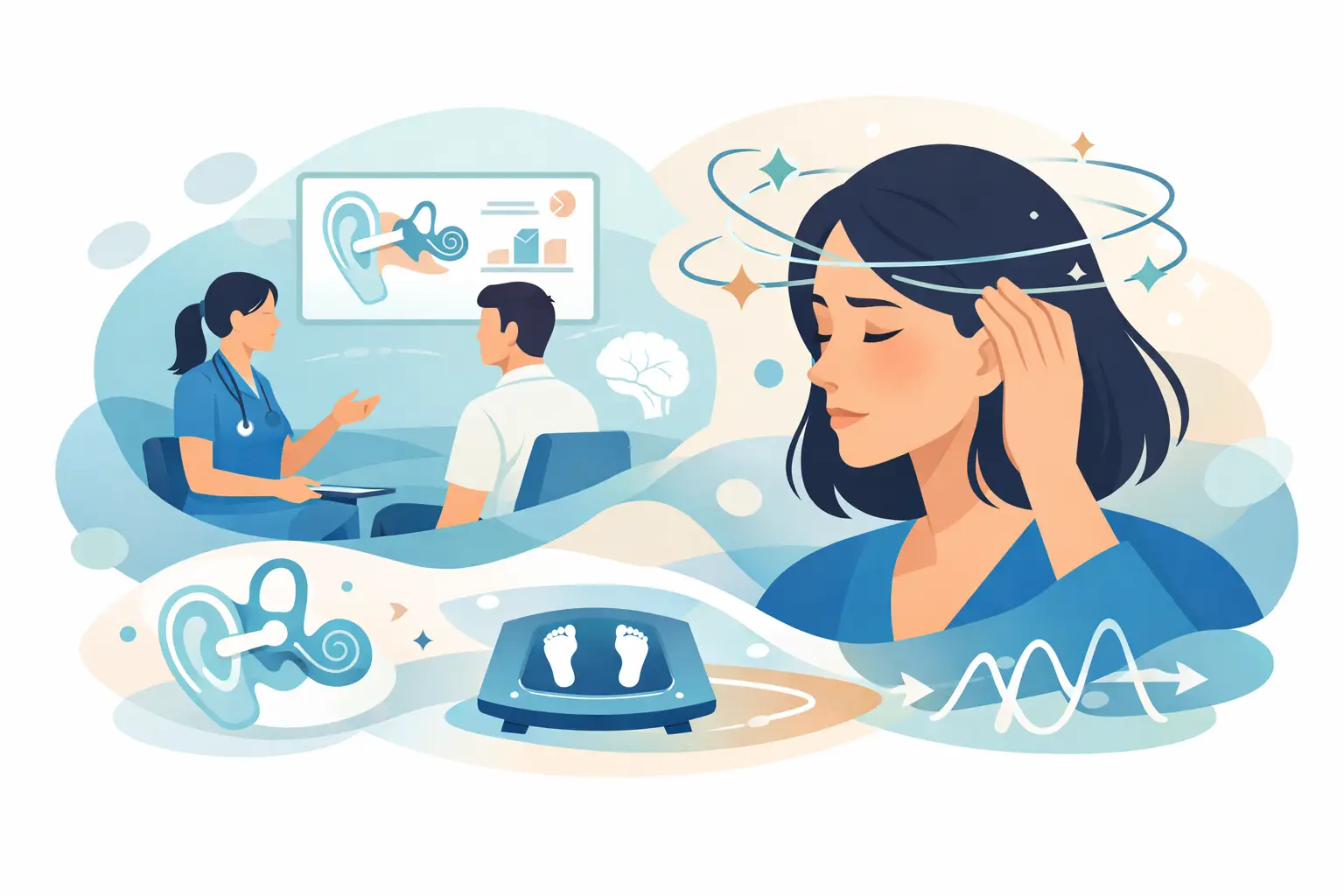
Vestibular Rehabilitation for Dizziness
When the room feels like it shifts as you turn your head, even simple tasks can start to feel risky. Vestibular rehabilitation for dizziness is designed to address that exact problem by improving how your brain and body process balance signals, so movement feels steadier and daily life feels more manageable again.
Dizziness is not one condition. It is a symptom with several possible causes, and that is why a careful assessment matters. Some people describe spinning sensations. Others feel lightheaded, off-balance, foggy, or unsteady when walking, bending, or rolling in bed. Those details help guide treatment, because dizziness linked to an inner ear issue is approached differently than dizziness related to concussion, neck dysfunction, or another medical condition.
What vestibular rehabilitation for dizziness actually does
Vestibular rehabilitation is a type of therapy that targets problems involving the vestibular system, which helps control balance, spatial awareness, and eye movement. When this system is not working properly, the brain can receive mixed signals from the inner ear, eyes, and muscles and joints. That mismatch often leads to vertigo, imbalance, nausea, motion sensitivity, and difficulty focusing.
Treatment uses specific exercises to help the nervous system adapt. In simple terms, the goal is to teach the body to interpret movement more accurately and respond with better control. Depending on the cause of symptoms, therapy may work on gaze stabilization, balance retraining, walking patterns, head movement tolerance, and positional maneuvers.
This is not a one-size-fits-all service. The right plan depends on what is causing the dizziness, how long symptoms have been present, and how they affect work, driving, exercise, or day-to-day routines at home.
Common conditions that can cause dizziness
Many people are surprised to learn that dizziness can come from several different sources. One common cause is benign paroxysmal positional vertigo, often called BPPV. This happens when small crystals in the inner ear move into the wrong place and trigger brief spinning sensations with position changes, such as lying down, getting up, or turning over in bed.
Other cases involve vestibular neuritis or labyrinthitis, which can affect the inner ear and create more persistent dizziness and imbalance. Some people develop symptoms after a concussion, where head injury disrupts visual and vestibular processing. Others notice dizziness alongside neck pain or stiffness, especially after a car accident or sports injury.
There are also situations where dizziness is related to medication, cardiovascular issues, migraine, or neurological conditions. That is where clinical judgment matters. If symptoms point away from a musculoskeletal or vestibular source, referral to the appropriate medical provider may be the safest next step.
What to expect during an assessment
A good evaluation does more than confirm that you feel dizzy. It looks at when symptoms happen, what movements trigger them, how long they last, and whether there are related issues like headaches, nausea, falls, blurred vision, hearing changes, or neck pain.
Your provider may assess eye tracking, head movement tolerance, balance, walking, positional testing, and coordination. If BPPV is suspected, specific testing can help identify which inner ear canal is involved. If a concussion or cervical issue may be contributing, those factors should also be examined because treating only one part of the problem may not give full relief.
This step is important because the exercises that help one patient can aggravate another if the diagnosis is off. Dizziness care works best when the treatment plan matches the actual source of symptoms.
How treatment is tailored to the cause
For BPPV, treatment often includes repositioning maneuvers that guide displaced inner ear crystals back where they belong. These maneuvers can be very effective, and in some cases people notice significant improvement quickly. Even then, some residual unsteadiness may remain for a short time, especially if symptoms have been present for a while.
For vestibular hypofunction, where one side of the balance system is underperforming, treatment usually focuses on gaze stabilization and habituation exercises. These are designed to improve how the eyes stay focused during head movement and reduce sensitivity to motion over time. Early exercises may briefly bring on mild symptoms, which can be normal. The goal is controlled exposure, not pushing until symptoms spiral.
If the dizziness is related to concussion, rehabilitation may include a broader plan. Visual tracking, balance retraining, graded return to activity, and neck treatment may all play a role. That is one reason a multidisciplinary clinic model can be helpful. When symptoms overlap across systems, coordinated care often gives a clearer path forward.
Why dizziness can affect more than balance
People often come in focused on the spinning sensation itself, but dizziness tends to create a wider impact. Confidence drops. Walking in busy places becomes stressful. Looking up, turning quickly, or using stairs may feel unsafe. Some patients start avoiding exercise, social activities, or driving because they are worried symptoms will flare.
That pattern can make recovery harder. The less you move, the more sensitive the system can become. Vestibular therapy helps break that cycle by rebuilding tolerance in a structured way. Progress may start with small changes, such as getting out of bed without spinning or walking through a grocery store with less anxiety, but those gains matter because they restore independence.
When to seek care
If dizziness has lasted more than a few days, keeps coming back, affects your balance, or interferes with work and daily activities, it is worth getting assessed. The same applies if symptoms started after a concussion, car accident, illness, or sudden positional trigger.
There are also red flags that should be treated as urgent medical concerns rather than routine rehab issues. Sudden severe headache, fainting, chest pain, new weakness, slurred speech, facial drooping, double vision, or significant changes in hearing need prompt medical attention. Vestibular rehabilitation can be very effective, but only after more serious causes have been ruled out when necessary.
How long recovery usually takes
This is one of the most common questions, and the honest answer is that it depends. BPPV may improve quickly with the right maneuver, though some people need more than one session. Post-concussion dizziness and chronic vestibular dysfunction often take longer because the nervous system needs time and repetition to adapt.
Consistency matters more than intensity. A personalized home exercise program is usually part of treatment, and results tend to be better when exercises are done as prescribed. At the same time, more is not always better. If symptoms spike too hard or linger too long after practice, the program may need to be adjusted.
Age, overall health, medication use, visual issues, neck problems, and how long symptoms have been present can all affect recovery speed. That does not mean improvement is out of reach. It simply means the timeline should be realistic and tailored to the individual.
The value of a personalized, hands-on approach
Dizziness can feel isolating because it is hard to explain and easy for others to underestimate. Effective care starts with listening carefully, identifying the likely cause, and building a treatment plan around the person in front of you rather than applying the same protocol to everyone.
In a clinic setting, that may include vestibular exercises, positional treatment, balance retraining, and when appropriate, support for related issues like concussion symptoms, neck stiffness, or post-injury mobility restrictions. For patients in Calgary seeking coordinated rehabilitation, a multidisciplinary clinic such as Panorama Physiotherapy and Chiropractic Clinic can be especially helpful when dizziness overlaps with pain, injury recovery, or balance concerns.
The goal is not only to reduce symptoms in the treatment room. It is to help you move through your day with more stability, less fear, and more trust in your body again.
If dizziness has been limiting how you work, walk, drive, or enjoy everyday life, getting the right assessment can be the turning point that makes recovery feel possible.