
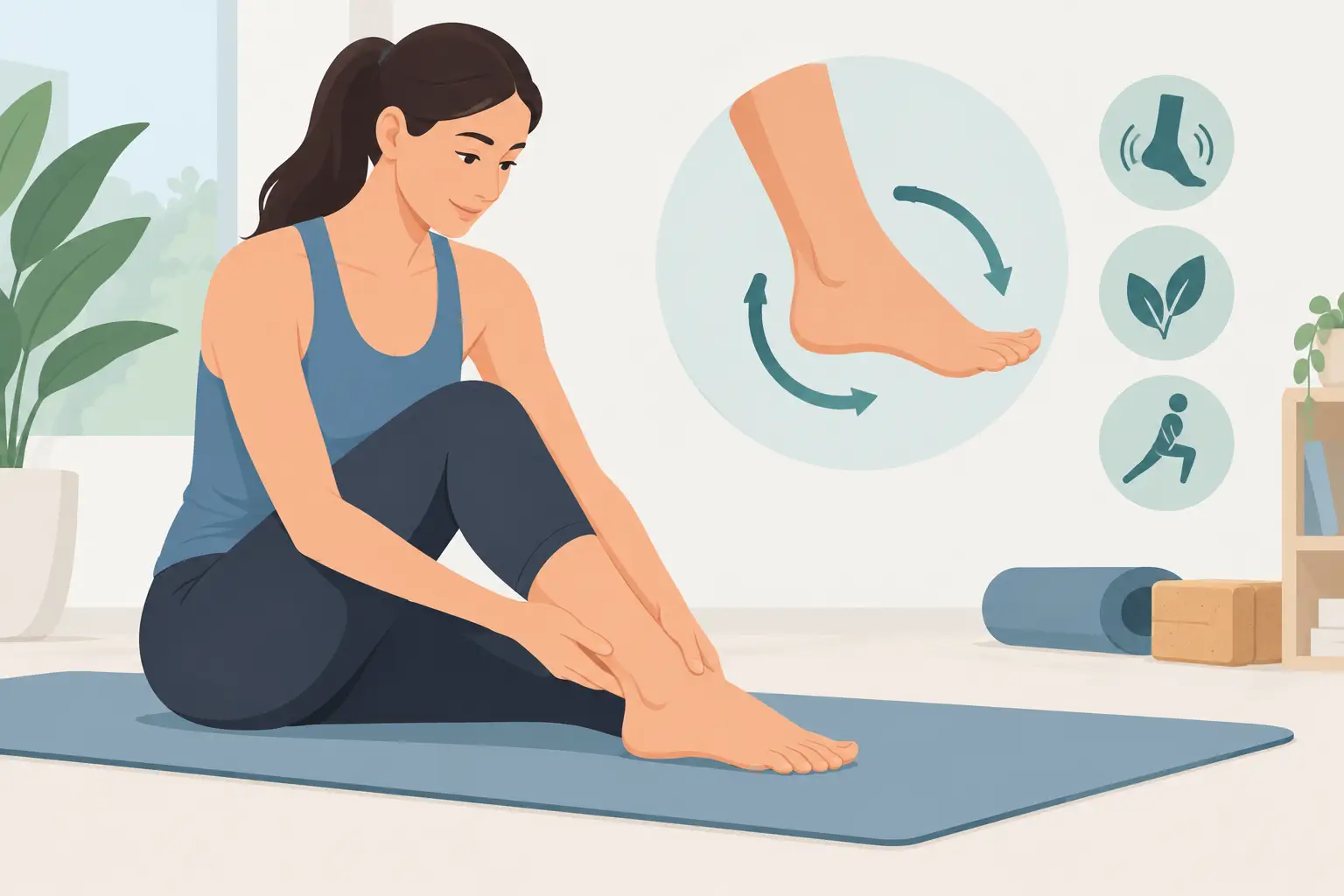
How to Improve Ankle Mobility Without Forcing It
A stiff ankle can make everyday movement feel surprisingly difficult. You may notice your heels lifting during a squat, a pinching sensation on stairs, reduced balance on uneven ground, or discomfort when returning to a run. Learning how to improve ankle mobility is not about forcing a deeper stretch. It is about identifying what is limiting your movement and building comfortable, controlled range of motion that supports the way you live, work, and exercise.
Your ankles absorb and transfer force with every step. When motion is limited, other areas often compensate. The foot may roll inward, the knee may drift, or the hip and lower back may take on more work than they should. Improving ankle mobility can help make movement more efficient, but the right approach depends on whether stiffness comes from muscle tightness, a previous injury, joint irritation, swelling, or movement habits.
Why ankle mobility matters
The ankle needs to move in several directions, but the motion most people struggle with is dorsiflexion – bringing the shin forward over the foot while keeping the heel down. This movement is essential for walking downhill, climbing stairs, getting up from a chair, squatting, lunging, and landing from a jump.
Limited dorsiflexion does not always cause pain immediately. Some people simply adapt by turning their feet outward, shortening their stride, or avoiding positions that require the ankle to bend. Over time, these workarounds can contribute to foot pain, knee discomfort, Achilles irritation, shin symptoms, or difficulty returning to sport after an injury.
Mobility is also different from flexibility. Flexibility refers primarily to how much a muscle can lengthen. Mobility includes flexibility, joint movement, strength, balance, and your ability to control a position. A calf stretch may help, but it is rarely the entire answer.
Common reasons ankles become stiff
Ankle stiffness can develop after a sprain, fracture, surgery, a period in a walking boot, or repeated ankle rolling. Even after swelling and pain improve, the joint can remain guarded and the surrounding tissues may lose movement tolerance. Returning too quickly to full activity can keep the cycle going.
Calf tightness is another common factor, particularly for people who sit for long periods, wear heeled shoes regularly, or suddenly increase running, hiking, or gym training. However, not every stiff ankle is a tight-calf problem. Pinching at the front of the ankle, persistent swelling, joint arthritis, tendon irritation, or a bony restriction can all affect motion.
For some patients, the issue starts higher up the chain. Weak hip control, poor single-leg balance, limited big-toe movement, or a previous knee injury can change how force travels through the foot and ankle. This is why a personalized assessment is more useful than repeatedly stretching an area that may not be the true source of the problem.
A simple way to check your ankle motion
The knee-to-wall test offers a useful starting point. Stand facing a wall with one foot flat on the floor. Place the toes a few inches from the wall and slowly bend the knee toward the wall without letting the heel lift or the arch collapse. If the knee reaches the wall comfortably, move the foot slightly farther back and repeat.
Compare both sides. A noticeable difference, pain, pinching, or an inability to keep the heel down may suggest restricted dorsiflexion. The test is not a diagnosis, and there is no single number that applies to every body. Still, it can help you track whether your movement is becoming more comfortable and symmetrical over time.
Do not push through sharp pain or force the knee inward to reach farther. The goal is quality of movement, not winning the test.
How to improve ankle mobility with controlled movement
A brief, consistent routine usually works better than an occasional long stretching session. Start with movements that feel mild to moderate, not painful. If symptoms are increasing later that day or the following morning, reduce the range, repetitions, or frequency.
Use ankle rocks to practice dorsiflexion
Place one foot in front of the other in a comfortable staggered stance. Keep the front heel down and slowly guide the front knee forward in line with the second or third toe. Pause briefly, then return to the start. This is a controlled ankle rock.
Try 8 to 12 repetitions on each side for one or two rounds. You can use a wall or counter for balance. Keep the movement slow enough that you can notice whether the foot stays grounded and the knee tracks smoothly. This exercise is especially helpful before walking, squatting, or training because it rehearses the motion you need during those activities.
Stretch both calf muscles
The gastrocnemius, the larger calf muscle, crosses the knee and the ankle. Stretch it with the back knee straight, back heel down, and the body gently moving forward. Hold a comfortable stretch for 20 to 30 seconds.
The soleus sits deeper in the calf and is better targeted with the back knee slightly bent while the heel remains down. This version often matters for stair climbing and squatting because the knee is bent during those movements. Perform two or three holds of each variation, without bouncing or forcing the heel toward the floor.
Stretching can reduce a feeling of muscular tightness, but it should not create numbness, tingling, or sharp pain. If it does, stop and seek professional guidance.
Build strength at the end of your range
New range of motion is more useful when you can control it. Calf raises are a practical place to begin. Rise onto both feet, pause, and lower slowly with control. As strength improves, progress to single-leg calf raises if they are comfortable.
You can also practice a slow heel-lowering exercise from a small step, as long as it does not aggravate the Achilles tendon or create ankle pain. Strengthening should feel like muscular work, not joint compression or a sharp pull. Two or three sessions per week is often enough to begin, particularly if you are also active in a sport or physical job.
Add balance and foot control
Stand on one leg near a stable surface and maintain a relaxed, grounded foot for 20 to 30 seconds. Avoid gripping hard with the toes. As the exercise becomes easier, try turning your head slowly or reaching one hand forward while maintaining balance.
Balance training helps the ankle respond to small changes in the ground and can be valuable after a sprain. It also reveals whether limited mobility is causing you to shift your weight away from one side. If you have frequent ankle rolling, dizziness, or a recent injury, start with professional direction rather than progressing too quickly on your own.
Make mobility part of real life
The most effective mobility work fits into your routine. A few ankle rocks before a walk, calf stretches after sitting at a desk, and controlled calf raises while waiting for coffee can add up. You do not need an intense daily routine to see progress, but you do need consistency.
Footwear also deserves attention. A shoe with a higher heel can make walking more comfortable for some people with limited ankle motion, but it may reduce the demand on the ankle and calf over time. Flat shoes are not automatically better either, especially if you transition suddenly. The best choice depends on your activity, foot shape, symptoms, and current tolerance.
For runners, hikers, and athletes, increasing training volume gradually matters as much as mobility drills. If your ankle feels stiff after every run, the answer may not be more stretching. It may be a need to adjust mileage, hill work, recovery, strength, or running mechanics.
When ankle stiffness needs professional care
It is a good idea to seek assessment if ankle stiffness persists beyond a few weeks, follows a significant sprain or fracture, repeatedly limits your squat or walking, or comes with swelling, instability, numbness, or pain. Sudden inability to bear weight, marked swelling or deformity, redness and warmth, calf pain, or a suspected fracture requires prompt medical attention.
A physiotherapist can assess the joint, surrounding muscles, gait, balance, strength, and the movement patterns that may be maintaining the problem. Treatment may include hands-on therapy, targeted exercise, activity modification, and a progressive plan to restore confidence in daily movement or sport. If another approach is appropriate, a multidisciplinary clinic can help coordinate care around your needs.
At Panorama Physiotherapy and Chiropractic Clinic, care begins with understanding what your ankle needs to do – whether that is walking comfortably through your day, returning to the gym, keeping up with your children, or getting back to your sport. Small, well-chosen changes can create meaningful progress, especially when they are built around your body and your goals.