
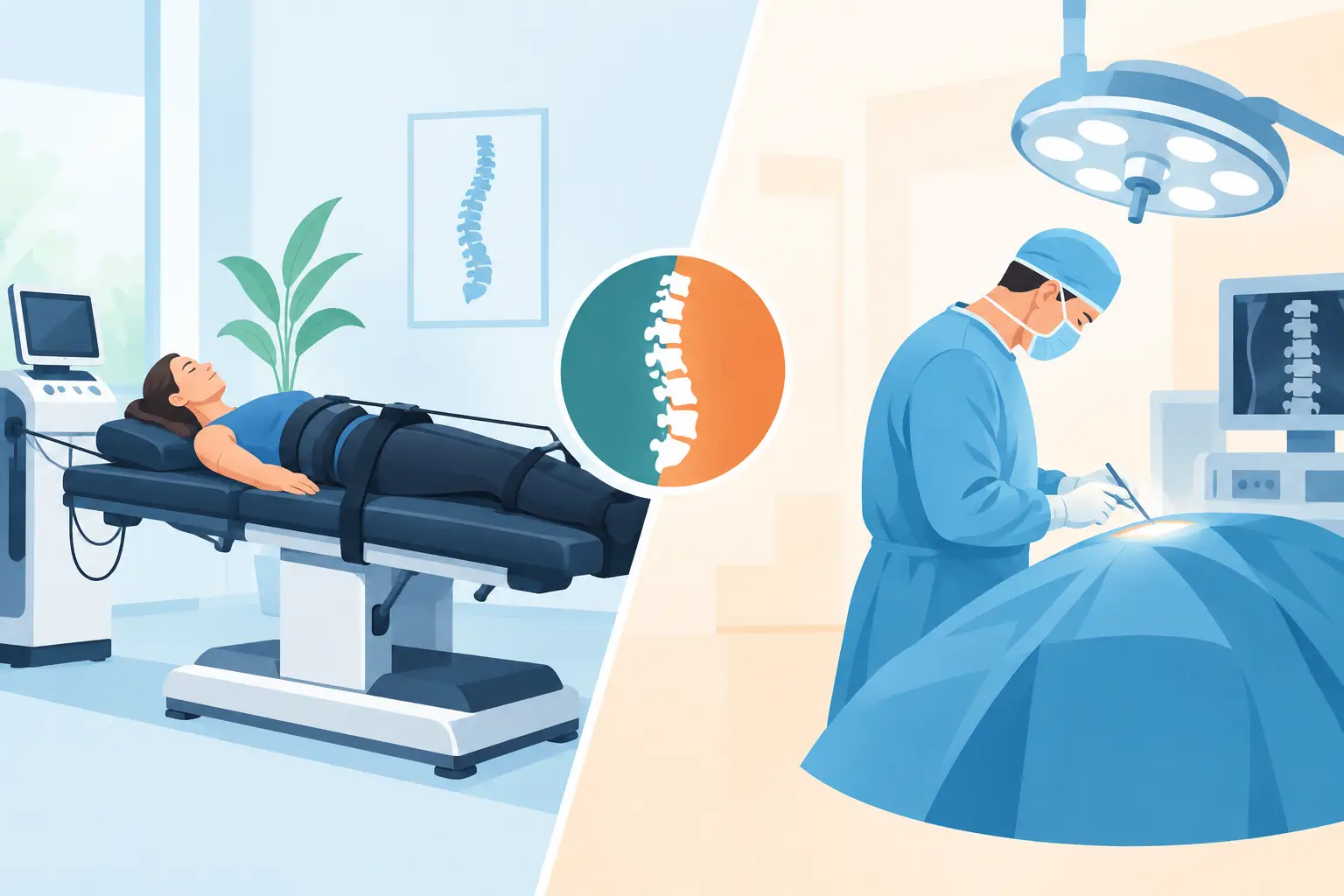
Decompression Therapy Versus Surgery Compared
A disc problem can make ordinary movements feel uncertain. Sitting through a workday, driving across Calgary, lifting a child, or sleeping comfortably may all become difficult when back or neck pain travels into an arm or leg. The decision around decompression therapy versus surgery is not simply about choosing the fastest option. It is about identifying what is causing symptoms, how severe they are, and which treatment offers the best balance of relief, function, and safety for the individual.
For many people, non-surgical care is an appropriate first step. For others, surgery is necessary to protect nerve function or address pain that has not responded to conservative treatment. A thorough assessment helps separate these situations.
What Is Non-Surgical Decompression Therapy?
Spinal decompression therapy is a form of controlled, computer-guided traction. The treatment gently stretches and releases the spine in repeated cycles. This may reduce pressure within a spinal disc and create more space around irritated nerves, with the goal of easing symptoms and supporting movement.
It is often considered for people with disc-related neck or low back pain, sciatica, degenerative disc changes, facet joint irritation, or radiating pain associated with nerve compression. During treatment, the patient lies comfortably on a specialized table while the practitioner applies a carefully selected level of traction. Sessions are noninvasive and do not require anesthesia or downtime.
Decompression is rarely a stand-alone solution. At Panorama Physiotherapy and Chiropractic Clinic, it may be incorporated into an individualized plan that also includes physiotherapy, chiropractic care, manual therapy, exercise guidance, and education on movement habits. The aim is not only to reduce pain, but also to improve the strength, mobility, and confidence needed for daily life.
Decompression Therapy Versus Surgery: The Main Difference
The central difference is straightforward. Non-surgical decompression attempts to manage symptoms and improve function without altering the spine surgically. Surgery physically removes, repairs, fuses, or stabilizes tissue that is pressing on a nerve or contributing to spinal instability.
A surgical procedure may include a discectomy, laminectomy, spinal fusion, or another operation based on the diagnosis. These procedures can be highly effective when there is a clear structural reason for surgery, especially when a compressed nerve is causing progressive weakness or serious loss of function.
Neither option is automatically better. The right path depends on the diagnosis, symptom pattern, imaging findings when appropriate, medical history, and response to prior treatment. An MRI can show a disc bulge or degeneration, but imaging alone does not determine treatment. Many people have spinal changes on imaging without pain. The clinical exam and the patient’s symptoms must guide the decision.
When Decompression Therapy May Be a Reasonable Option
Conservative care is commonly considered when symptoms are painful but stable, nerve function is intact, and there are no urgent warning signs. A person with a recent flare of sciatica, for example, may benefit from a plan that reduces aggravating activities, restores comfortable movement, and gradually rebuilds capacity.
Non-surgical decompression may be worth discussing if pain is linked to certain positions or activities, if symptoms improve with gentle unloading of the spine, or if the patient wants to explore conservative options before considering an operation. It can also be useful for people who are not ideal surgical candidates because of health conditions or who prefer to avoid the risks and recovery demands of surgery when clinically appropriate.
The potential advantages are meaningful: no incision, no anesthesia, minimal interruption to work or home routines, and the ability to combine treatment with active rehabilitation. Still, decompression therapy is not a quick fix. Improvement may take several visits, and results vary depending on the condition, its duration, and the patient’s overall health and participation in their care plan.
Not everyone is a candidate. Certain spinal fractures, severe osteoporosis, active cancer, spinal infection, some types of surgical hardware, pregnancy, and specific vascular or neurological concerns may make traction-based treatment unsuitable. A licensed practitioner should review your history before treatment begins.
When Surgery May Be the Better Choice
Surgery deserves prompt consideration when a nerve is under significant pressure and function is declining. Progressive muscle weakness, worsening numbness, difficulty walking because of nerve impairment, or loss of bowel or bladder control are not symptoms to manage with routine conservative care. They require urgent medical evaluation.
Surgery may also be appropriate when a well-defined condition has caused severe, persistent pain and a comprehensive course of non-surgical care has not provided adequate relief. For example, a large disc herniation causing ongoing leg pain, weakness, and substantial limits in daily activity may respond better to a surgical consultation than repeated passive treatments.
The benefit of surgery is that it can directly address a structural problem. When the diagnosis is clear and the procedure is well matched to the patient, surgery may relieve nerve compression and improve quality of life. However, it comes with trade-offs: anesthesia, infection risk, bleeding, scar tissue, medication needs, time away from work, and a rehabilitation period. Some operations, particularly fusions, can change how the spine moves and place added demand on nearby segments over time.
A surgical recommendation should feel clear and well explained. Patients should understand the diagnosis, the expected benefit, the alternatives, the likely recovery timeline, and what could happen without surgery. Asking for a second opinion is reasonable when the situation is not urgent.
Recovery Expectations Are Different
With decompression therapy, recovery is typically gradual and active. Many patients can continue working, walking, and managing family responsibilities while modifying activities that aggravate symptoms. The rehabilitation focus is often on posture, spinal mobility, core and hip strength, lifting mechanics, and a progressive return to sport or work demands.
Surgical recovery varies widely. A minor discectomy may allow a relatively faster return to light activity, while fusion surgery can require months of structured recovery. Even when surgery successfully reduces nerve pain, rehabilitation is often needed afterward to restore strength, endurance, and movement confidence.
This is why the choice should not be framed as treatment versus no treatment. Both decompression therapy and surgery can involve rehabilitation. The question is whether the problem can be managed safely through conservative care or requires surgical intervention.
How an Assessment Helps You Decide
A useful assessment begins with the details that matter most: where the pain starts, whether it travels, which movements increase or relieve it, how long symptoms have been present, and whether there is weakness, numbness, balance trouble, or changes in bladder or bowel function.
Your practitioner may assess range of motion, reflexes, sensation, muscle strength, walking pattern, and how your symptoms respond to specific movements. They will also consider your work demands, activity goals, past injuries, and prior treatment. This creates a more complete picture than choosing a treatment based on a scan or a friend’s experience.
For some patients, the best plan is a time-limited trial of conservative care with clear markers for progress. If pain, mobility, and function are improving, continuing the plan may make sense. If symptoms worsen, neurological signs develop, or meaningful improvement does not occur, referral for further medical or surgical evaluation may be the next appropriate step.
A Patient-Centered Path Forward
Pain can create pressure to choose immediately, particularly when it has affected sleep, work, or the activities you enjoy. But unless urgent symptoms are present, a careful, individualized plan can provide the information needed to make a confident decision.
The most helpful next step is an assessment that looks beyond the location of pain to the movement, nerve, and lifestyle factors affecting recovery. Whether your care involves decompression therapy, rehabilitation, a medical referral, or surgery, the goal should remain the same: safer movement, better function, and a return to the life you want to live.