
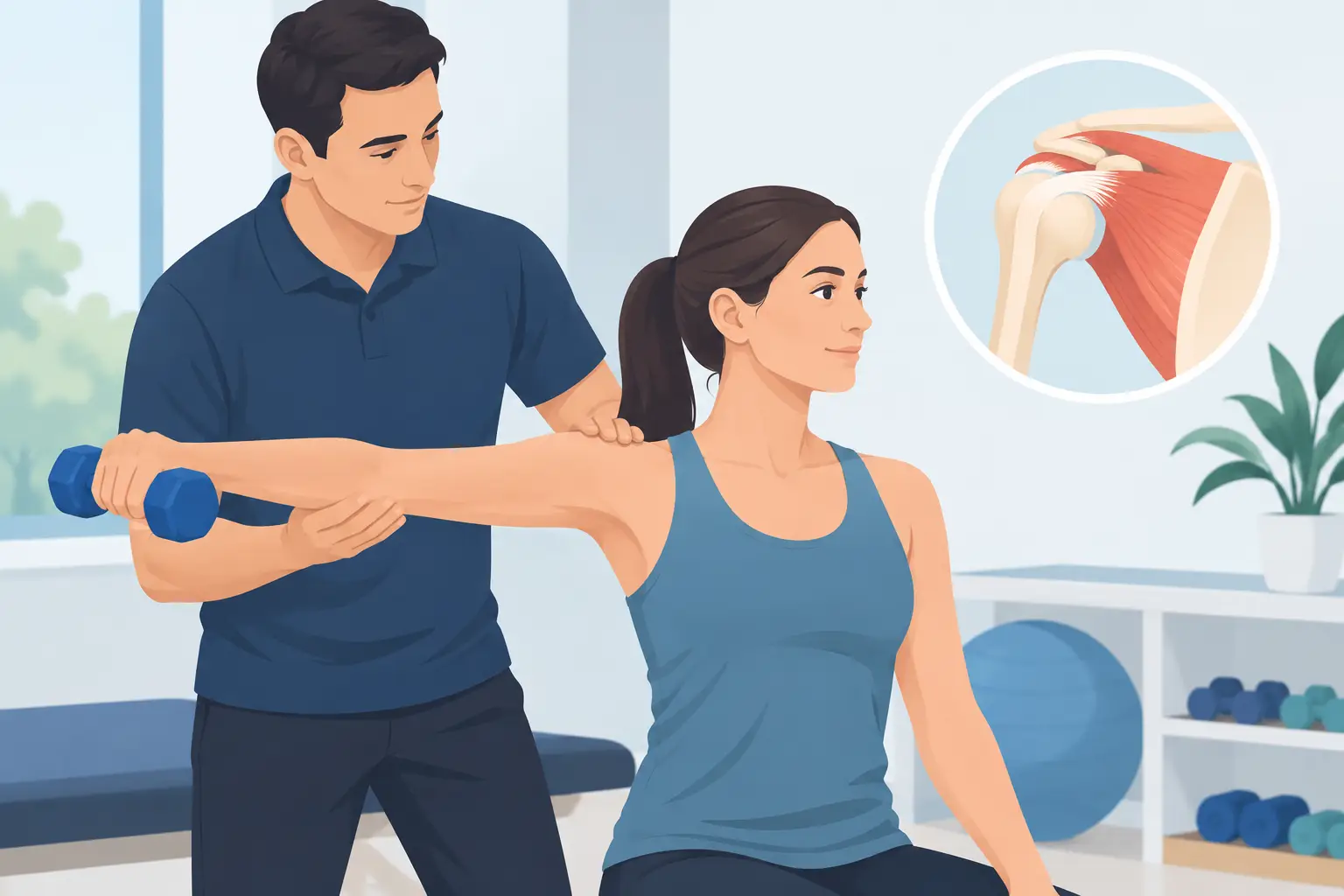
Rotator Cuff Rehabilitation for Better Recovery
A shoulder injury can turn ordinary movements into frustrating reminders of what you cannot currently do. Reaching into a cupboard, fastening a seat belt, lifting a child, or sleeping on one side may all become painful. Effective rotator cuff rehabilitation is not about forcing the shoulder to work through pain. It is a structured process that settles irritation, restores movement, rebuilds strength, and helps you return to the activities that matter to you.
The rotator cuff is a group of four muscles and tendons that stabilizes the ball-and-socket shoulder joint. When these tissues are strained, inflamed, torn, or weakened over time, the shoulder may feel painful, stiff, weak, or unreliable. Recovery looks different for every patient, which is why a careful assessment and individualized treatment plan are so valuable.
Why Rotator Cuff Pain Needs a Clear Assessment
Rotator cuff symptoms can develop after a fall, a lifting injury, repetitive overhead work, a sports injury, or gradual wear over years of use. Pain at the outside or front of the shoulder is common, especially when raising the arm, reaching behind the back, or lying on the affected side. Some people notice clicking or a painful arc during lifting. Others mainly experience weakness, fatigue, or a loss of confidence using the arm.
Those symptoms do not automatically mean there is a full tendon tear. Shoulder pain can also involve joint stiffness, bursitis, neck-related symptoms, arthritis, poor shoulder blade control, or irritation from repeated overload. A physiotherapy assessment helps identify which movements are limited, what is provoking symptoms, and how the shoulder is functioning as part of the arm, neck, and upper back.
This matters because the right treatment is not always simply more exercise. Early on, an irritated shoulder may need reduced load and improved movement before strengthening is useful. In a more chronic problem, the priority may be gradually rebuilding capacity so the shoulder can tolerate work, sport, and daily tasks again.
The Stages of Rotator Cuff Rehabilitation
A successful recovery follows the shoulder’s response, not a rigid calendar. Some minor strains improve steadily in weeks. Larger tears, post-operative recovery, or pain that has been present for months may require a longer plan. Your provider adjusts progression based on pain, movement quality, strength, sleep, and your personal goals.
Calm Pain and Protect the Shoulder
The first goal is to reduce aggravation without making the shoulder completely inactive. Resting from the exact movement that causes sharp pain can be helpful, but avoiding all arm use for too long can lead to more stiffness and weakness.
Your physiotherapist may recommend temporary changes to lifting, work tasks, exercise, and sleep positioning. Gentle range-of-motion work can keep the shoulder moving within a tolerable range. Hands-on treatment may also be used when appropriate to address surrounding tightness and help make movement more comfortable.
Pain during rehabilitation is not always a sign of harm, but sharp, catching, or escalating pain should be taken seriously. A useful rule is to monitor how the shoulder feels later that day and the following morning. If symptoms remain significantly worse after an exercise session, the load may need to be adjusted.
Restore Comfortable Mobility
The shoulder depends on coordinated movement between the upper arm, shoulder blade, rib cage, and upper back. Limited motion in any of these areas can change how the rotator cuff is loaded.
Rehabilitation commonly begins with controlled mobility exercises that improve reaching and rotation without provoking the joint. Depending on your assessment, this may include assisted arm raises, gentle external rotation, shoulder blade movement, and upper-back mobility. The objective is not to chase maximum range at any cost. It is to regain useful motion with less pain and better control.
For some patients, stiffness is the main barrier. For others, the shoulder moves freely but lacks stability under load. These situations require different strategies, which is why a program copied from a video may not address the reason your shoulder is still painful.
Rebuild Rotator Cuff and Shoulder Blade Strength
Once movement is improving, targeted strengthening helps the shoulder regain stability. The rotator cuff works alongside larger muscles of the chest, back, and shoulder blade. If these muscles are not sharing load well, the smaller cuff muscles can become overworked.
Exercises often begin with low-resistance isometric holds or controlled band work. From there, your program may progress to external and internal rotation, rowing patterns, arm elevation, and weight-bearing exercises. Proper form matters more than lifting heavy weight early in recovery. A lighter exercise performed with good shoulder and shoulder blade control is often more productive than pushing through compensations.
Strength gains come from consistency. Your treatment plan should fit your schedule, symptoms, and starting point. An athlete returning to throwing needs a different level of shoulder capacity than someone whose goal is to reach overhead comfortably at work or home.
Return to Work, Sport, and Everyday Demands
The final stage of rehabilitation prepares the shoulder for real life. It is one thing to complete a band exercise in a clinic and another to lift boxes, perform overhead work, swim, golf, play tennis, or return to the gym.
This phase gradually introduces the positions and loads that previously caused difficulty. A worker may practice controlled lifting and carrying. A recreational athlete may build overhead strength, endurance, and sport-specific coordination. The progressions should be challenging enough to create adaptation but gradual enough that the shoulder can recover between sessions.
Treatments That May Support Recovery
Exercise is the foundation of most non-surgical rotator cuff rehabilitation, but it is not the only tool. A multidisciplinary clinic can combine approaches when they support your goals and clinical findings.
Manual therapy may help improve comfort and mobility in the shoulder, upper back, or surrounding soft tissues. Functional dry needling, acupuncture, or other hands-on approaches may be considered for muscle tension and pain relief when appropriate. These treatments can make it easier to participate in movement-based rehabilitation, but they should support an active recovery plan rather than replace one.
Education is also treatment. Understanding which activities are safe to continue, how to modify a painful task, and how to pace your return to exercise can reduce fear and prevent repeated flare-ups. At Panorama Physiotherapy and Chiropractic Clinic, care is tailored to the individual so treatment can reflect the demands of your work, sport, home life, and recovery goals.
When Imaging or Medical Referral May Be Needed
Many rotator cuff conditions improve with conservative care, but some symptoms need prompt medical evaluation. Seek assessment after a significant fall or injury if you cannot lift your arm, have sudden major weakness, notice a visible deformity, or experience numbness that does not resolve. Ongoing night pain, worsening symptoms, or no meaningful improvement with appropriate care may also warrant further investigation.
Imaging can be useful when it will change treatment decisions, particularly if a substantial tear is suspected. However, imaging findings and pain do not always match perfectly. Some adults have tendon changes on imaging without symptoms, while others have significant pain with minimal visible changes. A thorough clinical assessment helps put those results in context.
If surgery is recommended, rehabilitation remains essential before and after the procedure. Post-operative timelines and precautions vary based on the repair, so your physiotherapist works within the surgeon’s guidance while helping restore mobility, strength, and confidence step by step.
What Progress Should Feel Like
Recovery is rarely perfectly linear. You may have a better week followed by a mild flare after an unusually busy day, poor sleep, or an increase in activity. That does not necessarily mean you have reinjured the shoulder. It may simply mean the current load exceeded what the tissues could tolerate.
Meaningful progress often includes less pain at rest, better sleep, improved reach, more strength during daily tasks, and fewer symptom flare-ups. Your plan should be reviewed and progressed as these changes occur. If the shoulder has plateaued, the answer may be a different exercise dose, better load management, or a closer look at movement patterns elsewhere in the body.
A painful shoulder does not have to define how you work, exercise, or care for yourself. With a clear diagnosis, a plan built around your needs, and steady guidance, rotator cuff recovery can become a practical path back to stronger, more comfortable movement.