
How to Relieve Neck Stiffness and Move Easier
A stiff neck can make ordinary moments surprisingly difficult. Looking over your shoulder while driving, settling into sleep, lifting a child, or working at a screen can all become uncomfortable when neck muscles feel tight and guarded. Knowing how to relieve neck stiffness starts with a simple goal: calm the irritated area without avoiding movement for so long that it becomes even tighter.
Neck stiffness is common, but it is not always caused by one obvious event. It may follow an awkward sleeping position, a long day at a desk, stress-related muscle tension, a new workout, or a sudden movement. Sometimes it develops after a sports injury, work injury, or motor vehicle accident. The right approach depends on the cause, how long symptoms have lasted, and whether pain is improving or becoming more limiting.
How to relieve neck stiffness at home
For a mild, recent episode without concerning symptoms, gentle self-care can often help. The key is to use strategies that reduce sensitivity while gradually restoring comfortable motion. Forcing a stretch or trying to “crack” your neck can increase irritation, especially when muscles are already in spasm.
Keep your neck moving gently
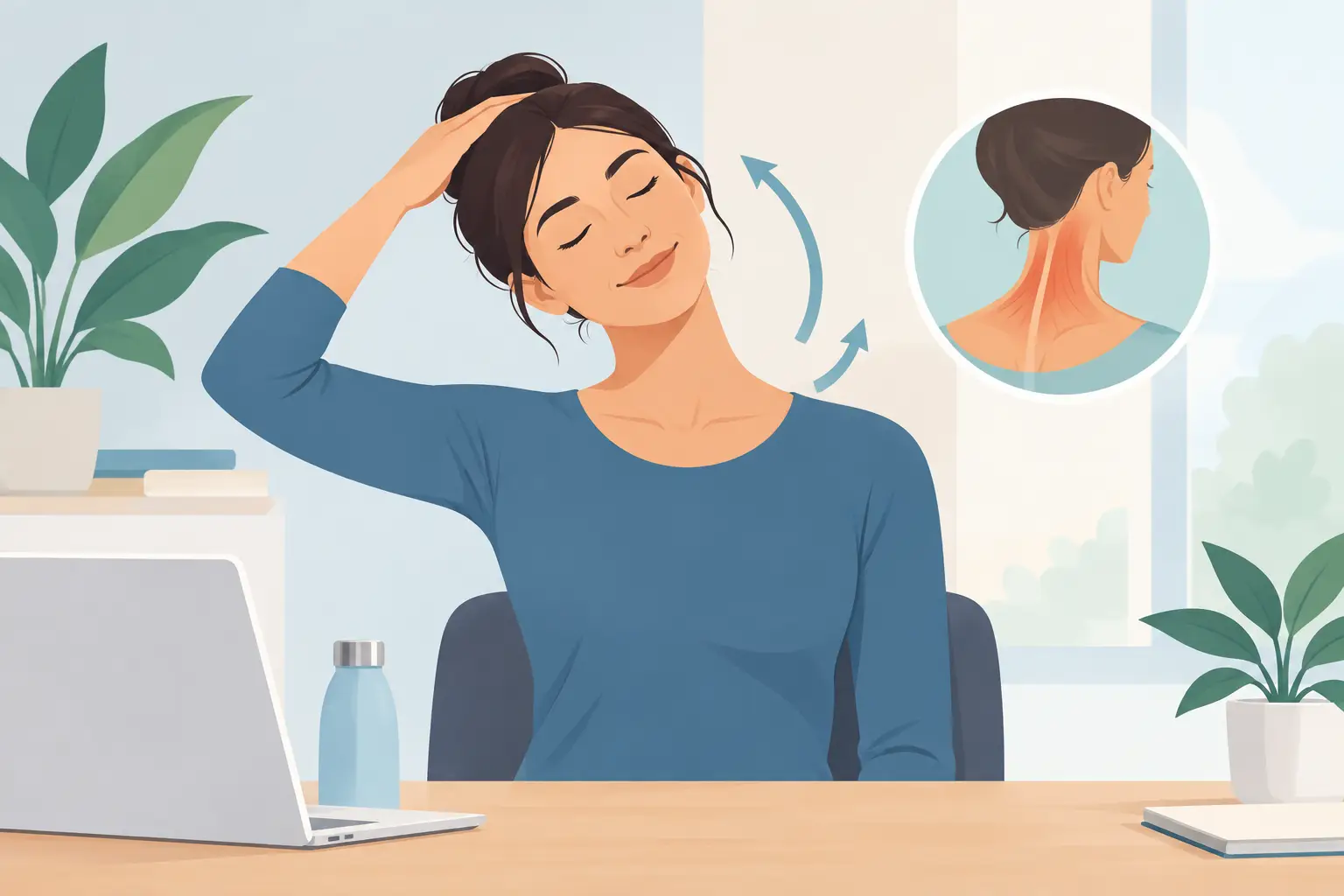
Complete rest is rarely the best answer for a routine stiff neck. Try slow, controlled movements several times throughout the day: turn your head a small distance from side to side, nod gently, and bring each ear slightly toward the shoulder without lifting the shoulder. Stay within a comfortable range rather than pushing through sharp pain.
Small movement breaks can be more useful than one long stretching session. If you work at a computer, stand up every 30 to 60 minutes, walk briefly, and let your arms relax at your sides. This changes the load on your neck, upper back, and shoulders.
Use heat or cold based on what feels better
Heat often helps when the neck feels tight, achy, or cramped. A warm shower, heating pad, or warm towel applied for 15 to 20 minutes may help muscles relax before gentle movement. Keep a barrier between the heat source and your skin, and do not fall asleep with a heating pad on.
Cold can be useful when stiffness began after a recent strain or is accompanied by soreness and swelling. Apply a wrapped cold pack for short intervals of about 10 to 15 minutes. There is no single rule that works for everyone. Use the option that gives you more relief, then follow it with easy motion rather than prolonged immobility.
Adjust the positions that keep aggravating it
Neck stiffness often persists because the same position is repeated all day. Raise a laptop or monitor so you are not constantly looking down, keep your keyboard and mouse close enough that you are not reaching, and support your forearms when possible. Your screen does not need to be perfect, but your body should not have to strain to see it.
Sleep matters too. A pillow should support the space between your head and shoulder without pushing your neck sharply forward or sideways. Back and side sleeping are often more comfortable than stomach sleeping, which requires the neck to remain rotated for hours. If you wake up stiff most mornings, your pillow height, mattress comfort, and usual sleep position are worth reviewing.
Ease shoulder and upper-back tension
The neck does not work alone. Stiffness frequently involves the muscles around the shoulder blades, upper back, chest, and jaw. Try gently rolling your shoulders backward, squeezing your shoulder blades together for a few seconds, or taking slow breaths that allow your shoulders to drop away from your ears.
Stress can make this pattern worse. Many people unconsciously clench their jaw or hold their shoulders high when concentrating. A few slow breaths, a short walk, or a deliberate reset of your posture will not solve every cause of neck pain, but it can reduce the muscle guarding that keeps stiffness going.
Avoid quick fixes that can prolong the problem
When your neck feels locked up, it is tempting to stretch aggressively, use a massage device at high pressure, or repeatedly twist until you hear a pop. These approaches may provide temporary relief for some people, but they can also irritate sensitive tissue or mask a problem that needs assessment.
It is also easy to overcorrect posture. Trying to hold a rigid, perfectly upright position all day can create more tension. A better goal is positional variety: sit, stand, walk, and change your setup often enough that no one posture has to carry the entire load.
Over-the-counter pain medication may be appropriate for some people, but it is not right for everyone. Check with a pharmacist or health professional if you have medical conditions, take other medications, are pregnant, or are unsure what is safe for you. Medication can reduce discomfort, but it does not replace addressing the movement habits or injury factors behind recurring stiffness.
When neck stiffness needs professional care
A neck that is mildly stiff after sleeping awkwardly may improve over a few days. However, an assessment is a good idea when symptoms are not improving, keep returning, interfere with work or sleep, or make it hard to drive safely and perform normal activities.
Professional care is especially valuable after a collision, fall, sports impact, or workplace injury. Neck symptoms can be delayed after an accident, and early guidance can help you return to movement safely. A physiotherapist or chiropractor can assess your neck mobility, strength, posture, upper-back function, and contributing factors such as headache, jaw tension, or shoulder restrictions.
At Panorama Physiotherapy and Chiropractic Clinic, care is tailored to the findings of your assessment rather than treating every stiff neck the same way. Depending on your needs, your plan may include hands-on therapy, guided exercises, chiropractic care, acupuncture, functional dry needling, or strategies to improve work, sport, and sleep positions. The focus is not only on easing pain today, but on helping you regain confident, durable movement.
Seek urgent medical attention for warning signs
Most neck stiffness is musculoskeletal, but certain symptoms need prompt medical evaluation. Seek urgent care if neck pain occurs with severe or unusual headache, fever, confusion, fainting, chest pain, trouble speaking, vision changes, facial drooping, or new weakness or numbness in an arm or leg.
You should also seek immediate help after a significant trauma, or if you have worsening pain with poor balance, loss of coordination, or changes in bladder or bowel control. These symptoms are not typical of a simple muscle strain and should not be managed with home exercises alone.
Build a plan for stiffness that keeps returning
Recurring neck stiffness usually means something in your routine, workload, or movement capacity needs attention. It may be a desk setup, repetitive job demands, low tolerance for a new exercise program, unresolved whiplash symptoms, or tension linked with TMJ problems. The answer is rarely to stop all activity permanently.
A personalized rehabilitation plan can gradually improve neck and upper-back strength, mobility, and control. This may involve building tolerance for looking over your shoulder, lifting, overhead activity, or longer periods at a desk. Progress should be measured by what you can do with less discomfort, not simply by whether you can stretch farther on one day.
Be patient with the process. A stiff neck often responds best to calm, consistent care: a little movement, a better-supported routine, and professional help when symptoms are persistent or limiting. That approach gives your neck the best chance to feel easier now and stay more resilient when life asks it to do more.