
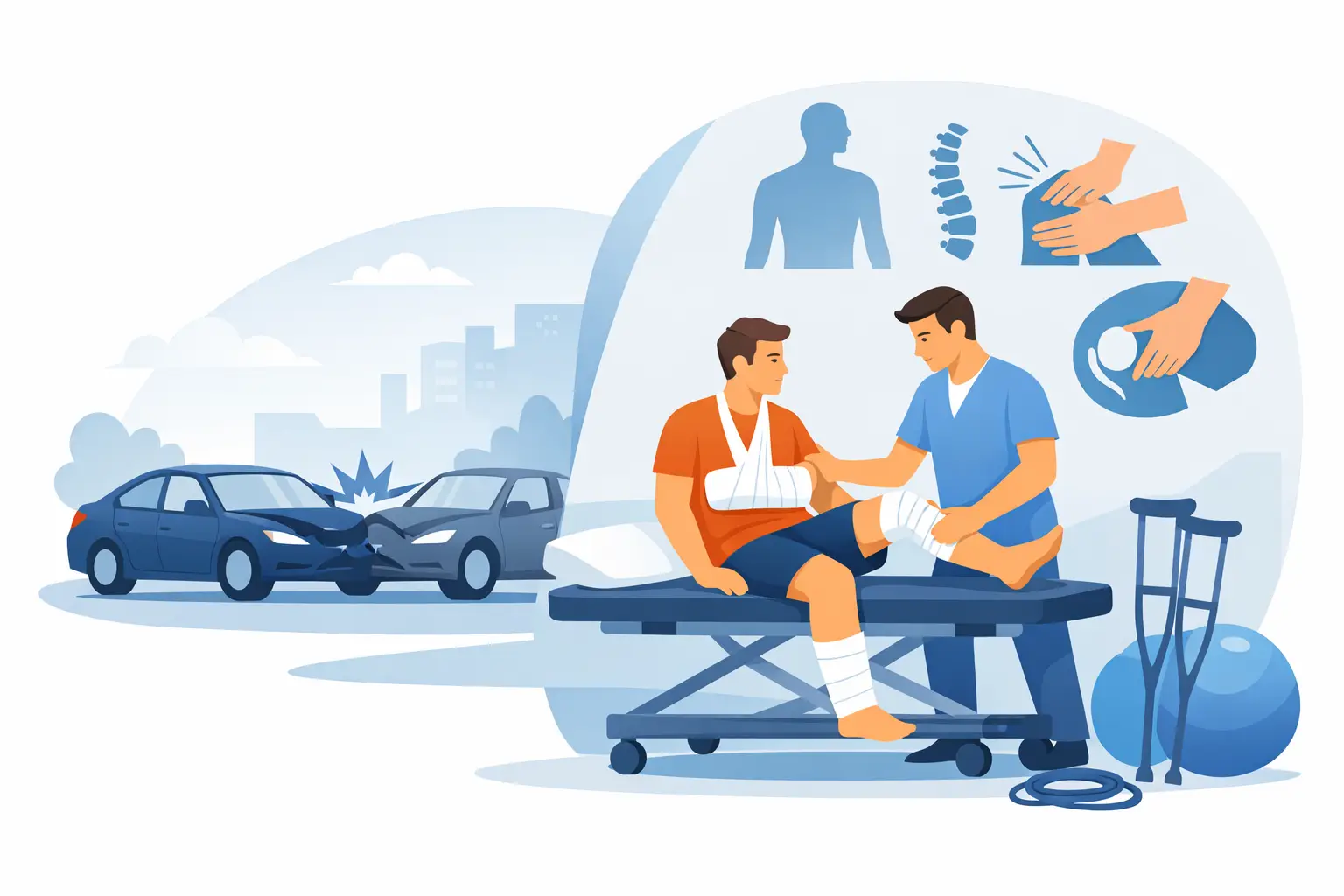
Car Accident Injury Physiotherapy: What Helps
The day after a car crash is often harder than the day of the crash. Adrenaline fades, stiffness sets in, and simple movements like turning your head, getting out of bed, or sitting at your desk can suddenly feel difficult. That is where car accident injury physiotherapy can make a real difference. Early, personalized treatment can help reduce pain, protect mobility, and keep short-term injuries from turning into long-term problems.
Why car accident injuries can feel worse later
Many motor vehicle injuries do not show their full effect right away. Soft tissue strain, joint irritation, nerve sensitivity, and inflammation can build over several hours or days. A person may leave the scene thinking they are fine, only to develop neck pain, headaches, back stiffness, dizziness, or shoulder pain the next morning.
This delayed response is common with whiplash and other collision-related injuries. During impact, the body absorbs force quickly. Even a lower-speed crash can stress muscles, ligaments, and joints well beyond their normal range. If those tissues are not assessed and treated properly, the body often starts compensating. One painful area leads to guarded movement, and that compensation can create new pain in the upper back, jaw, hips, or lower back.
What car accident injury physiotherapy treats
Physiotherapy after a collision is not limited to one diagnosis. It is used to assess and treat a wide range of issues that affect movement, comfort, and daily function.
Whiplash and neck pain
Whiplash is one of the most common post-accident injuries. It can involve neck pain, reduced range of motion, headaches, shoulder tension, and pain between the shoulder blades. Some people also notice jaw discomfort or numbness and tingling into the arm. Physiotherapy focuses on calming irritated tissues, restoring normal neck movement, and improving support from the surrounding muscles.
Back pain and joint irritation
Low back pain is also common after a crash, especially when the body braces on impact. A sudden force can aggravate spinal joints, strain muscles, and trigger persistent tightness. Mid-back pain, rib discomfort, and sacroiliac joint irritation can show up as well. Treatment helps reduce pain while improving how the spine and surrounding structures move together.
Shoulder, hip, and knee injuries
Seatbelts, bracing against the steering wheel, and the position of the body at impact can all contribute to injuries outside the neck and back. A strained shoulder, a jammed hip, or a twisted knee may not seem severe at first, but these injuries can interfere with work, exercise, sleep, and driving. Physiotherapy helps identify whether pain is coming from the joint itself, the muscles around it, or compensation patterns caused by the crash.
Concussion and dizziness symptoms
Some people develop headaches, dizziness, nausea, balance issues, visual sensitivity, or brain fog after a collision. These symptoms may point to concussion, vestibular dysfunction, or cervicogenic dizziness linked to the neck. This is one area where proper assessment matters a great deal. Not every dizzy patient needs the same treatment, and pushing activity too early can backfire. A clinic with concussion and vestibular rehabilitation experience can help guide recovery safely.
What happens during the first physiotherapy assessment
A good first appointment should feel thorough, not rushed. The goal is to understand what was injured, how your symptoms are affecting daily life, and what type of treatment is appropriate right now.
Your physiotherapist will usually ask about the crash itself, when symptoms began, what movements aggravate pain, and whether you have headaches, numbness, dizziness, weakness, or sleep disruption. They will also look at range of motion, strength, joint mobility, posture, walking pattern, and functional tasks like sitting, standing, bending, or lifting.
This matters because two people can have the same accident and very different recovery needs. One person may need gentle pain control and mobility work in the first week. Another may need a more targeted program for concussion symptoms, shoulder dysfunction, or persistent low back pain. Individualized planning is one of the biggest factors in whether treatment feels effective.
How treatment usually works
Car accident recovery is rarely about one exercise sheet and a wait-and-see approach. It usually involves a combination of hands-on care, movement-based treatment, and progression over time.
Early phase: calm pain and restore basic movement
In the first stage, treatment often focuses on reducing irritation and helping the injured area move again without making symptoms worse. That may include manual therapy, soft tissue treatment, gentle mobility exercises, postural guidance, and specific home exercises. If headaches, dizziness, or concussion symptoms are present, care needs to be adjusted carefully.
This phase is important because resting too much can lead to more stiffness, but doing too much too soon can increase pain. The right balance depends on the injury, the person, and how the body is responding.
Mid phase: rebuild strength and control
As pain settles, physiotherapy shifts toward restoring stability, endurance, and movement quality. For neck injuries, that may mean retraining the deep support muscles that help control the head and cervical spine. For back pain, it may involve core control, hip strength, and better tolerance for bending, lifting, or prolonged sitting.
At this stage, treatment should still be specific. Generic strengthening can help, but it does not replace a plan built around your actual restrictions and goals.
Later phase: return to work, driving, and exercise
The final stage is about function. Can you check your blind spot comfortably while driving? Sit through a workday without a flare-up? Sleep through the night? Return to the gym or recreational activity with confidence? These are the outcomes that matter most.
A results-driven treatment plan should move beyond symptom reduction and prepare you for normal life again. That includes building tolerance for the physical and cognitive demands of your routine.
Why multidisciplinary care can help after a collision
Some accident injuries respond best to more than one type of treatment. Physiotherapy is often the foundation, but there are times when coordinated care improves the overall result.
For example, a patient with neck pain and headaches may benefit from physiotherapy plus massage-focused soft tissue work. Someone with dizziness may need vestibular rehabilitation. A person dealing with back pain, muscle guarding, and joint restriction may respond well to a combination of physiotherapy and chiropractic care, depending on their presentation and comfort level.
The advantage of a multidisciplinary clinic is coordination. Your providers can work toward the same recovery goals rather than treating symptoms in isolation. That tends to create a more consistent plan and fewer mixed messages.
When to start car accident injury physiotherapy
Sooner is generally better, especially if pain, stiffness, headaches, dizziness, or reduced function show up within the first few days. Early assessment helps identify what is actually going on before compensation patterns become harder to correct.
That said, there is no point at which recovery becomes hopeless. Some people do not seek treatment until weeks or months later because they expected symptoms to pass. Others are managing ongoing pain long after the paperwork is done and the crash feels like old news. Physiotherapy can still help, but longer-standing issues may take more time because the body has had more time to adapt in unhelpful ways.
Signs you should not ignore
After a collision, persistent pain is enough reason to be assessed, but some symptoms deserve quicker attention. Severe headache, significant dizziness, fainting, increasing numbness, weakness, trouble with balance, visual changes, or symptoms that worsen instead of improve should be evaluated promptly. Physiotherapy is valuable, but it works best when the right condition is being treated at the right time.
What patients often get wrong about recovery
One common mistake is waiting for pain to disappear before moving. Another is trying to push through too aggressively because an X-ray or scan did not show a major injury. Soft tissue injuries, whiplash, and post-concussion symptoms can be very real even when imaging is limited.
The other misconception is that recovery should be linear. It often is not. A few better days followed by a flare-up does not always mean treatment is failing. It may mean the body needs a different pace, different exercise dosage, or a closer look at what activities are overloading the system.
Choosing the right clinic for post-accident care
If you are looking for treatment after a crash, experience matters. You want a clinic that understands motor vehicle injuries, can assess more than the obvious pain site, and can adapt care as symptoms change. A patient-centered approach matters just as much. Recovery is not one-size-fits-all, and the best plans are built around your symptoms, your goals, and your day-to-day demands.
For patients in North Calgary, Panorama Physiotherapy and Chiropractic Clinic takes that kind of coordinated, individualized approach to accident recovery under one roof.
A car crash can interrupt more than your schedule. It can affect how you work, sleep, drive, exercise, and feel in your own body. Getting the right help early gives recovery a better direction, and even if your symptoms have been lingering, the right treatment plan can still help you move forward.