
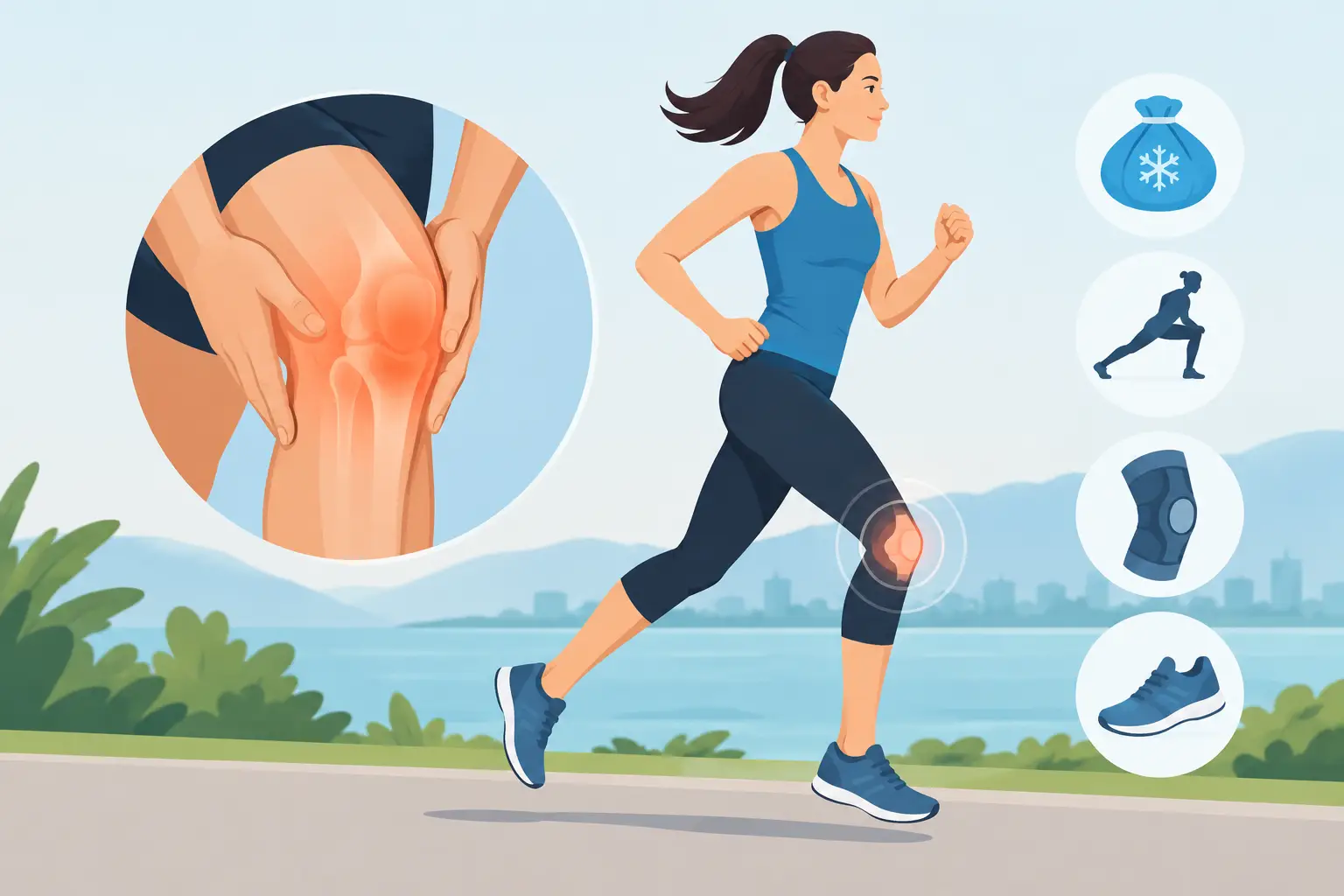
How to Treat Runner Knee and Run With Less Pain
That ache around or behind the kneecap can turn an easy run into a frustrating question: should you push through, rest completely, or seek help? Learning how to treat runner knee starts with recognizing that pain is a signal to adjust your training, not necessarily a reason to give up running altogether. With the right load management, targeted strengthening, and a plan built around your movement, most runners can make meaningful progress.
Runner knee is often used to describe patellofemoral pain, a common condition that causes discomfort at the front of the knee or around the kneecap. It may be most noticeable when running downhill, climbing stairs, squatting, sitting with bent knees for a long time, or getting up from a chair. While the pain is felt at the knee, the contributing factors can involve the hips, feet, training habits, recovery, and running mechanics.
What Causes Runner Knee?
Runner knee rarely has one single cause. It often develops when the demands placed on the knee rise faster than the body can adapt. A sudden increase in mileage, hills, speed work, or running frequency can irritate sensitive structures around the kneecap. The same can happen when a runner returns too quickly after time off, illness, another injury, or a change in footwear.
Movement factors may also play a role. Reduced strength or control through the hips and thighs can affect how the leg manages force during landing. Limited ankle mobility, foot mechanics, poor recovery, or running through fatigue may add to the problem. This does not mean that every runner needs to change their form or replace their shoes. It means the best treatment plan should identify the factors that matter in your case.
A proper assessment is especially valuable because knee pain can have several causes. Patellar tendon irritation, meniscus injuries, arthritis, referred pain from the hip or back, and other conditions can feel similar at first. Treating the wrong problem can delay recovery.
How to Treat Runner Knee Without Losing All Fitness
The goal is not always complete rest. In many cases, relative rest is more useful: temporarily reducing the activities that sharply increase pain while maintaining movement that the knee tolerates well.
Start by adjusting your running load. This may mean shortening runs, slowing your pace, avoiding steep hills, pausing speed sessions, or choosing flatter routes for a period of time. Some runners benefit from run-walk intervals while symptoms settle. A helpful guideline is to keep pain mild and manageable during activity and ensure it does not become significantly worse later that day or the following morning.
If running is currently too painful, low-impact options such as cycling, swimming, pool running, or an elliptical trainer may help maintain cardiovascular fitness. The right option depends on what your knee can handle comfortably. A painful workout is not automatically harmful, but repeatedly provoking symptoms makes it harder to judge whether your knee is improving.
Cold packs may provide short-term comfort after activity, particularly if the area feels irritated. They are not a cure, but pain relief can make it easier to stay active within reasonable limits. Over-the-counter medication may also help some people, but it should be discussed with a pharmacist or medical provider, especially if you have other health conditions or take regular medication.
Build Strength Where Your Knee Needs Support
Targeted strengthening is one of the most effective parts of runner knee rehabilitation. The knee needs the thigh muscles to control bending and absorb force, while the hip muscles help guide the leg during single-leg activities such as running, stairs, and lunges.
A physical therapist may begin with exercises that are easy to control, then gradually build toward more demanding movements. Depending on your symptoms and ability, this could include sit-to-stands, step-ups, controlled squats, split squats, bridges, side-lying hip exercises, calf raises, and single-leg balance work. The exercise selection matters less than proper technique, appropriate resistance, and gradual progression.
Exercises should challenge you without causing a substantial flare-up. Some discomfort can be acceptable during rehabilitation, but sharp pain, swelling, limping, or symptoms that remain elevated for more than a day are signs that the exercise load may need adjustment. Progress is not always linear. A brief increase in symptoms can happen as activity rises, but the overall trend should move toward better tolerance and function.
Do Not Overlook Mobility and Recovery
Stiffness at the ankles, hips, or surrounding muscles can change how you move, although stretching alone does not resolve runner knee. Mobility work is most useful when it addresses a specific limitation found during an assessment. For example, improving ankle range of motion may help a runner who has difficulty controlling knee movement during a squat or step-down.
Recovery also deserves attention. Poor sleep, inadequate nutrition, high stress, and too little time between hard sessions can reduce the body’s ability to adapt to training. If you are increasing mileage, doing strength training, and adding hills in the same week, the total load may be more than your knee is ready for. Change one training variable at a time when possible.
A Safer Return to Running
Once daily activities such as stairs, walking, and squatting are improving, a structured return to running can begin. There is no universal timeline. A runner with mild symptoms that started after a small training change may recover relatively quickly, while persistent pain or an underlying movement issue can take longer.
Begin with a level surface and an easy effort. Run-walk intervals can be a practical bridge back to continuous running. For example, a runner may alternate short periods of easy running and walking, then gradually increase the running portion as the knee tolerates it. Keep the next day in mind. If pain is noticeably worse the morning after a run, reduce the duration, intensity, or terrain at the next session.
Avoid trying to make up for missed training. Increasing distance, pace, and hills all at once is a common reason symptoms return. A gradual plan is less exciting than a hard comeback, but it is far more likely to keep you running consistently.
When Running Form and Footwear Matter
Running form changes are not required for everyone with runner knee. However, a therapist may observe your gait if certain patterns appear to overload the knee. In some cases, a small increase in cadence, a change in stride length, or improved control through the hips and trunk can reduce symptoms. These changes should be introduced carefully, because a new running pattern can shift stress to another area.
Footwear may be worth reviewing if your shoes are significantly worn, uncomfortable, or not suited to your current running volume. Still, there is no single best shoe for every runner. Comfort, fit, and a gradual transition are usually more useful guides than marketing claims. Orthotics may help selected patients, particularly when foot mechanics contribute to symptoms, but they work best as part of a broader rehabilitation plan.
When to See a Physical Therapist for Runner Knee
Professional assessment is recommended if pain persists beyond a few weeks, keeps returning, limits daily activities, or prevents you from progressing your running. A physical therapist can assess knee function, hip and ankle strength, mobility, balance, training history, and running tolerance. From there, treatment can focus on the factors most likely to improve your recovery.
Hands-on therapy may be used when appropriate to reduce pain or improve movement, but lasting results usually come from active rehabilitation and a realistic return-to-running plan. At Panorama Physiotherapy and Chiropractic Clinic, treatment is individualized and may include exercise-based rehabilitation, manual therapy, functional dry needling, and coordinated care based on your needs and goals.
Seek prompt medical attention if you have significant swelling, knee locking, inability to bear weight, instability or giving way, fever, redness and warmth around the joint, a deformity, or pain after a major fall or twist. These symptoms may indicate a condition that needs more urgent evaluation.
Runner knee can be discouraging, especially when running is part of your routine, stress relief, or identity. The most productive next step is to respect what your knee is telling you, reduce the aggravating load, and rebuild capacity with guidance that fits your body and your goals.