
Best Clinic Treatments for Whiplash Recovery
A whiplash injury can make ordinary movements surprisingly difficult. Looking over your shoulder while driving, sitting at a desk, sleeping comfortably, or lifting a child may all trigger neck pain, headaches, stiffness, or dizziness. The best clinic treatments for whiplash are not about forcing the neck to move or masking symptoms temporarily. They combine a thorough assessment with gradual, personalized care that helps you regain comfort, confidence, and function.
Whiplash most often follows a motor vehicle accident, but it can also occur during a sports collision, fall, or sudden forceful movement of the head and neck. Symptoms do not always appear immediately. Some people feel relatively well at first, then notice increasing pain, limited movement, fatigue, or headaches over the next day or two. Early assessment can help identify what is contributing to your symptoms and provide a clear path forward.
Why Whiplash Needs an Individual Assessment
Whiplash is a broad term for an injury caused by rapid back-and-forth neck movement. It can affect muscles, ligaments, joints, nerves, and the way the nervous system processes pain. Two people involved in similar accidents may have very different symptoms, recovery timelines, and treatment needs.
A clinic assessment should look beyond the sore area. Your provider may assess neck and upper-back movement, posture, shoulder function, muscle control, headache patterns, balance, and any symptoms traveling into the arm. If you have dizziness, visual sensitivity, or difficulty concentrating after an accident, screening for concussion-related or vestibular symptoms may also be appropriate.
This assessment matters because the right treatment depends on what is limiting your recovery. A very irritated, painful neck may need a different starting point than a neck that is mostly stiff and weak several weeks after the injury. Good care progresses at a pace your body can tolerate.
Best Clinic Treatments for Whiplash
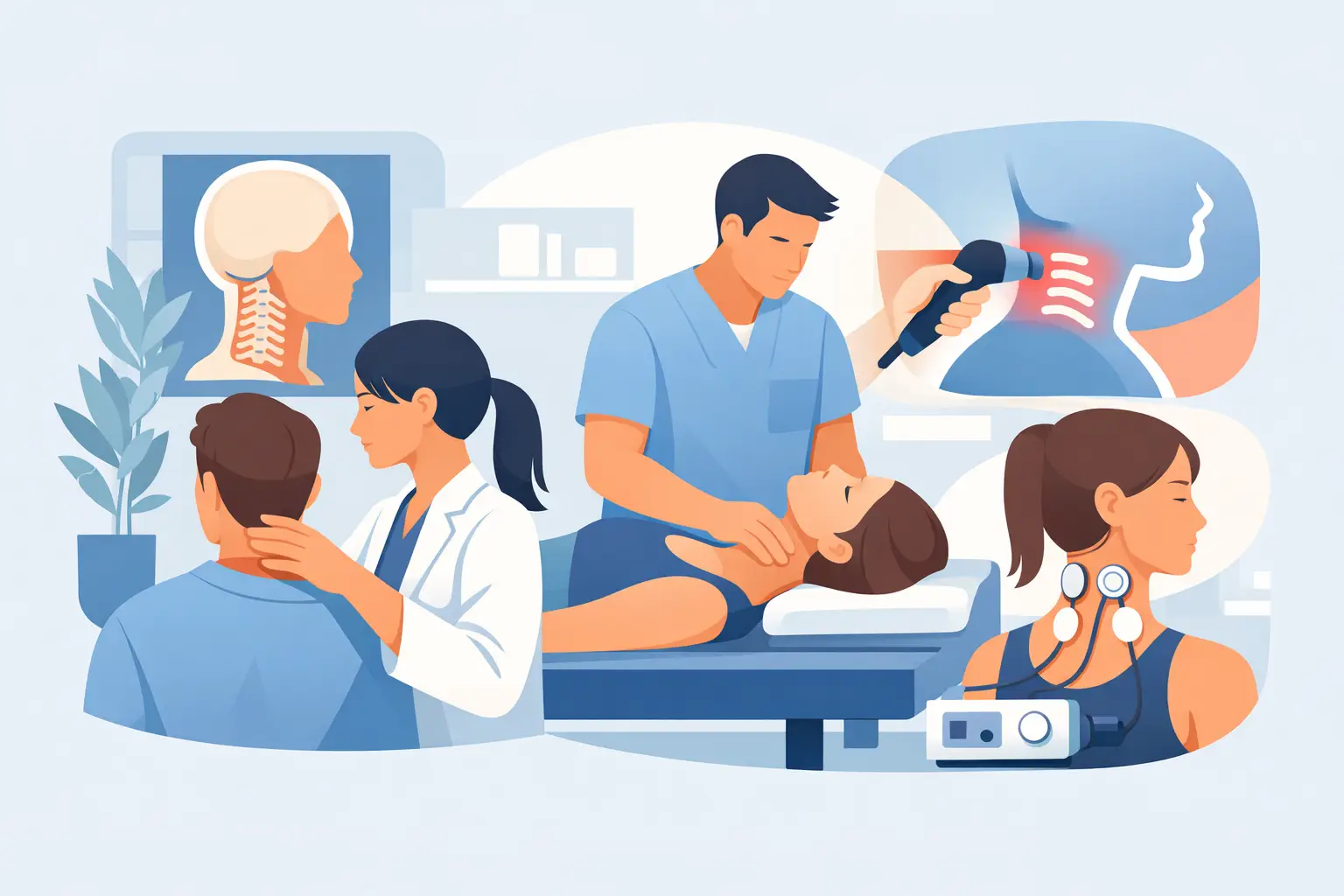
The most effective plan often uses more than one treatment approach. At Panorama Physiotherapy and Chiropractic Clinic, care can be coordinated under one roof so your plan remains focused on your specific goals, whether that means returning to work, driving without pain, getting back to sport, or simply sleeping through the night.
Physiotherapy for movement and control
Physiotherapy is often central to whiplash recovery. In the early stage, treatment may focus on reducing pain, improving comfortable movement, and helping you stay safely active rather than becoming fearful of every motion. Your physiotherapist can teach gentle range-of-motion exercises, postural strategies, and practical modifications for work, driving, and sleep.
As symptoms settle, exercise becomes more targeted. Deep neck muscles, shoulder blade stabilizers, and upper-back muscles all contribute to steady, efficient neck movement. A progressive exercise program can rebuild control and endurance so everyday activities do not repeatedly flare your symptoms.
The key is dosage. Doing too little for too long can lead to stiffness and deconditioning, while doing too much too soon can aggravate an already sensitive system. Your program should be adjusted according to how you respond between visits, not just how you feel on the treatment table.
Manual therapy for pain and stiffness
Hands-on treatment can be useful when joint stiffness, muscle guarding, or upper-back restrictions are limiting movement. Depending on your presentation, a licensed practitioner may use gentle joint mobilization, soft-tissue therapy, stretching, or myofascial techniques to improve comfort and mobility.
Manual therapy is most helpful when it supports active rehabilitation. It may give you enough symptom relief to turn your head more easily or complete your exercises with better form, but it should not be the entire plan. Lasting recovery usually requires restoring strength, movement confidence, and daily function as well.
Chiropractic care when it fits your condition
Chiropractic care may be included in a whiplash treatment plan after an appropriate assessment. Chiropractors can evaluate spinal joint movement, muscle tension, posture, and related upper-back or shoulder concerns. Treatment may include gentle mobilization, soft-tissue methods, exercise guidance, and, when clinically appropriate, chiropractic adjustments.
Not every patient is a candidate for the same technique, particularly soon after a collision. A patient-centered chiropractor explains the options, considers your symptom irritability and medical history, and chooses methods that fit your comfort level and recovery stage.
Acupuncture or functional dry needling for muscle pain
Persistent muscle tightness around the neck, shoulders, and upper back can make whiplash symptoms feel more intense. Acupuncture or functional dry needling may help some patients reduce muscle guarding and pain sensitivity, especially when trigger points are contributing to headaches or restricted motion.
These treatments are not a replacement for exercise and movement retraining. They can be a useful complement when muscle tension is keeping you from moving normally or progressing with rehabilitation. Your practitioner can help determine whether either option is suitable for you.
Vestibular rehabilitation for dizziness and imbalance
Dizziness after a motor vehicle accident deserves careful attention. It may come from the neck, the inner ear, a concussion, or a combination of factors. Vestibular rehabilitation uses specific exercises to improve balance, gaze stability, motion tolerance, and confidence with walking or driving.
If turning your head, moving through busy environments, or looking at screens brings on dizziness or nausea, tell your provider. Treating neck pain alone may not fully resolve these symptoms when the vestibular system is also involved.
Education and a return-to-activity plan
Clear guidance is a treatment in itself. Many people are unsure whether they should rest, use heat or ice, wear a collar, exercise, or return to normal activity. Recommendations vary based on the injury, but prolonged immobilization is rarely the goal for uncomplicated whiplash.
Your care team can help you understand what symptoms are expected, which activities to temporarily modify, and how to reintroduce work, exercise, household tasks, and driving. Measurable goals make progress easier to recognize, especially when recovery feels gradual.
What a Practical Whiplash Recovery Plan Looks Like
A strong plan begins with listening. Your provider should understand how the injury affects your day, what movements worry you, and what you need to return to. Treatment can then combine symptom relief with active steps that build capacity over time.
Follow-up visits are used to reassess movement, pain patterns, and function. If progress stalls, the plan may need to change. For example, ongoing headaches may call for a closer look at the upper neck, jaw, stress, sleep, or visual and vestibular factors. Arm tingling or weakness may require further medical evaluation rather than simply more massage.
Recovery is not always linear. A busy workday, poor sleep, or an unexpected jolt can cause a temporary flare. That does not necessarily mean you have reinjured yourself. With professional guidance, you can learn how to settle a flare and continue progressing without abandoning activity altogether.
When to Seek Medical Attention Urgently
Most whiplash injuries improve with appropriate conservative care, but some symptoms require prompt medical assessment. Seek urgent help after an accident if you have severe or worsening headache, fainting, confusion, repeated vomiting, new weakness, numbness that is worsening, difficulty walking, loss of bladder or bowel control, severe midline neck pain, or symptoms following a significant impact.
You should also tell your provider about prior neck injuries, osteoporosis, inflammatory conditions, blood-thinning medication, or any recent changes in vision, speech, or coordination. Safe treatment starts with recognizing when further testing or medical referral is needed.
Whiplash can be frustrating, particularly when pain affects work, family life, or the independence you rely on every day. With a timely assessment and a care plan that combines hands-on treatment, active rehabilitation, and clear guidance, the goal is not simply to make your neck feel better for a few hours. It is to help you move with less pain and return to the life you want to live.