
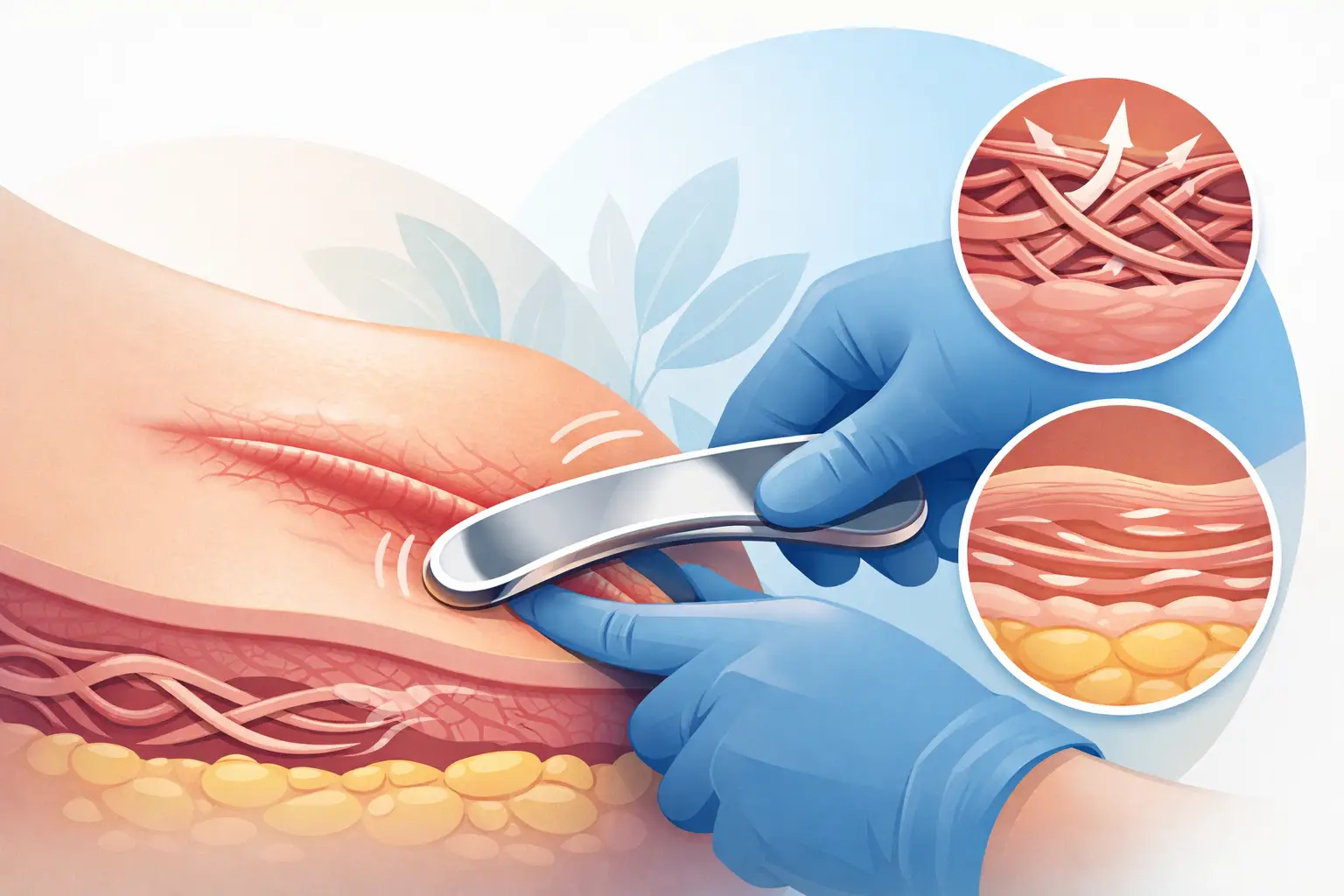
Graston Technique for Scar Tissue
Scar tissue can be stubborn. You may notice it as tightness after surgery, a pulling feeling when you reach overhead, or a lingering sense that an old injury never fully loosened up. That is where graston technique for scar tissue often comes into the conversation. For many patients, the goal is not to erase scar tissue, but to improve how the tissue moves, how the area feels, and how well the body functions day to day.
What graston technique for scar tissue is meant to do
Graston Technique is a form of instrument-assisted soft tissue mobilization. A trained provider uses specially designed stainless steel instruments to assess and treat areas of tissue restriction. When scar tissue has developed after surgery, trauma, overuse, or muscle strain, the tissue can become less flexible and less organized than the surrounding structures.
That matters because scar tissue does not just sit on the surface. It can affect how skin, fascia, muscle, tendon, and nearby joints glide together. In practical terms, that may show up as pain, reduced range of motion, stiffness, weakness, or movement patterns that feel off.
The purpose of treatment is to help improve tissue mobility and reduce restrictions that may be contributing to those symptoms. For some people, that means easier walking after an ankle injury. For others, it means improved shoulder motion after surgery, less pulling around a C-section scar, or better tolerance for exercise after a sports injury.
How scar tissue can limit recovery
Scar tissue is a normal part of healing. The body lays it down to repair damage, and without it, many injuries would not close or stabilize properly. The issue is not that scar tissue exists. The issue is that sometimes it forms in a way that limits normal motion or creates sensitivity.
If the tissue becomes thick, stuck, or poorly aligned, it may interfere with the way nearby structures move. A tendon may not glide smoothly. A muscle may not lengthen well. A joint may lose motion because the soft tissue around it feels bound down. In some cases, patients also change how they move to avoid discomfort, which can create strain in other areas.
This is one reason hands-on care can be useful. When treatment is paired with targeted exercise and movement retraining, it can support a more complete recovery rather than simply chasing temporary relief.
How Graston treatment typically feels
A Graston session starts with an assessment. Your provider looks at your symptoms, medical history, movement, and the quality of the tissue in the affected area. Not every tight or painful region is best treated with instruments, so clinical judgment matters.
During treatment, the instrument is moved along the skin to detect and address restrictions. You may feel pressure, scraping, or a rough sensation over the affected tissue. Some areas feel mildly tender, while others can be more sensitive, especially when scar tissue is dense or the tissue has been irritated for a long time.
Treatment should be purposeful, not excessive. More intensity is not always better. A skilled clinician adjusts the pressure and technique to your tolerance, your stage of healing, and the condition being treated. Mild redness after treatment is common. Some people also feel temporary soreness, similar to how tissue can feel after deep manual work.
When graston technique for scar tissue may help
This approach can be helpful in a range of situations, but it depends on the person, the tissue involved, and how far along healing has progressed. It is often considered for post-surgical scars, old soft tissue injuries, tendon-related issues, muscle strains, ligament sprains, and areas where mobility remains limited even after the initial healing phase.
Examples include scar tissue after knee, shoulder, or ankle surgery, adhesions following repetitive strain, and soft tissue restriction after sports injuries or motor vehicle accidents. It may also be used as part of care for plantar fasciitis, Achilles tendinopathy, tennis elbow, or chronic muscle tightness where scar-like restrictions are contributing to symptoms.
That said, not every scar needs treatment, and not every painful area is a scar tissue problem. Sometimes the main issue is strength loss, joint stiffness, nerve sensitivity, or inflammation rather than tissue adhesion. This is why an individualized assessment matters.
What results patients can realistically expect
The most helpful way to think about Graston is as one tool within a broader treatment plan. Some patients notice easier movement fairly quickly, especially if tissue restriction is a major part of the problem. Others improve more gradually over several visits as the tissue responds and movement patterns are retrained.
Common goals include improved range of motion, less stiffness, reduced pain with activity, and better tolerance for exercise or daily tasks. For athletes, the focus may be returning to training with fewer restrictions. For someone recovering from surgery, it may be getting through work, stairs, or sleep with less discomfort.
It is also worth being honest about limits. Dense, longstanding scar tissue may not fully normalize. Chronic conditions often need more than manual treatment alone. And if the scar is very recent, aggressive treatment may not be appropriate yet. Good care is not about promising instant change. It is about matching the right treatment to the right stage of recovery.
Why treatment often works best with exercise and rehab
Hands-on treatment can create an opportunity for better movement, but exercise helps hold onto that gain. Once tissue mobility improves, the body needs a reason to use that new range well. That may involve strengthening, stretching, balance work, posture correction, or sport-specific retraining.
For example, if scar tissue around the shoulder is limiting overhead motion, treatment may help free the area, but strength and control are still needed so the shoulder moves efficiently. If a lower leg injury has led to stiffness and altered walking mechanics, soft tissue work alone is unlikely to fix the whole problem.
This is where a multidisciplinary clinic can make a real difference. Coordinated care allows treatment to address both the restricted tissue and the larger movement issue behind it.
Is Graston painful?
This is one of the most common questions, and the honest answer is that it can be uncomfortable, but it should be tolerable. The sensation varies depending on the body part, the amount of tissue restriction, and your sensitivity level. Freshly irritated tissue or very dense areas tend to be more tender.
A thoughtful provider will not treat discomfort as a badge of honor. The goal is to create a therapeutic response without flaring symptoms unnecessarily. If a treatment leaves you in significantly worse pain for days, the approach may need to be modified.
When Graston may not be the right choice
There are situations where instrument-assisted treatment should be delayed, modified, or avoided. These may include open wounds, active infection, certain skin conditions, unhealed fractures, acute inflammatory flare-ups, bleeding disorders, or areas where sensation is impaired. Recent surgery may also require clearance and careful timing.
This is another reason to seek care from a licensed practitioner who can assess the full picture rather than applying the same technique to every painful area.
What to look for in a provider
Technique matters, but so does reasoning. You want a provider who explains why Graston is being used, what it is expected to help with, and how it fits into your broader recovery plan. The best treatment plans are specific. They connect your symptoms, your goals, and your daily demands.
If you are dealing with lingering tightness after surgery, a sports injury that never quite resolved, or an old scar that still affects movement, a clinic that offers physiotherapy, chiropractic care, and complementary hands-on treatment can often build a more complete plan around you. At Panorama Physiotherapy and Chiropractic Clinic, that means looking beyond the scar itself and considering the joints, muscles, posture, and movement habits that may still be influencing your recovery.
Scar tissue is part of healing, but it should not always be the end of the story. When the tissue is limiting motion or keeping you from feeling fully recovered, the right treatment can help your body move with less resistance and more confidence.