
Spinal Decompression Therapy Benefits Explained
Back pain has a way of shrinking daily life. Simple things like getting out of bed, sitting through work, or lifting groceries can start to feel calculated and tiring. That is why many patients ask about spinal decompression therapy benefits – not as a quick fix, but as a way to reduce pressure, move more comfortably, and avoid letting pain take over their routine.
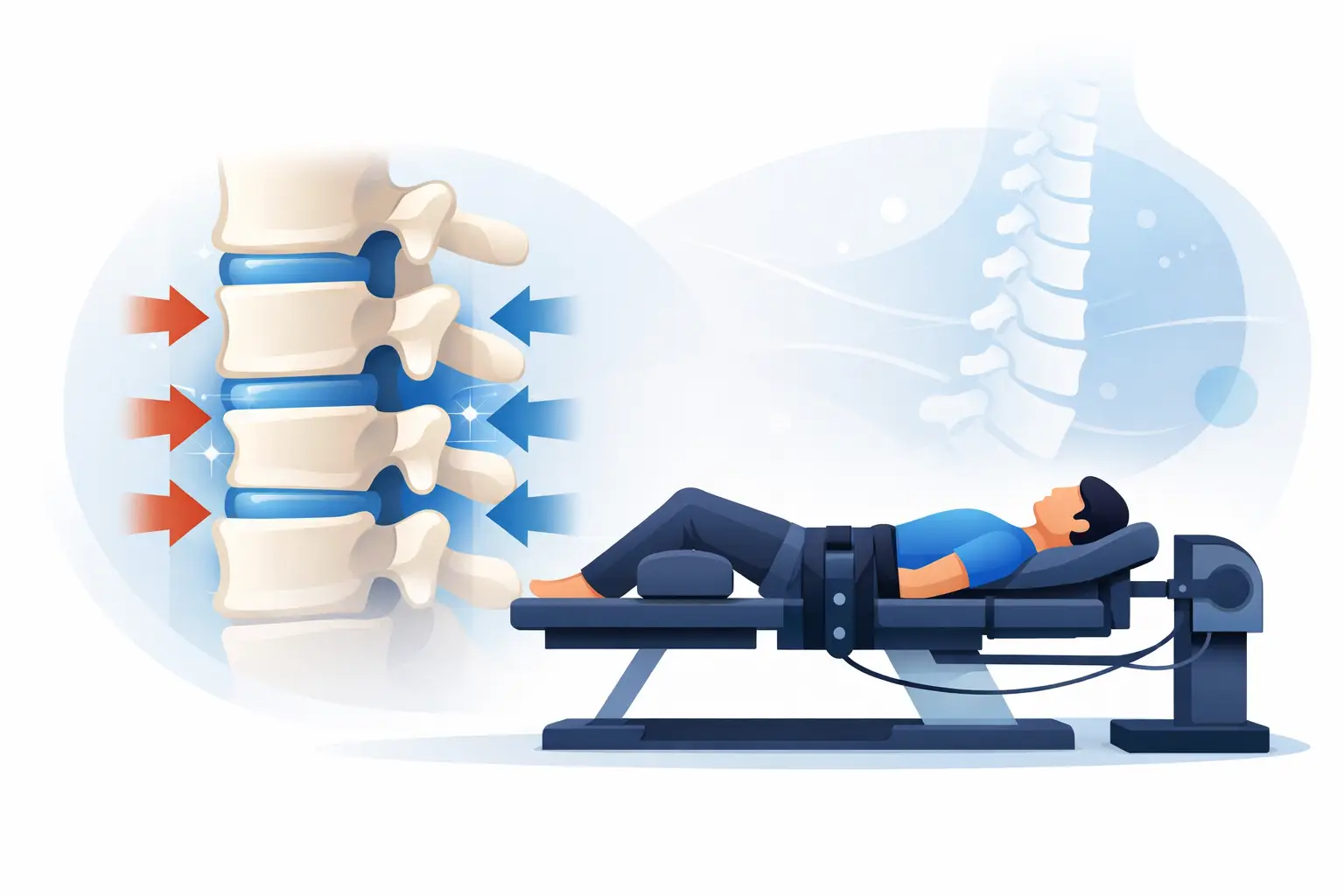
Spinal decompression therapy is a non-surgical treatment designed to gently stretch the spine in a controlled way. The goal is to reduce compression on spinal discs and surrounding structures, especially when pain is linked to disc irritation, nerve pressure, or persistent lower back and neck symptoms. For the right patient, it can become one useful part of a broader recovery plan that may also include physiotherapy, chiropractic care, exercise, and hands-on treatment.
What spinal decompression therapy is meant to do
When a spinal disc is irritated or under too much pressure, nearby tissues can become inflamed and sensitive. Some people feel a dull ache in the low back. Others notice burning, numbness, or pain traveling into the leg or arm. Spinal decompression therapy aims to create a gentle unloading effect across specific areas of the spine, which may reduce stress on discs and joints while giving irritated nerves more room.
That does not mean the therapy “pushes a disc back into place” in a dramatic or instant way. A more accurate expectation is that it may help improve comfort, ease mechanical pressure, and support healing conditions within the spine. The treatment is gradual, measured, and adjusted to the patient rather than forced.
Spinal decompression therapy benefits for pain and function
The most common reason people consider this treatment is pain relief, but the value of care usually goes beyond pain alone. Many patients are equally frustrated by stiffness, difficulty sitting, disturbed sleep, and reduced tolerance for walking or exercise.
Reduced pressure on irritated spinal structures
One of the main spinal decompression therapy benefits is the potential to reduce compressive forces affecting discs, facet joints, and nerve roots. When pressure is lowered, some patients notice less sharp pain with movement, fewer flare-ups after sitting, and a decrease in radiating symptoms such as sciatica.
This can matter most for people whose symptoms are aggravated by loading, bending, prolonged sitting, or repeated strain. If pain is being driven by compression-related mechanics, relieving that pressure may help calm the area down.
Improved mobility and daily tolerance
Pain often creates guarding. Muscles tighten, movement becomes cautious, and over time the back or neck can feel less reliable. As symptoms settle, patients may find they can stand longer, change positions more easily, or return to normal routines with less hesitation.
That functional change is often what makes treatment meaningful. Being able to drive without constant shifting, sleep without waking from pain, or get through a workday with less discomfort can be just as important as a lower pain score.
Support for disc-related recovery
Spinal decompression therapy is commonly discussed for disc bulges, disc herniations, and degenerative disc changes. In these cases, the treatment may help create a more favorable environment for recovery by decreasing mechanical stress and encouraging better movement patterns.
It is not a cure-all for every disc problem. Some disc issues respond well, while others need a different approach depending on severity, duration, and neurologic symptoms. That is why a proper assessment matters before starting care.
A non-surgical option for selected patients
Many people want to explore conservative care before considering injections or surgery. For appropriate cases, spinal decompression offers a non-invasive option that does not rely on medication and does not involve downtime in the way surgical recovery does.
That said, conservative does not mean passive. The best results usually happen when decompression is paired with active rehabilitation, posture correction, mobility work, and strength training to address why the problem developed in the first place.
Who may benefit most from spinal decompression therapy
This treatment is often considered for people with low back pain, neck pain, sciatica, degenerative disc disease, disc bulges, disc herniation, or symptoms linked to nerve compression. It may also be helpful for patients who feel worse with sitting, bending, lifting, or sustained postures.
Office workers, active adults, older adults, and people recovering from strain-related injuries may all be candidates if their symptoms fit the pattern. Some patients come in after trying rest, stretching, or general exercise on their own without enough improvement.
Still, candidacy depends on more than pain location. A clinician will usually look at symptom behavior, neurological signs, medical history, imaging when available, and how the body responds during examination. That screening helps determine whether decompression is likely to help or whether another treatment path makes more sense.
When spinal decompression may not be the right fit
This is one of the most important parts of the conversation. Not all back or neck pain is caused by disc compression, and not every patient should receive this therapy. If pain is primarily driven by instability, fracture, severe osteoporosis, certain post-surgical conditions, infection, tumor, or other red flags, decompression may be inappropriate.
Patients with progressive weakness, changes in bowel or bladder control, or severe unexplained symptoms need prompt medical evaluation rather than routine conservative care. Even in less urgent cases, some people simply respond better to different treatment methods.
An honest clinic should say that clearly. Good care is not about fitting every patient into the same service. It is about choosing the right treatment for the right condition at the right time.
What treatment usually feels like
Most patients are relieved to learn that spinal decompression therapy is typically gentle. During treatment, you are positioned on a specialized table while the equipment applies controlled traction to a targeted area of the spine. Settings are based on your condition, tolerance, and clinical goals.
Many people describe the sensation as a rhythmic stretch and release rather than anything forceful. The session should feel manageable, not intimidating. Some patients notice relief early, while others improve more gradually over a series of visits.
Because response varies, progress is usually tracked through practical markers such as pain intensity, leg or arm symptoms, sitting tolerance, walking tolerance, sleep, and ability to perform daily tasks. Those changes often tell us more than a single symptom rating.
Why decompression works best as part of a broader plan
Even when spinal decompression helps, it rarely tells the whole story. Back and neck problems often involve more than disc pressure alone. Muscle weakness, poor endurance, joint restriction, repetitive strain, old injury patterns, and work or sport demands can all keep symptoms returning.
That is why multidisciplinary care can make a real difference. A patient may benefit from decompression to calm pain, physiotherapy to restore movement and strength, manual therapy to reduce stiffness, and education to improve lifting, workstation setup, or activity pacing. Each part supports the others.
This approach is especially helpful when symptoms have been present for a while or when pain is affecting several parts of life at once. A treatment plan should not stop at short-term relief if the goal is lasting function.
What results to expect from spinal decompression therapy benefits
The best expectations are realistic ones. Some patients experience meaningful reduction in pain and nerve symptoms, better tolerance for sitting and walking, and improved confidence with movement. Others feel partial relief that makes exercise and rehabilitation finally possible. A smaller group may notice little change and need a different strategy.
Results depend on the diagnosis, how long symptoms have been present, the severity of tissue irritation, and whether the patient follows through with the rest of the care plan. Someone with a recent disc flare-up may respond differently than someone with years of recurring pain and significant deconditioning.
This is also why treatment should be reassessed regularly. If the therapy is helping, the plan can continue and evolve. If it is not producing meaningful progress, the approach should change.
Choosing care with confidence
If you are considering spinal decompression therapy, the key question is not whether the treatment sounds promising. It is whether your symptoms, examination findings, and goals make it a sensible match. A careful assessment should always come first.
At a clinic like Panorama Physiotherapy and Chiropractic Clinic, that means looking beyond the surface symptom and building a treatment plan around the person, not just the diagnosis. For some patients, spinal decompression becomes a helpful bridge from pain to movement. For others, a different combination of care will be more effective.
The most useful treatment is the one that helps you return to your life with less pain, better movement, and a clearer plan for staying well.