
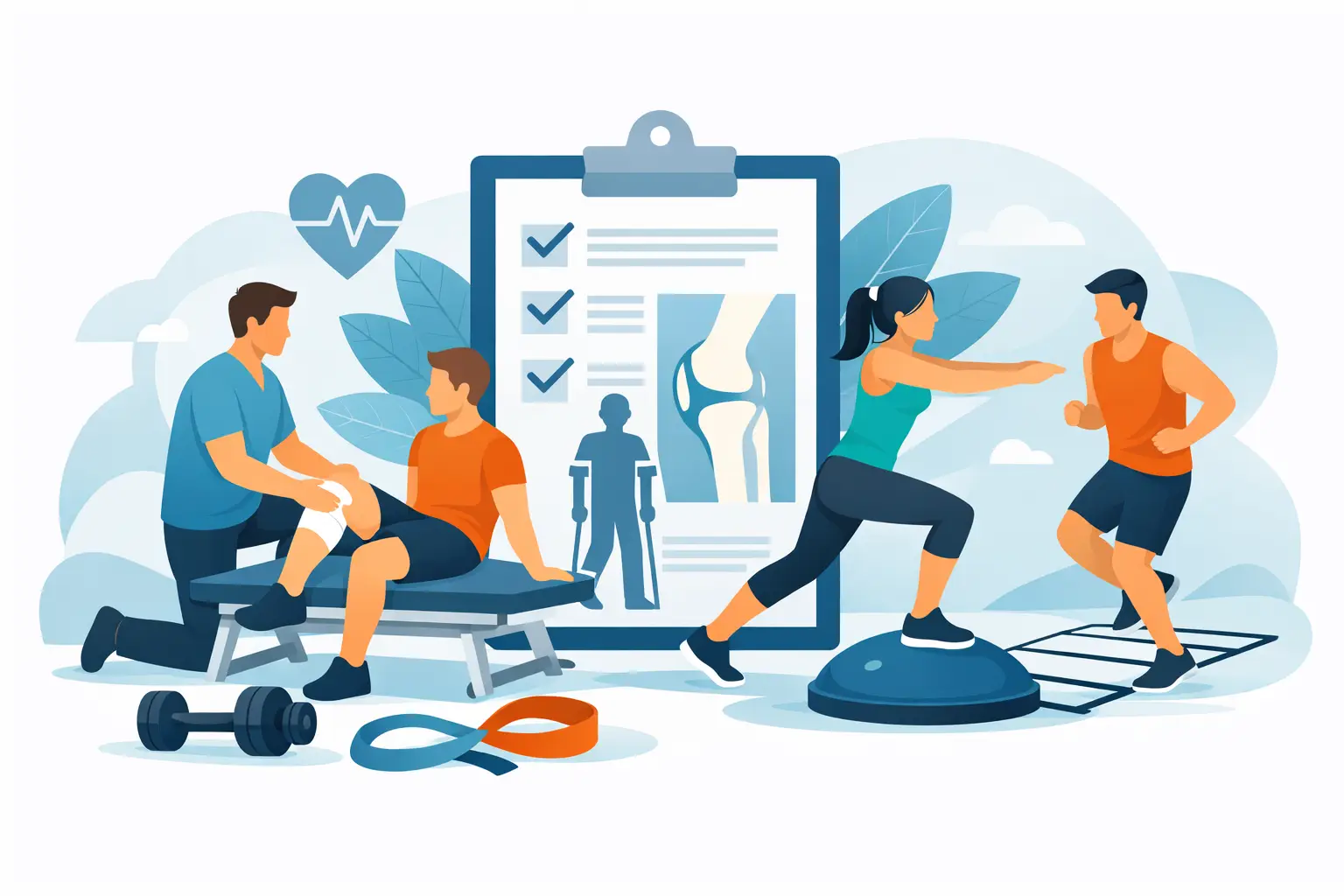
Sports Injury Rehabilitation Program Basics
A twisted knee during soccer, a sore shoulder that never settles after tennis, or an ankle sprain that keeps giving way can change more than your training schedule. The right sports injury rehabilitation program is not just about getting pain down. It is about helping your body heal well, rebuild strength, and return to movement with more confidence and less risk of re-injury.
For many people, the hardest part is knowing what recovery should actually look like. Rest has a place, but rest alone rarely solves the full problem. Once pain starts to ease, the injured area often still lacks mobility, stability, strength, or coordination. If those gaps are missed, it becomes much easier for the same issue to come back when activity picks up again.
What a sports injury rehabilitation program should do
A good sports injury rehabilitation program has a clear purpose at every stage of recovery. Early on, the focus is usually pain control, swelling management, and protecting the injured tissue while keeping the rest of the body moving as normally as possible. Later, treatment shifts toward restoring joint motion, rebuilding muscle capacity, improving balance, and preparing you for the demands of your sport or daily activities.
That progression matters. A runner recovering from Achilles pain does not need the same plan as a hockey player with a shoulder injury or a teen athlete coming back from an ACL sprain. Even when two people have the same diagnosis, age, training history, pain levels, and movement habits can change the treatment approach.
The strongest programs are individualized rather than generic. They also look beyond the painful area. A knee problem may involve hip weakness, poor landing mechanics, or limited ankle mobility. A shoulder injury may be linked to posture, thoracic stiffness, or training volume. Treating root causes often makes the difference between short-term improvement and lasting recovery.
Why rest alone usually is not enough
When you are hurt, taking time off often feels like the safest option. In the early phase, reducing aggravating activity is often necessary. But too much rest for too long can create new problems. Muscles weaken, joints stiffen, and movement confidence drops. In some cases, the body becomes more sensitive because the injured area is no longer being loaded in a gradual, controlled way.
This is why guided rehabilitation matters. The goal is not to push through pain blindly. It is to introduce the right amount of movement at the right time. That may mean gentle range-of-motion work at first, then progressive strengthening, then more dynamic drills that mimic sport-specific demands.
There is always some nuance here. A fracture, concussion, or acute ligament tear may require a more protective timeline than a mild muscle strain or overuse injury. The details depend on the diagnosis and the stage of healing. What stays consistent is the need for a plan that evolves rather than stopping at symptom relief.
The main phases of rehabilitation
Most sports injury rehab follows a progression, even if the timing varies from person to person. The first phase is about settling irritation. That can include hands-on treatment, activity modification, gentle mobility work, and education on what movements to avoid or continue.
The next phase usually focuses on restoring movement quality and building foundational strength. This is where many people start to feel better, but feeling better is not the same as being ready. Pain may drop before tissues are truly prepared for running, jumping, cutting, lifting, or contact.
The final phase is where performance-style rehab becomes essential. This may include single-leg stability work, plyometrics, change-of-direction drills, reaction training, or sport-specific loading. If this stage is skipped, the return to activity can be premature.
Early rehab: calm things down without shutting everything down
In the beginning, treatment often aims to reduce pain and irritation while maintaining as much safe movement as possible. Depending on the injury, this may include manual therapy, mobility exercises, soft tissue treatment, taping, or targeted modifications to your daily routine.
This phase should also answer basic but important questions. What can you still do safely? What signs suggest you are doing too much? What level of discomfort is acceptable during recovery? Clear guidance helps reduce fear and keeps patients engaged in the process.
Mid-stage rehab: rebuild capacity
Once symptoms become more manageable, the focus should shift. Strength, control, and endurance need to come back gradually. That often includes resisted exercises, balance work, core training, and movement retraining based on your injury pattern.
This stage is where individual programming becomes especially valuable. Someone returning to recreational pickleball has different demands than a competitive skater or a laborer who also wants to get back to the gym. The rehab plan should reflect those goals rather than forcing everyone into the same exercise sheet.
Late-stage rehab: prepare for real movement
This phase bridges the gap between the clinic and real life. If your sport involves sprinting, pivoting, overhead movements, or explosive power, your rehab should eventually include those elements in a controlled way.
This does not always mean hard training right away. It means testing how the body tolerates more advanced movement and progressing with purpose. In many cases, return-to-sport decisions should be based on strength, function, confidence, and tolerance to load, not just the calendar.
What treatments may be part of the program
Rehabilitation is rarely one single technique. A well-rounded plan may combine exercise therapy with hands-on care and other supportive treatments when appropriate. Physiotherapy often forms the foundation because it addresses movement, function, and progressive loading. Chiropractic care may also be helpful in certain cases, especially when joint mechanics and mobility restrictions are contributing to symptoms.
Depending on the patient and condition, complementary treatments such as manual therapy, acupuncture, functional dry needling, cupping, or soft tissue techniques may be included to reduce pain, improve mobility, and support participation in exercise. These tools can be useful, but they work best when they support an active rehab plan rather than replacing it.
That balance matters. Passive treatment may help you feel better in the short term, but strength, stability, and movement confidence usually improve through guided exercise and progression.
How progress is measured in a sports injury rehabilitation program
Good rehab should not feel random. Progress can be tracked through pain levels, swelling, range of motion, strength, balance, walking or running tolerance, and the ability to perform sport-specific tasks.
Sometimes improvement is straightforward. You move better, hurt less, and can do more each week. Other times recovery is uneven. A shoulder may gain strength before overhead tolerance improves. An ankle may feel fine walking but still struggle with cutting or landing. These are normal parts of rehab, and they are exactly why reassessment matters.
A treatment plan should be adjusted as your body changes. If progress stalls, the issue may be exercise dosage, technique, workload outside the clinic, or an overlooked contributing factor. Honest reassessment keeps care focused and efficient.
When to seek professional help
Not every sports injury needs extensive treatment, but some signs should not be ignored. Pain that lingers, repeated swelling, joint instability, reduced range of motion, weakness, dizziness after impact, or symptoms that return every time you resume activity all deserve proper assessment.
Early treatment can often shorten recovery and prevent compensation patterns from setting in. It can also reduce the frustration of guessing. Many patients wait until pain becomes chronic or performance drops significantly. By that point, recovery is still possible, but it may take more work than if the problem had been addressed earlier.
For active individuals and families in Calgary, access to a multidisciplinary clinic can be especially helpful when an injury is affecting more than one area or when recovery needs to move from pain relief to full function. Coordinated care under one roof can make the process simpler and more consistent.
What patients should expect from quality care
You should expect a thorough assessment, a clear explanation of what is going on, and a plan that fits your goals. You should also expect honesty. Some injuries improve quickly. Others take time, patience, and steady progression. A credible provider will explain both the opportunities and the limits of treatment.
At Panorama Physiotherapy and Chiropractic Clinic, that patient-centered approach matters because sports injuries are rarely one-size-fits-all. The best outcomes come from understanding how the injury happened, what your body needs now, and what level of recovery you want to return to.
If you are dealing with a sports injury, the most helpful next step is often not doing more or doing less on your own. It is getting the right plan, at the right time, so recovery moves forward with purpose.