
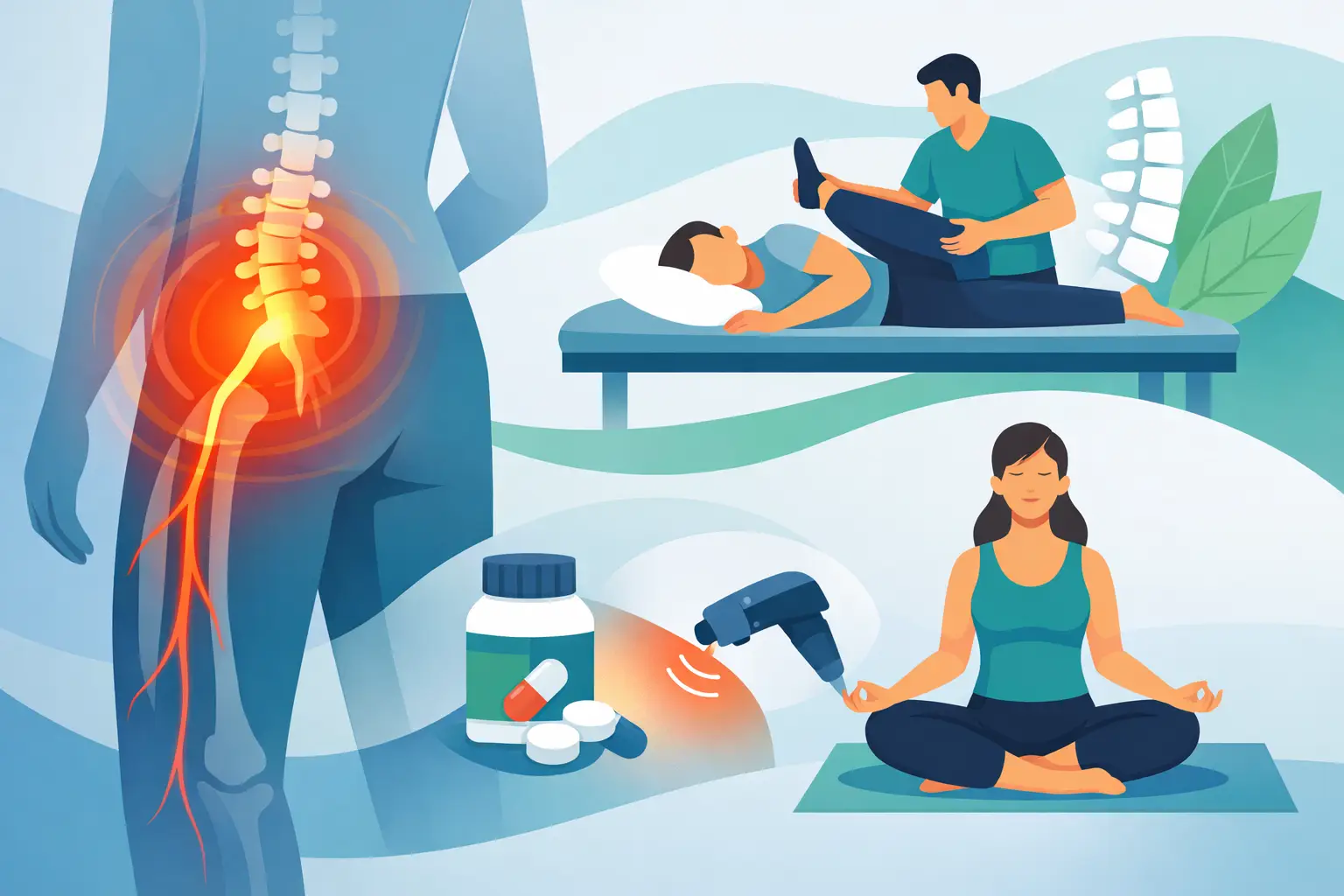
Best Non Surgical Sciatica Treatments That Work
Sciatica can make ordinary moments feel surprisingly difficult: getting out of the car, standing at the kitchen counter, climbing stairs, or finding a comfortable position in bed. The best non surgical sciatica treatments are not one-size-fits-all solutions. They begin by identifying what is irritating the nerve and then building a plan that reduces pain while helping you move with more confidence.
For many people, sciatica improves without surgery. The right approach depends on your symptoms, how long they have been present, your daily demands, and whether a disc issue, joint dysfunction, muscle tightness, spinal narrowing, or another condition is contributing to nerve irritation.
What Sciatica Actually Feels Like
Sciatica is a pattern of symptoms caused by irritation or compression of the sciatic nerve or one of the nerve roots that forms it in the lower back. Pain may begin in the low back or buttock and travel down one leg. Some people feel burning, tingling, numbness, cramping, or an electric-shock sensation. Others mainly notice weakness, stiffness, or a leg that feels unreliable during walking.
A herniated or bulging disc is a common cause, especially when symptoms start after bending, lifting, or prolonged sitting. Arthritis-related changes, spinal stenosis, muscular tension around the hip, and movement patterns that repeatedly load the back can also play a role. Because several conditions can create similar symptoms, an in-person assessment is more useful than guessing based on pain location alone.
Best Non Surgical Sciatica Treatments: Start With Assessment
The most effective treatment plan starts with a thorough evaluation of your movement, strength, sensation, reflexes, posture, and symptoms. Your provider will consider what makes pain better or worse, whether it reaches below the knee, and whether certain positions centralize the pain back toward the low back.
This assessment matters because the right exercise for one person may aggravate another. Someone whose symptoms worsen with sitting and bending may need a different approach from someone whose pain increases with standing or walking. A personalized plan helps avoid the cycle of resting too much, trying random exercises, flaring symptoms, and losing confidence in movement.
Stay Gently Active Instead of Resting for Days
During a painful flare, it is reasonable to modify activities that sharply worsen symptoms. However, extended bed rest can increase stiffness, reduce conditioning, and make returning to normal movement harder. Short, frequent walks and gentle position changes are often more helpful than trying to push through a long workout or staying completely still.
The goal is not to ignore pain. It is to find a tolerable level of movement that keeps your body active without repeatedly provoking the nerve. A physiotherapist can help you identify your current limits and progress activity safely.
Targeted Physiotherapy and Exercise
Physiotherapy is often central to non-surgical sciatica care because it addresses both symptoms and the movement habits that may be contributing to them. Treatment may include specific exercises to improve spinal motion, core control, hip strength, flexibility, and walking tolerance.
For some patients, extension-based movements help reduce leg symptoms. For others, flexion-based exercises, hip mobility work, or graded strengthening are more appropriate. Nerve gliding exercises may also be used to improve the nerve’s ability to move through surrounding tissues without excessive sensitivity. These should be prescribed carefully, since aggressive stretching can worsen an irritated nerve.
A good rehabilitation plan progresses beyond temporary relief. It prepares you for the activities that matter to you, whether that is lifting at work, returning to the gym, playing with children, driving comfortably, or walking through your neighborhood without planning every rest stop.
Manual Therapy for Pain and Mobility
Hands-on treatment can be useful when joint stiffness, muscle guarding, or restricted movement is contributing to your pain. Depending on the assessment, a practitioner may use manual therapy techniques to improve mobility in the low back, pelvis, or hips and reduce protective muscle tension.
Manual therapy is most valuable when paired with active rehabilitation. It may make movement and exercise more comfortable, but lasting results usually require building strength, control, and confidence outside the treatment room as well.
Chiropractic Care When It Fits Your Condition
Chiropractic care can be part of a conservative sciatica treatment plan for appropriately selected patients. Gentle spinal mobilization or manipulation may help improve motion and reduce mechanical pain for some people, particularly when joint restriction is present.
It is not the right choice for every cause of leg pain, and it should follow a careful assessment. A licensed provider should explain the expected benefits, alternatives, and any reasons to use a different approach. In a multidisciplinary clinic, physiotherapy and chiropractic care can be coordinated rather than treated as separate, competing options.
Acupuncture, Dry Needling, and Other Symptom-Relief Options
Acupuncture or functional dry needling may help some people manage muscular pain, tension, and sensitivity surrounding a sciatica episode. These treatments are generally used as supportive tools, not replacements for an active recovery plan. They can be especially useful when pain is preventing sleep, walking, or participation in rehabilitation exercises.
Other modalities, such as heat, cold, soft-tissue techniques, or cold laser therapy, may provide short-term comfort for selected patients. Relief can be meaningful, but it is wise to view passive treatments as a bridge to better movement rather than the whole solution.
Spinal Decompression: A Treatment With Context
Non-surgical spinal decompression may be considered for certain people with disc-related symptoms or persistent low back pain. The goal is to apply controlled traction to the spine, potentially easing pressure and allowing more comfortable movement.
Results vary, and decompression is not necessary for every person with sciatica. It tends to make the most sense when an assessment suggests it may complement exercise-based care and when progress is measured over time. If a treatment is not improving your function or symptoms after a reasonable trial, the plan should be reassessed.
Medications and Injections May Have a Role
Your primary care provider may recommend medications to help manage acute pain or inflammation, depending on your health history. These can sometimes make it easier to sleep and begin moving again, but they do not correct the underlying factors driving the condition. Medication decisions should account for possible side effects and interactions.
For severe or persistent symptoms, a physician may discuss an epidural steroid injection. Injections are still non-surgical, but they are more invasive than rehabilitation-based care. They may reduce inflammation and provide temporary relief for some patients, particularly when pain is limiting participation in therapy. The benefit is often greatest when that relief is used to resume gradual, guided activity.
When Sciatica Needs Urgent Medical Attention
Most sciatica does not require emergency care, but certain symptoms should never be managed with home exercises alone. Seek urgent medical attention if you have new loss of bladder or bowel control, numbness in the groin or inner thighs, rapidly worsening leg weakness, fever with significant back pain, or symptoms following major trauma.
You should also arrange a medical evaluation if pain is severe and unrelenting, symptoms are steadily worsening, or you have a history of cancer, unexplained weight loss, or other significant health concerns. These signs do not automatically mean a serious problem is present, but they deserve timely evaluation.
Building a Plan That Supports Lasting Recovery
The right treatment plan should have clear goals. Early on, that may mean sleeping more comfortably, reducing pain down the leg, or walking for ten minutes without a flare. As symptoms settle, goals can shift toward returning to work duties, sports, household tasks, and the strength needed to prevent repeated episodes.
At Panorama Physiotherapy and Chiropractic Clinic, care can be coordinated across physiotherapy, chiropractic treatment, manual therapy, acupuncture, and rehabilitation services when clinically appropriate. That allows the plan to change as your symptoms and function improve, rather than relying on a single technique for every stage of recovery.
If leg pain is changing how you work, sleep, or move, the most helpful next step is a professional assessment. With an accurate diagnosis, steady progression, and care matched to your body, sciatica does not have to keep setting the terms of your day.