
Can Chiropractic Help Jaw Pain? What to Know
Jaw pain can make ordinary moments feel exhausting. Chewing, speaking, yawning, or waking up after a restless night can trigger discomfort in the jaw, temple, ear, neck, or face. If you are asking, “can chiropractic help jaw pain?” the answer is that it may help when muscle tension, joint movement restrictions, posture, or neck involvement are contributing to your symptoms. The right approach starts with a careful assessment, not a one-size-fits-all adjustment.
Why Jaw Pain Is Not Always Just a Jaw Problem
The temporomandibular joints, often called the TMJ, connect your lower jaw to your skull. They work alongside the muscles of your face, head, and neck every time you eat, talk, or swallow. Because these areas are closely connected, jaw pain may be influenced by more than the joint itself.
Common symptoms of TMJ dysfunction can include clicking or popping, jaw stiffness, pain with chewing, headaches, facial tenderness, ear discomfort, limited opening, or a feeling that the jaw catches or locks. Some people also notice neck pain, shoulder tension, or symptoms that become worse during stressful periods.
Clenching and grinding, especially during sleep, are frequent drivers of jaw-muscle overload. So are prolonged forward-head posture, previous dental work, arthritis, trauma, and habits such as chewing gum frequently or resting your chin in your hand. After a motor vehicle accident, the neck and jaw can both be affected, even if jaw symptoms do not appear immediately.
A thorough evaluation helps separate jaw symptoms related to muscles and movement from conditions that need a different type of care. Tooth infection, gum disease, sinus concerns, neuralgia, inflammatory disease, and certain ear conditions can all create pain around the jaw. That is why an honest provider will not assume every case is TMJ dysfunction.
Can Chiropractic Help Jaw Pain Caused by TMJ Dysfunction?
For some patients, chiropractic care can be a useful part of a conservative TMJ treatment plan. The goal is not simply to treat where pain is felt. It is to identify movement and loading patterns that may be keeping the jaw, neck, and surrounding muscles irritated.
A chiropractor may assess how your jaw opens and closes, whether it deviates to one side, and which muscles are tender or overactive. They may also evaluate the cervical spine, upper back, shoulders, and posture. Restricted neck movement, persistent muscle guarding, and poor control of the shoulder and upper-back region can increase strain through the head and jaw area.
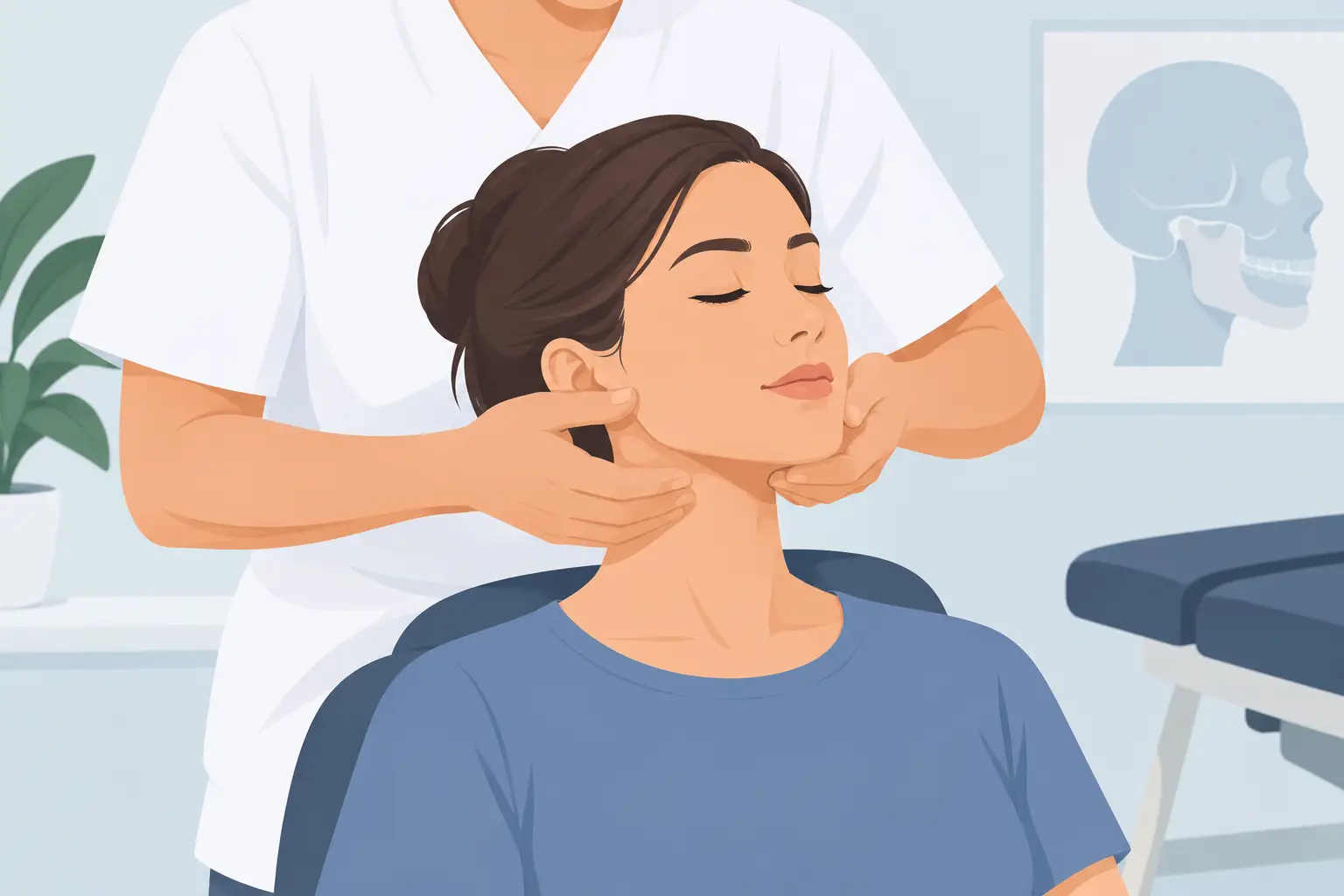
Treatment may include gentle manual therapy to the neck, upper back, jaw-related muscles, and surrounding soft tissues. Depending on your presentation, a practitioner may use joint mobilization, muscle release techniques, or carefully selected chiropractic adjustments to improve mobility and reduce muscular tension. Care should be comfortable, specific to your condition, and adjusted if it aggravates symptoms.
Research on manual therapy for TMJ-related pain suggests that it can improve pain and jaw function for some people, particularly when combined with exercises and education. Results vary because jaw pain has many causes. Someone whose main issue is muscle tension and limited neck mobility may respond differently than someone with significant joint degeneration, a disc problem, or severe nighttime grinding.
Treatment Should Include More Than Hands-On Care
Lasting improvement usually requires more than passive treatment. Hands-on care can help calm pain and restore movement, but your daily habits, muscle control, sleep patterns, and stress response also affect recovery.
Your individualized plan may include guided jaw exercises to improve controlled opening and closing without overloading the joint. Gentle neck and upper-back exercises can improve support and posture, while relaxation strategies may help reduce daytime clenching. If you catch yourself holding your teeth together while concentrating, try a simple reset: keep your lips together, allow your teeth to stay slightly apart, and let your tongue rest softly against the roof of your mouth.
Heat can ease muscular soreness for some patients, while others benefit from short-term cold after an irritated flare-up. Softer foods and smaller bites may reduce discomfort temporarily when chewing is painful. These strategies are not meant to replace an assessment, but they can make the early phase of recovery more manageable.
If bruxism, or nighttime grinding, is suspected, referral to a dentist may be appropriate. A dental professional can assess your bite, teeth, and need for a custom night guard. Chiropractic and physiotherapy care can work alongside dental treatment rather than competing with it.
What a TMJ Assessment Should Look Like
A quality assessment is detailed because jaw pain can be complex. Your provider should ask when symptoms began, what makes them worse, whether you have had trauma, and how the pain affects eating, sleep, work, and exercise. They should also ask about headaches, neck symptoms, stress, grinding, prior dental procedures, and any episodes of locking.
The physical examination may look at jaw range of motion, muscle tenderness, joint sounds, bite-related movement, neck mobility, and posture. Your practitioner should explain what they find in plain language and outline realistic next steps. Some people improve within several visits, while persistent or chronic symptoms may need a longer plan and coordination with a dentist, physician, or other specialist.
At Panorama Physiotherapy and Chiropractic Clinic, care can be coordinated across chiropractic, physiotherapy, manual therapy, acupuncture, and other appropriate services when a broader rehabilitation plan is needed. This multidisciplinary approach is especially valuable when jaw pain occurs with headaches, neck pain, sports injuries, or recovery after an accident.
When Chiropractic Care May Not Be the First Step
Chiropractic care is not the right first response for every kind of jaw pain. Seek prompt dental or medical evaluation if you have facial swelling, fever, a suspected tooth infection, severe pain after an injury, unexplained numbness or weakness, trouble swallowing, or a jaw that is locked open or closed. Sudden chest pressure, shortness of breath, sweating, nausea, or pain that spreads to the jaw can also be a medical emergency.
You should also speak with a dentist or physician if your symptoms are worsening quickly, you have a significant change in your bite, or pain persists without a clear musculoskeletal explanation. Appropriate referrals are part of patient-centered care. Treating the correct cause matters more than fitting every symptom into one treatment category.
Getting Better Results From Your Care Plan
Small changes between appointments can protect the progress you make in treatment. Avoid testing the jaw repeatedly by opening wide or forcing it to pop. Limit gum, chewy foods, and long periods of wide opening when symptoms are active. Pay attention to prolonged phone use, desk work, and driving positions that pull your head forward.
It can also help to track what precedes flare-ups. Is pain worse after a stressful workday, after poor sleep, after long conversations, or after eating certain foods? Those patterns give your practitioner useful information and help shape a plan that fits your real life.
Jaw pain deserves a thoughtful approach because it can affect comfort, nutrition, sleep, and confidence. With the right assessment and a personalized combination of manual care, exercise, and coordinated support, many people can move toward easier, more comfortable daily function.