
Rehab After Ankle Sprain for a Safer Return
A swollen ankle can make a simple walk to the kitchen feel uncertain. Yet pain and swelling are only part of the picture. Rehab after ankle sprain helps restore the strength, joint control, and confidence that protect your ankle when you step off a curb, return to work, or get back to sport.
Many people assume an ankle sprain is healed once they can walk without a limp. That milestone matters, but it does not always mean the ligaments, muscles, and balance systems are ready for sudden movement. Stopping recovery too early can leave the ankle vulnerable to repeated sprains, ongoing stiffness, or a feeling that it may give way.
Why ankle sprains need more than rest
An ankle sprain occurs when the ligaments that support the joint are stretched or torn. The most common type happens when the foot rolls inward, stressing the ligaments on the outside of the ankle. Symptoms can range from mild tenderness to significant bruising, swelling, and difficulty bearing weight.
In the first few days, relative rest and protection can be appropriate. But complete inactivity for too long may increase stiffness and slow the return of normal movement. The right progression depends on the severity of the injury, your activity level, and whether there are associated injuries to the bone, cartilage, tendons, or higher ankle ligaments.
A personalized assessment helps distinguish a routine sprain from a problem that needs further investigation. A physiotherapist can assess swelling, range of motion, walking mechanics, strength, balance, and the specific movements that cause symptoms. This creates a recovery plan based on how your ankle is functioning, not just how it looks.
The stages of rehab after ankle sprain
Recovery is rarely a straight line. Some people improve quickly but still need balance training before returning to running or court sports. Others have a more significant injury and need a slower approach. The goal is to challenge the ankle enough to build capacity without repeatedly aggravating it.
Early phase: Protect the injury and restore motion
Early treatment focuses on reducing pain and swelling while keeping the ankle moving within a comfortable range. Your provider may recommend activity modifications, compression, elevation, or supportive footwear or bracing when appropriate. The aim is not to force movement through sharp pain. It is to prevent the ankle from becoming unnecessarily stiff while allowing injured tissue to settle.
Gentle ankle movements, such as pointing and flexing the foot or tracing the alphabet with the toes, may be introduced when tolerated. Walking can often resume in a gradual, supported way, with attention to avoiding a pronounced limp. If you cannot bear weight, have severe swelling, or have pain directly over a bone, an assessment is especially important.
Middle phase: Build strength and regain control
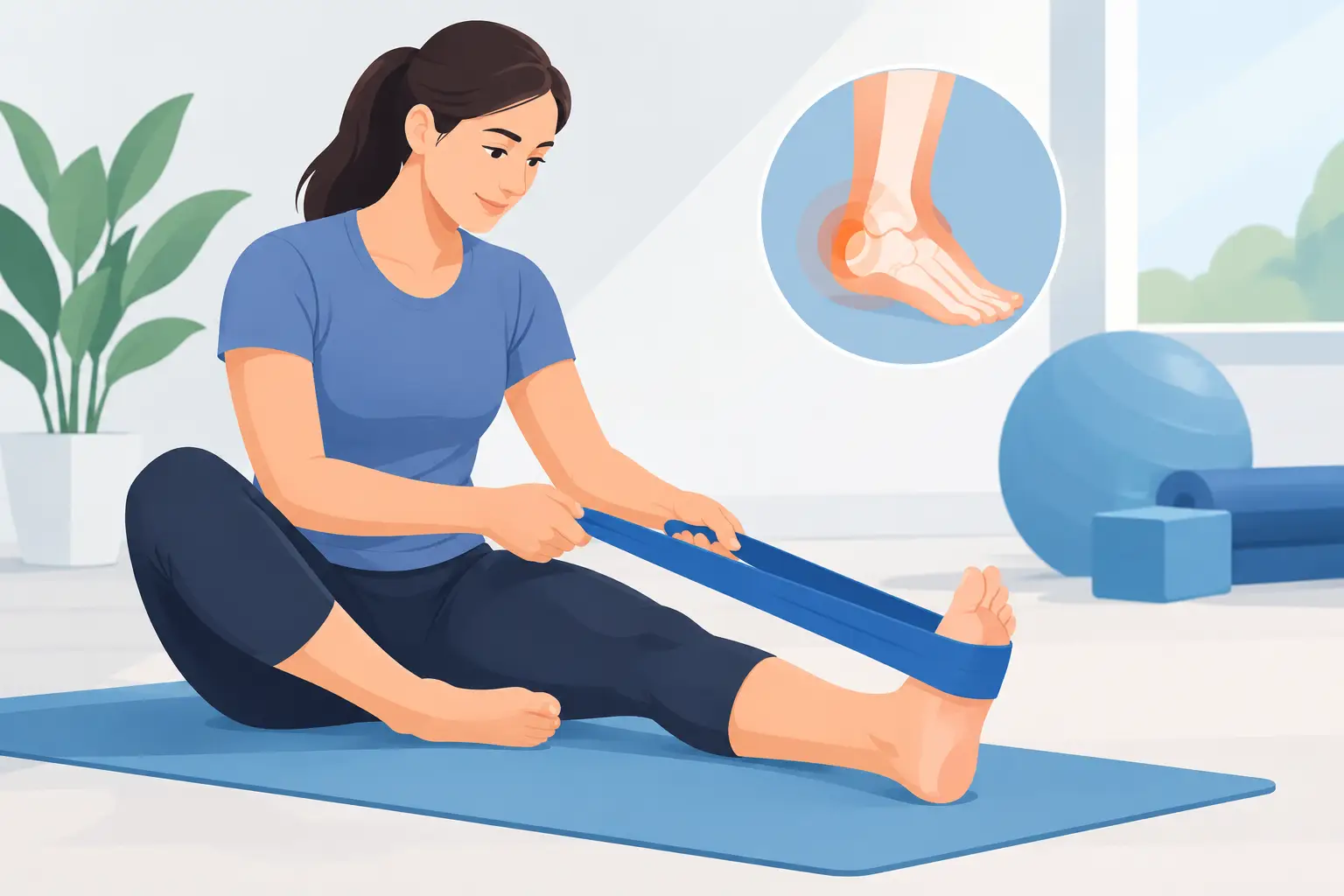
As swelling and pain improve, rehabilitation shifts toward strength. The muscles around the ankle and lower leg help control the foot during walking, stairs, uneven ground, and directional changes. After a sprain, these muscles may be weak or slow to respond even when daily activities feel manageable.
A treatment plan may include resisted ankle movements, calf raises, controlled step-ups, and exercises for the hips and core. Hip strength matters because the position of the knee and hip affects how force travels through the leg and into the ankle. For someone returning to a physically demanding job or recreational sport, these exercises may progress from slow, controlled movements to more functional tasks.
Manual therapy may also be used when joint stiffness is limiting movement. Hands-on treatment is not a replacement for exercise, but it can support comfort and mobility so you can move more normally and participate in rehabilitation effectively.
Late phase: Retrain balance and prepare for real life
An ankle sprain can affect proprioception, the body’s ability to sense joint position and react quickly to changes in surface or direction. This is one reason an ankle may feel unstable long after the initial pain improves.
Balance work is a central part of recovery. It may begin with standing on one leg near a stable support, then progress to unstable surfaces, reaching tasks, or movement-based drills. For athletes, rehabilitation should eventually include sport-specific demands such as hopping, landing, accelerating, stopping, and changing direction. For an injured worker, it may involve stairs, carrying, kneeling, or walking safely on uneven surfaces.
A return to running, sport, or high-demand work should be based on more than the calendar. Your ankle should have near-normal movement, minimal swelling, good strength, and the ability to complete relevant tasks without pain, limping, or a sense of instability. In some cases, temporary bracing or taping can offer added support during the transition, but it should complement strengthening and balance training rather than replace them.
Common mistakes that delay ankle sprain recovery
The most common setback is returning to activity because the ankle feels “good enough.” A pain-free walk is different from a safe landing after a jump or a quick pivot on a soccer field. If the ankle has not regained strength and reaction time, it may roll again under a higher load.
Another mistake is avoiding movement entirely. While a serious injury needs proper protection, prolonged rest can create stiffness and weakness. The better approach is guided, symptom-aware movement that progresses as your tolerance improves.
It is also easy to focus only on the ankle. Foot mechanics, calf flexibility, hip strength, footwear, and the demands of your work or sport can all influence recovery. A meaningful rehabilitation plan considers these contributing factors and addresses the reason the injury happened when possible.
When to seek professional care
Some ankle injuries need prompt medical attention. Seek an assessment if you cannot take several steps after the injury, have severe or worsening swelling, numbness, visible deformity, or pain directly over the ankle or foot bones. These signs can indicate a fracture or another injury that requires imaging or medical management.
Professional rehabilitation is also worthwhile if your ankle still feels weak, stiff, or unstable after the initial symptoms settle. Recurrent sprains, persistent swelling, catching or locking in the joint, and pain that does not improve are not problems to simply work around. They may point to incomplete recovery or an injury beyond a straightforward ligament sprain.
At Panorama Physiotherapy and Chiropractic Clinic, care begins with understanding what your ankle needs and what you need to return to. Whether that means walking comfortably through your neighborhood, standing through a work shift, or getting back to the sport you enjoy, treatment can be adapted to your goals, symptoms, and stage of healing.
Make your return gradual, not hesitant
A successful recovery does not require waiting until you feel afraid to move. It requires building trust in your ankle through the right sequence of movement, strength, balance, and functional practice. Pay attention to how the ankle responds later that day and the following morning, not only during exercise. Mild muscle fatigue can be expected as you rebuild capacity; increased swelling, sharp pain, or a return of limping means the activity may need to be adjusted.
If you are unsure whether your ankle is ready for the next step, a physiotherapy assessment can provide a clear starting point and a practical plan. The goal is not just to recover from this sprain, but to move forward with greater stability and confidence.