
Guide to Pediatric Physiotherapy Care for Kids
Children are meant to move, explore, climb, run, and learn through play. When pain, weakness, balance challenges, delayed motor skills, or an injury makes those everyday activities harder, a guide to pediatric physiotherapy care can help parents understand what comes next. Pediatric physiotherapy is not about pushing a child through adult-style exercises. It is individualized care that supports safer movement, growing confidence, and meaningful progress at a pace that fits the child.
At Panorama Physiotherapy and Chiropractic Clinic, care begins by listening to both the child and their family. The goal is to identify what is limiting function, build a practical treatment plan, and help children return to the activities that matter to them.
When Pediatric Physiotherapy May Help
A child does not need to be in severe pain to benefit from a physiotherapy assessment. Parents often seek care after a sports injury, a fall, a fracture, or a motor vehicle accident. Others are concerned because their child is tripping frequently, avoiding physical activity, having trouble with stairs, or not meeting expected movement milestones.
Pediatric physiotherapy may help children who are managing muscle or joint pain, posture concerns, growing pains that affect activity, coordination difficulties, weakness, reduced flexibility, balance concerns, or recovery after an orthopedic injury. It can also be part of care for children with developmental, neurological, or congenital conditions when movement, mobility, and independence need extra support.
The right time to book an assessment depends on the concern. A mild soreness after a new sport may settle with rest and gradual activity changes. Pain that persists, returns repeatedly, causes limping, interrupts sleep, or changes how a child plays deserves professional attention. After a significant injury, a physician or urgent care provider should assess the child first when needed, especially if there is severe pain, a visible deformity, inability to bear weight, numbness, or worsening symptoms.
What Happens at a Child’s First Visit
The first visit is designed to be calm, clear, and family-centered. A physiotherapist will ask about your child’s symptoms, health history, daily routines, favorite activities, school demands, sports, and goals. Parents know their children best, so observations such as “they stop playing after ten minutes” or “they avoid using one arm” are useful clinical information.
The physical assessment may include watching how a child walks, runs, squats, reaches, balances, gets on and off the floor, or performs an activity that brings on symptoms. The physiotherapist may assess joint movement, muscle strength, flexibility, coordination, and posture. For younger children, this is often incorporated into play and simple movement tasks rather than formal testing.
Children respond differently to a new clinic environment. Some are ready to engage right away, while others need time to observe and warm up. That is normal. A skilled pediatric approach adjusts to the child’s age, comfort level, communication style, and attention span without losing sight of the clinical purpose of the assessment.
By the end of the visit, families should understand the working diagnosis or movement concern, the recommended plan, and what progress may reasonably look like. Physiotherapy cannot promise a fixed timeline because healing and development vary. However, clear goals make care easier to follow and allow the treatment plan to change when needed.
A Guide to Pediatric Physiotherapy Care Plans
A pediatric care plan should connect directly to real life. For one child, success may mean returning to soccer without knee pain. For another, it may mean climbing stairs more confidently, keeping up at recess, improving handwriting posture, or moving from the floor to standing with less help.
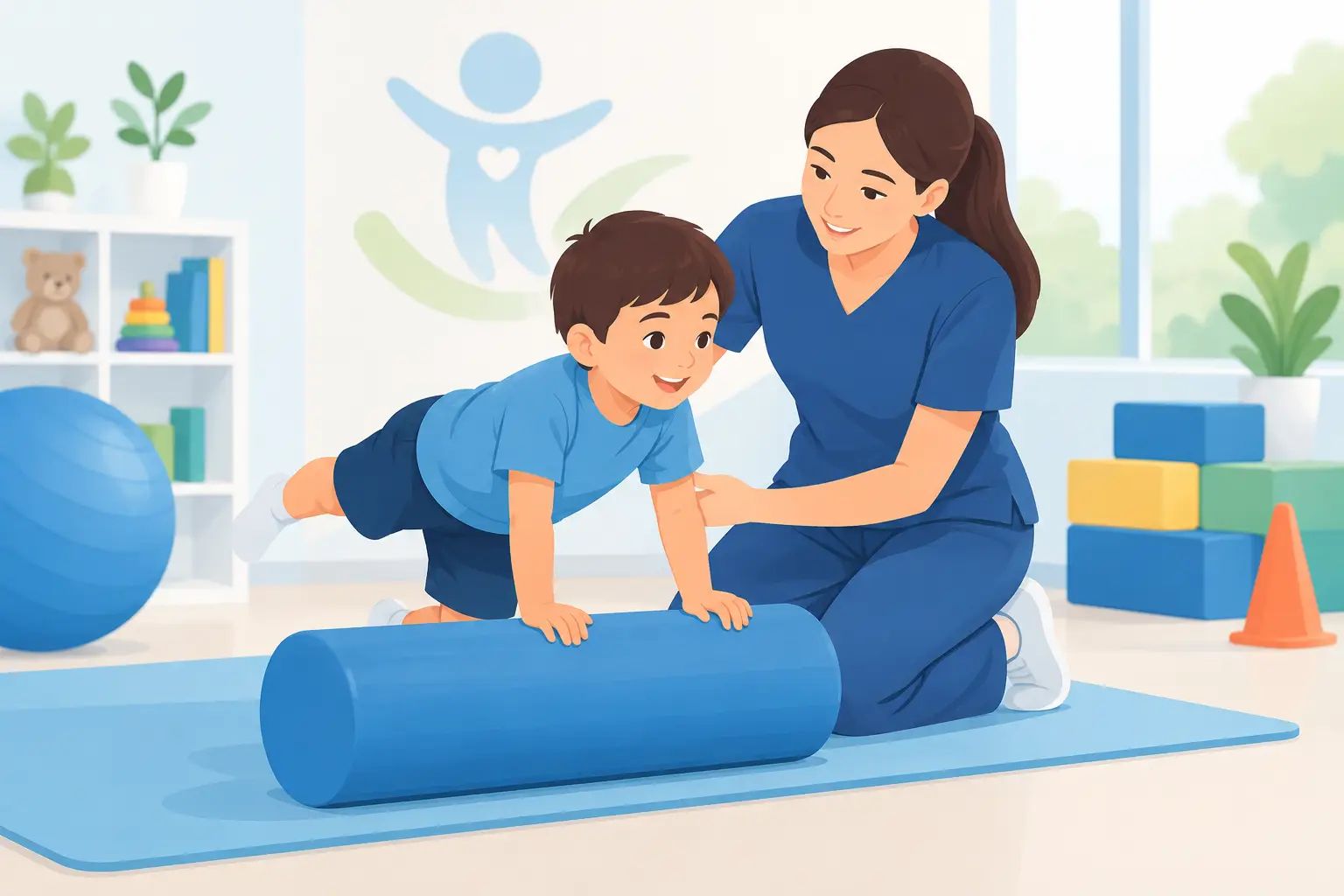
Treatment can include guided therapeutic exercise, balance and coordination activities, mobility work, manual therapy when appropriate, education for parents, and a home program. Play is often an effective part of the process. Throwing, stepping over obstacles, animal walks, games, and age-appropriate challenges can build strength and movement skills while keeping a child engaged.
Hands-on treatment may be recommended for certain musculoskeletal concerns, but it should never be the entire plan. Lasting improvement usually requires active participation – practicing a new movement pattern, building tolerance, and gradually returning to activity. The balance between hands-on care and exercise depends on the child’s diagnosis, age, symptoms, and goals.
For sports injuries, rehabilitation often progresses through stages. Early visits may focus on pain management, restoring comfortable movement, and protecting the injured area. As symptoms improve, the emphasis shifts to strength, jumping, running, agility, and sport-specific skills. Returning too soon can raise the risk of reinjury, but keeping a child out of all activity for longer than necessary can also reduce confidence and conditioning. A physiotherapist can help families find the appropriate middle ground.
How Parents Can Support Progress at Home
The home program should be realistic. A plan that requires 30 minutes of focused exercise every night may not suit a busy family or a young child. Short, consistent practice is often more effective than occasional long sessions. Your physiotherapist can suggest ways to blend exercises into routines, such as practicing balance while brushing teeth or completing a few movements before screen time.
Parents can help by encouraging effort rather than demanding perfection. Children may become frustrated when an activity feels difficult, especially after an injury or during a period of reduced mobility. Notice small wins: less hesitation on the stairs, better balance during play, or a willingness to try an exercise that was challenging last week.
It also helps to share changes with the care team. Let the physiotherapist know if your child has new pain, becomes more tired than expected, avoids an exercise, or finds an activity too easy. Treatment plans should evolve with the child’s response, not follow a script regardless of what is happening at home, at school, or on the field.
Communication Makes Care More Effective
Pediatric rehabilitation works best when the child, parent or caregiver, physiotherapist, and, when relevant, physician, coach, teacher, or other health professional are working toward similar goals. With family consent, clear recommendations can help adults support activity modifications without making a child feel singled out.
For example, a child recovering from an ankle injury may need a temporary adjustment to gym class, followed by a gradual return to running and jumping. A child with coordination challenges may benefit from extra time to practice a movement skill without pressure. The aim is participation, not exclusion.
Parents should also feel comfortable asking questions. Ask what movements are safe, what symptoms mean an activity should stop, how often home exercises should be done, and what improvement should look like over the next few weeks. Honest answers are part of good care. Sometimes a child needs a short course of treatment; sometimes progress requires longer-term support or a referral to another provider.
Choosing Pediatric Physiotherapy With Confidence
Look for a licensed physiotherapist who is comfortable working with children and can explain recommendations in plain language. A thorough assessment matters because similar symptoms can have different causes. Knee pain in an active teenager, for instance, may relate to training load, growth, strength, movement mechanics, footwear, or a combination of factors.
Convenience matters, too. Families are more likely to follow through when appointments fit school, work, and activity schedules. For families in North Calgary, having access to individualized rehabilitation in a clinic that can coordinate complementary care when appropriate can make recovery easier to manage.
The most helpful next step is often a focused assessment. Whether your child is recovering from an injury, struggling with movement, or simply not participating as confidently as they used to, early guidance can replace uncertainty with a clear, supportive path forward.