
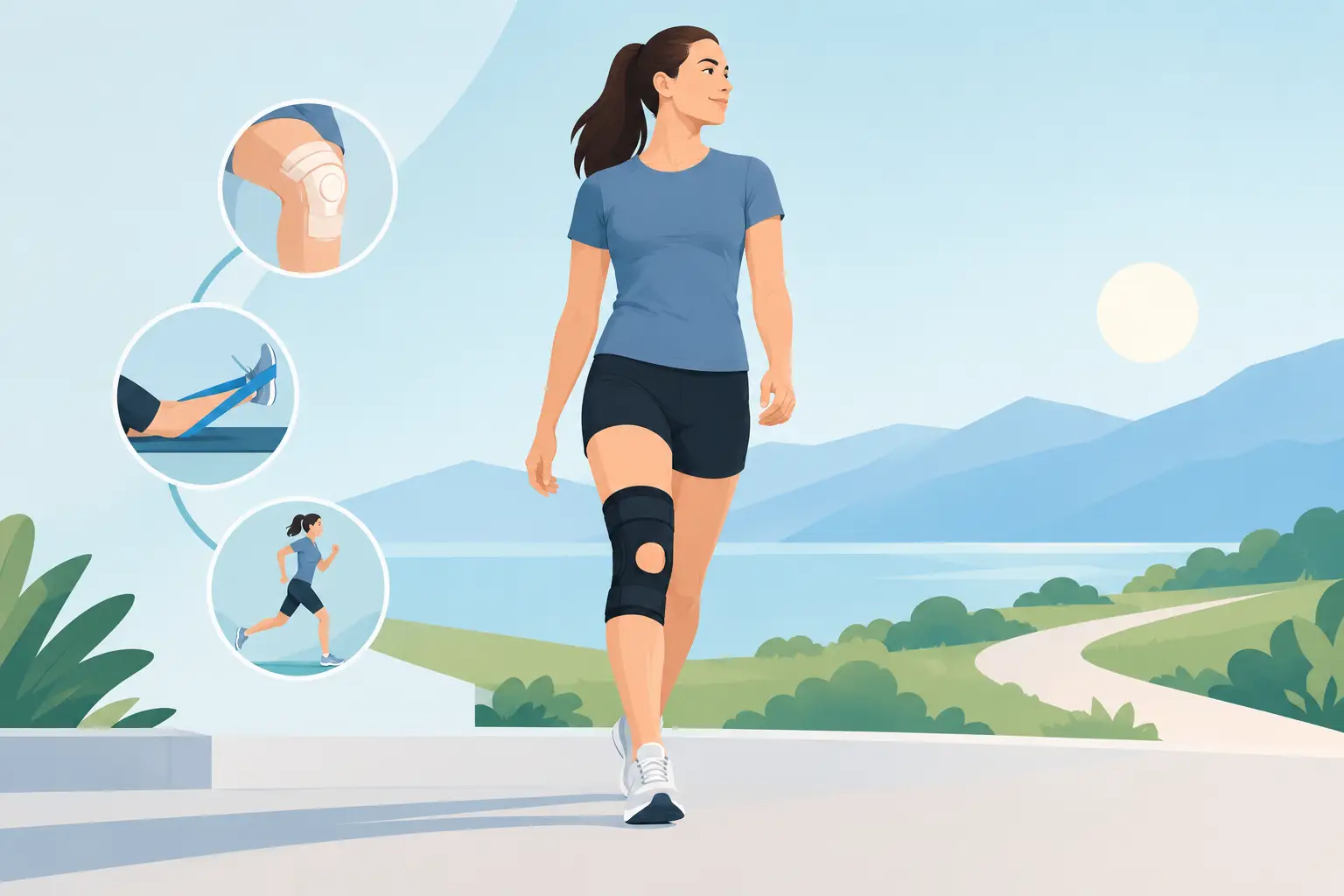
How to Return After ACL Surgery With Confidence
An ACL injury can make even ordinary movements feel uncertain. Getting back to running, work, the gym, or your sport is not simply about waiting for a certain number of months to pass. If you are wondering how to return after ACL surgery or injury, the safest answer is to rebuild strength, movement quality, confidence, and sport-specific capacity in stages.
The anterior cruciate ligament helps stabilize the knee during cutting, pivoting, landing, and sudden changes in direction. After an ACL tear, with or without reconstruction, the knee needs more than rest. A thoughtful rehabilitation plan helps restore the control your body needs to move well under real-life demands.
Return after ACL: think criteria, not just a calendar
Many people hear that return to sport happens at six, nine, or 12 months after surgery. Timelines can be helpful, but they are not a clearance test. Healing rates, surgical details, graft type, associated meniscus or cartilage injuries, training history, and the demands of your activity all affect recovery.
Returning too early can expose the knee to forces it is not prepared to manage. Waiting without progressively challenging the knee can also leave you with persistent weakness, stiffness, or a lack of trust in the leg. The goal is not to rush or to hold back unnecessarily. It is to earn each next step through measurable progress.
A physiotherapist can assess more than pain and range of motion. They look at swelling, walking mechanics, quad strength, hamstring strength, balance, landing control, endurance, and how the knee responds the day after activity. This helps create a return plan that matches your goals, whether that means lifting a child comfortably, returning to a physical job, skiing, or playing soccer.
Start with the foundations of knee recovery
Before running or returning to higher-impact exercise, the knee should be calm and functional in daily life. Persistent swelling, a knee that gives way, or increasing pain after basic activity are signs that the current load may be too high.
Early rehabilitation commonly focuses on restoring knee extension, gradually improving bending, reducing swelling, and rebuilding quadriceps activation. Full extension matters because even a small loss can change your walking pattern and make it harder to regain normal strength. Your therapist may use hands-on treatment, targeted exercise, mobility work, and education about pacing to support this stage.
Walking should become comfortable and controlled before you progress to jogging. You should also be able to manage stairs and single-leg tasks without major pain, shifting away from the surgical side, or a swollen knee afterward. The injured leg often feels capable before it is truly strong enough, which is why objective assessment matters.
Rebuild strength in both legs
Quadriceps weakness is one of the most common barriers to a successful return after ACL reconstruction. The quadriceps help absorb force when you land, decelerate, and descend stairs. If they are underperforming, other joints and tissues may compensate.
Rehabilitation should progressively strengthen the quadriceps, hamstrings, glutes, calves, and trunk. Exercises may begin with controlled body-weight movements and advance to resistance training, single-leg work, step-downs, squats, lunges, deadlifts, and more demanding variations as tolerated. The exact program depends on your surgical protocol and current function.
Strength should not be judged only by whether you can complete an exercise. Quality matters. Does the knee stay aligned over the foot? Can you control the lowering phase? Do you avoid loading the recovering leg when fatigue sets in? A physiotherapist can identify these compensations and adjust your program before they become habits.
Both legs need attention. The uninjured side is useful for comparison, but it can lose strength and coordination during recovery too. For athletes, comparing strength and performance between legs is often part of return-to-sport testing.
Progress from running to jumping and cutting
Running is a major milestone, but it is not the final one. Straight-line jogging places different demands on the knee than jumping, landing, stopping, or changing direction. A runner, basketball player, and warehouse worker may all need different progressions.
Before jogging, your rehabilitation provider will typically want to see good walking mechanics, minimal swelling, sufficient strength, and controlled single-leg movements. Running usually begins with short, planned intervals on a predictable surface. Volume, pace, hills, and uneven terrain can then be added gradually if the knee remains settled.
Once running is tolerated, training can progress to hopping, jumping, landing, acceleration, deceleration, and direction changes. These drills are not only about power. They teach the body to absorb force and maintain knee control during fast, less predictable movements.
For pivoting sports, sport-specific practice should come before unrestricted competition. A soccer player may progress from ball drills to controlled passing, then noncontact practice, then limited scrimmage. A skier may work on leg strength, balance, and controlled edge loading before returning to varied terrain. The final stage should resemble the physical demands you expect from your activity.
Use testing to guide your return to sport
A good return-to-sport decision combines clinical findings with your goals and confidence. Your physiotherapist may use strength testing, hop tests, balance measures, movement analysis, and functional task assessments. These tools help reveal deficits that are not always obvious during a regular workout.
For example, you may be able to jump far on the recovering leg but land with poor control. Or your strength may look good in a slow gym exercise while quick single-leg hopping remains uneven. Those differences matter for activities involving speed, fatigue, and unexpected movements.
No single test guarantees that reinjury will not happen. However, meeting a group of return criteria can reduce avoidable risk and gives you a clearer picture of what still needs work. Your surgeon and physiotherapy team should be involved in return-to-sport clearance, particularly after reconstruction or when other knee structures were repaired.
Do not ignore confidence and fear of reinjury
Physical readiness and psychological readiness are closely connected. It is common to hesitate when cutting, landing, or going back to the activity where the injury happened. That hesitation is not weakness. It is useful information about what your rehabilitation should address.
Confidence grows through repeated, successful exposure to progressively harder tasks. Start in a controlled setting, practice the movement with coaching, then add speed, decision-making, and fatigue over time. If fear is causing you to avoid loading the leg or move differently, tell your provider. The plan can be adjusted to help you regain trust without forcing a leap that feels unsafe.
Know when to slow down and seek guidance
Some muscle soreness is normal as training increases. A swollen knee, sharp pain, repeated buckling, loss of motion, or symptoms that worsen for more than a day or two deserve attention. These signs do not always mean something is seriously wrong, but they do mean your load, technique, or recovery plan may need to change.
People recovering from a meniscus repair, cartilage procedure, or multiple ligament injury may have additional restrictions. A recreational athlete returning to jogging also needs a different plan than a competitive athlete returning to contact sport. Personalized care is especially valuable because the right progression is based on your knee, not someone else’s timeline.
At Panorama Physiotherapy and Chiropractic Clinic, a physiotherapist can help Calgary-area patients build a practical return plan through guided rehabilitation, strength progression, functional testing, and hands-on care when appropriate. The focus is on restoring the movement and capacity needed for the life you want to return to.
Your ACL recovery does not end when you are cleared to participate. Continue strength training, practice good landing and movement mechanics, and give your knee time to adapt as activity becomes more demanding. A steady, well-supported return is one of the best ways to move forward with confidence.