
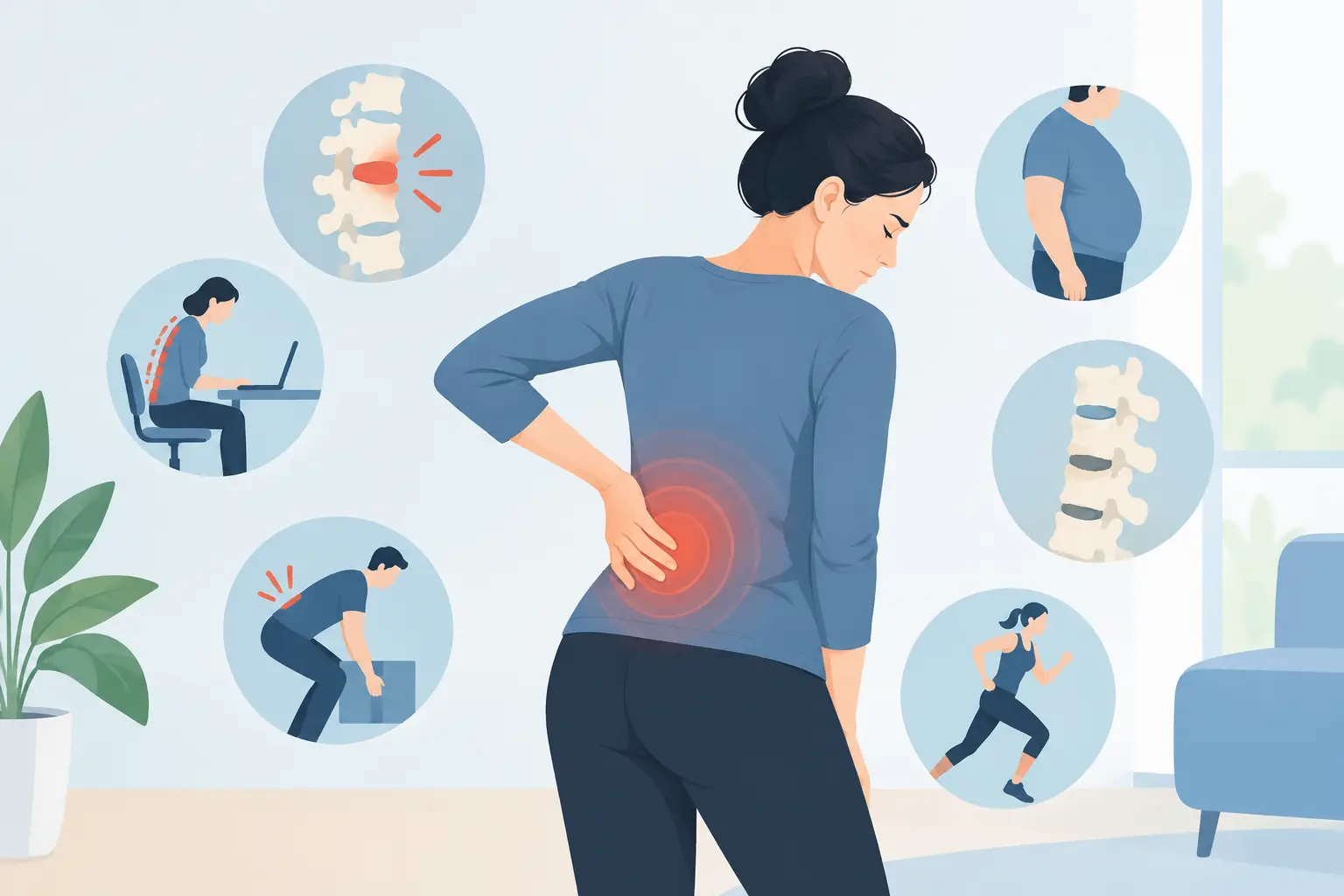
What Causes Recurring Back Pain? Common Reasons
A backache that settles down for a few days, then returns after a long drive, a workout, or a normal workday can be frustrating. If you are wondering what causes recurring back pain, the answer is rarely one simple issue. Repeated pain often reflects a combination of movement habits, tissue sensitivity, strength or mobility limitations, past injury, and the demands of daily life.
The good news is that recurring pain does not automatically mean permanent damage. A thoughtful assessment can identify the factors contributing to your symptoms and create a plan focused on reducing pain, restoring movement, and helping you return to the activities that matter to you.
What Causes Recurring Back Pain?
Back pain can come from muscles, joints, discs, nerves, ligaments, or nearby areas such as the hips and pelvis. In many cases, the original flare-up improves, but the underlying contributors have not been fully addressed. The result is a cycle where pain returns when the body is placed under familiar stress.
For example, someone may feel better after resting from a lifting-related strain. If they return to lifting without rebuilding trunk, hip, and leg strength or changing how they move under load, the same area may become irritated again. Another person may have stiffness after long periods of sitting, then experience pain every time they increase activity too quickly on the weekend.
The location of pain can offer clues, but it does not tell the full story. Low back pain may be influenced by hip mobility, core control, sleep position, work setup, stress, or recovery from a prior injury. This is why an individualized examination is more useful than assuming every episode has the same cause.
Incomplete Recovery After an Injury
A muscle strain, joint irritation, sports injury, workplace injury, or motor vehicle accident can leave behind reduced mobility, weakness, altered movement patterns, or fear of certain movements. Pain may fade before these issues fully recover.
When the body compensates, other muscles and joints can take on more work than they are designed to handle. That compensation may be useful in the short term, but over time it can contribute to recurring discomfort. A rehabilitation plan should progress beyond pain relief and include strength, mobility, balance, and activity-specific movement when appropriate.
Repeated Loading and Everyday Postures
Backs are built to move, bend, lift, and carry. Problems often arise not from one posture or one activity alone, but from too much of the same load without enough variation or recovery.
Sitting for extended periods, frequent bending and twisting at work, repetitive lifting, long commutes, or standing in one position can all aggravate sensitive tissues. A desk job and a physically demanding job can each contribute to pain for different reasons. The goal is not to find a single “perfect” posture. It is to improve movement options, build tolerance, and make practical adjustments to the demands that repeatedly trigger symptoms.
Strength, Mobility, and Movement Control Changes
Limited hip mobility, reduced trunk endurance, poor balance, or weakness in the legs can change how force moves through the back. This does not mean a person is doing everything wrong. It means their current capacity may not match what their work, sport, or home responsibilities require.
This mismatch is especially common after a period of inactivity, illness, pregnancy and postpartum changes, surgery, or a sudden increase in training. It can also affect active people who perform one sport or movement pattern repeatedly without enough variety. Targeted exercise is often more effective than simply avoiding all activity, although the right intensity depends on the person and the stage of recovery.
Disc, Joint, or Nerve Irritation
Some recurring back pain is related to irritation of spinal joints, discs, or nerves. Disc-related symptoms may include pain that is worse with certain bending, sitting, coughing, or lifting movements. Nerve irritation can cause pain, tingling, numbness, burning, or weakness that travels into the buttock, leg, or foot.
Arthritic or degenerative changes in the spine can also contribute to stiffness and aching, particularly as people get older. Imaging findings do not always match pain levels, however. Many people have age-related spinal changes without symptoms, while others have significant pain with little visible change on a scan. A clinical assessment considers your symptoms, movement, medical history, and functional goals rather than relying on imaging alone.
Stress, Sleep, and Recovery
Pain is a physical experience, but the nervous system also influences how strongly the body perceives and responds to it. Poor sleep, ongoing stress, fatigue, and insufficient recovery can make recurring back pain feel more intense and last longer.
This is not a suggestion that pain is “all in your head.” It means that recovery works best when the whole picture is considered. Improving sleep habits, pacing activity, managing workload, and gradually returning to movement can support hands-on treatment and exercise-based rehabilitation.
Why Pain Returns After You Feel Better
It is common to stop treatment or exercises once pain becomes manageable. That can be reasonable for a mild, short-lived episode, but recurring pain often needs a longer transition from symptom relief to resilience.
A person may be able to walk comfortably but still lack the strength to resume hockey, lift a child repeatedly, work a full shift on their feet, or complete a heavy gym session. Returning to these demands too quickly can restart the pain cycle. On the other hand, avoiding movement for too long can lead to stiffness, reduced confidence, and lower physical capacity.
The most helpful approach is usually graded progression. That means starting at a level your body can tolerate, then increasing activity in a measured way. Your plan may include manual therapy, physiotherapy exercises, chiropractic care, acupuncture, dry needling, or other treatments when clinically appropriate, but active rehabilitation remains central to lasting functional improvement.
When Recurring Back Pain Needs Prompt Medical Attention
Most episodes of back pain are not emergencies, but some symptoms require urgent evaluation. Seek prompt medical care if back pain occurs with any of the following:
- New loss of bladder or bowel control, or numbness around the groin or inner thighs
- Significant or worsening weakness in a leg or foot
- Fever, unexplained weight loss, or pain accompanied by a history of cancer or serious infection
- Severe pain after a fall, collision, or other major trauma
- Constant pain that is rapidly worsening or does not change with rest or movement
If your pain is recurring without these warning signs, it is still worth seeking an assessment when it limits work, sleep, exercise, or daily activities. Early guidance can help prevent a manageable issue from becoming a persistent pattern.
A Personalized Plan Can Change the Pattern
Effective care begins by listening to your story. When does the pain start? What makes it better or worse? Does it travel into the leg? Has a previous accident, sport, job task, or health change altered how you move? These details help identify the likely drivers of recurrence.
At Panorama Physiotherapy and Chiropractic Clinic, practitioners assess movement, strength, mobility, posture, and functional demands to build care around the individual rather than a generic protocol. For some patients, the priority is easing pain and restoring basic movement. For others, it is preparing for work duties, a return to sport, or the confidence to lift, walk, and play without worrying about the next flare-up.
Recurring back pain can be discouraging, especially when it interrupts the life you want to live. But repeated symptoms are also useful information: they show where your body may need more support, capacity, or a different recovery strategy. With the right assessment and a plan you can follow, progress can extend beyond temporary relief toward more comfortable, confident movement.