
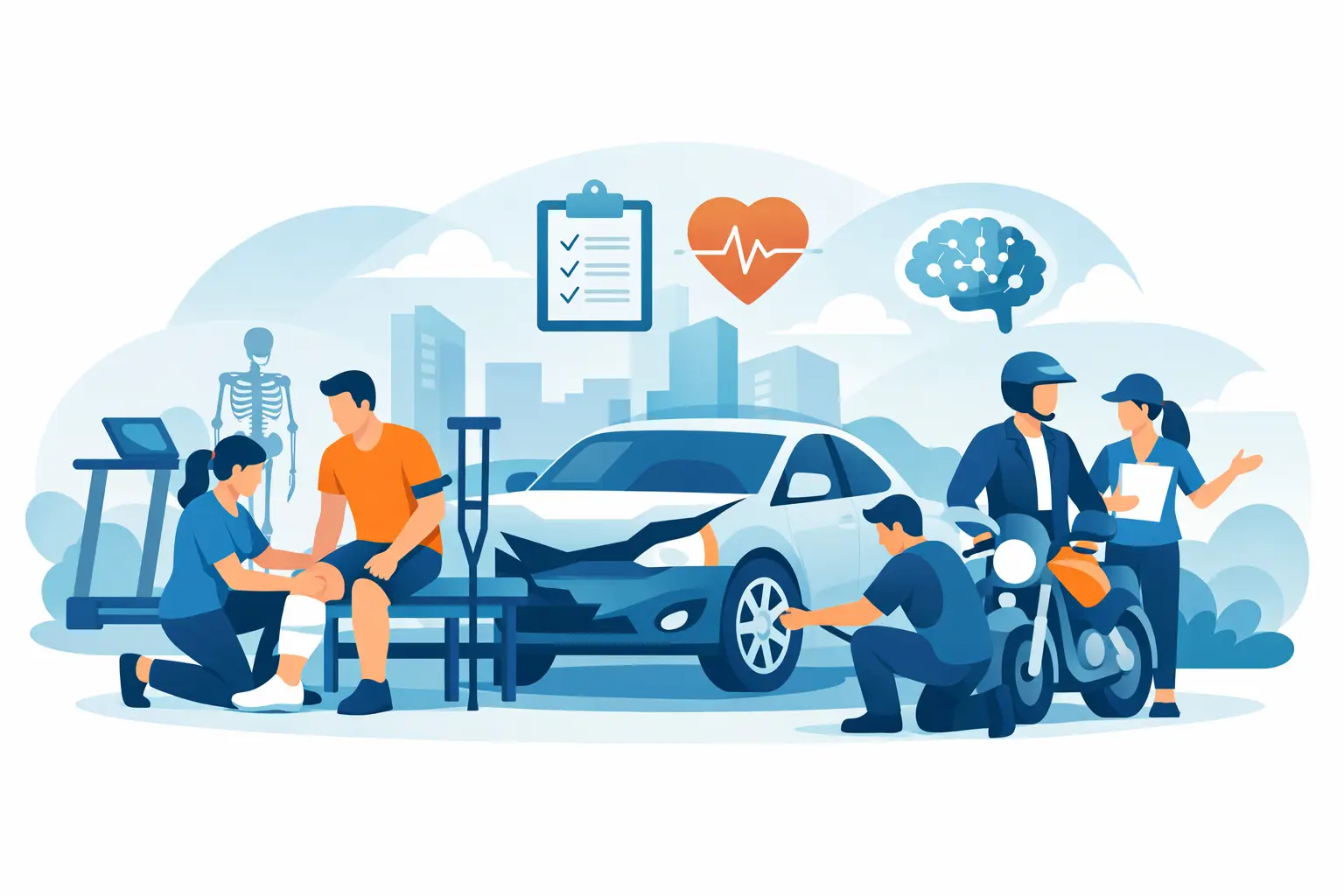
Your Guide to Motor Vehicle Rehabilitation
The pain after a collision does not always arrive at the scene. You may walk away feeling shaken but functional, then wake up the next morning with a stiff neck, headache, low back pain, dizziness, or a shoulder that will not move normally. This guide to motor vehicle rehabilitation explains what effective recovery care can look like, why early assessment matters, and how a personalized plan can help you return to daily life with greater confidence.
Start With an Assessment, Not Assumptions
A motor vehicle collision can strain muscles, joints, nerves, and connective tissue even at low speeds. The body may brace for impact in a split second, placing sudden force through the neck, back, shoulders, hips, knees, or jaw. Symptoms can also be affected by concussion, stress, poor sleep, or pre-existing conditions.
That is why rehabilitation should begin with a thorough assessment rather than a one-size-fits-all treatment. A licensed practitioner will ask about the collision, your symptoms, your health history, your work and home demands, and the activities you need to get back to. They may assess posture, range of motion, strength, balance, walking, joint mobility, and how specific movements affect your symptoms.
The purpose is not simply to identify where it hurts. It is to understand what is limiting you. For one person, the main concern may be neck pain while driving or working at a computer. For another, it may be dizziness in busy stores, back pain when lifting a child, or anxiety about getting behind the wheel. Your treatment plan should reflect those real-life goals.
Common Injuries Treated After a Collision
Whiplash-associated disorders are among the most common reasons people seek care after a motor vehicle accident. Whiplash can involve more than neck soreness. It may include headaches, shoulder blade pain, reduced neck movement, jaw tension, numbness or tingling, fatigue, and difficulty concentrating.
Low back and hip pain are also common, particularly when the body twists or absorbs force through the seat and seatbelt. Some people develop knee, wrist, rib, or shoulder pain from bracing during impact. Symptoms do not always follow a neat pattern, which is another reason an individualized assessment is valuable.
If you have dizziness, visual sensitivity, nausea, headaches, brain fog, or balance changes after a collision, concussion or vestibular symptoms may be involved. These concerns deserve timely attention. A rehabilitation provider can assess how symptoms affect movement and daily activities while coordinating with other health professionals when needed.
Seek urgent medical care for severe or worsening headache, repeated vomiting, fainting, new confusion, weakness, changes in speech or vision, chest pain, or other concerning symptoms. Rehabilitation supports recovery, but it does not replace emergency assessment when red flags are present.
What Motor Vehicle Rehabilitation May Include
The right care plan depends on your injuries, symptoms, medical history, and recovery goals. Early treatment may focus on reducing pain, restoring comfortable movement, and helping you safely return to routine activities. As symptoms improve, the plan should progress toward strength, endurance, coordination, and confidence.
Physiotherapy often forms the foundation of active rehabilitation. Treatment may include guided mobility work, strengthening exercises, posture and movement retraining, balance exercises, and a home program designed around your current tolerance. The goal is gradual, meaningful progress – not pushing through pain or resting indefinitely.
Hands-on treatment may be used when appropriate to address joint stiffness, muscle guarding, or restricted movement. Depending on your assessment, care may include manual therapy, chiropractic treatment, acupuncture, functional dry needling, cupping, or other complementary approaches. These treatments can help relieve symptoms, but they are most effective when paired with active rehabilitation that helps your body move and function better between appointments.
For people with dizziness or visual motion sensitivity, vestibular rehabilitation can provide carefully selected exercises that retrain balance and tolerance to movement. Concussion care may also include education on pacing, sleep, screen use, physical activity, and a gradual return to work, school, or sport.
A multidisciplinary setting can be especially helpful when several symptoms overlap. At Panorama Physiotherapy and Chiropractic Clinic, practitioners can coordinate care across physiotherapy, chiropractic treatment, vestibular rehabilitation, concussion care, and hands-on therapies so your plan addresses the full picture rather than isolated symptoms.
A Guide to Motor Vehicle Rehabilitation Timelines
Recovery does not follow a single schedule. Some people improve noticeably within a few weeks, while others need longer-term care because of the severity of injury, multiple painful areas, concussion symptoms, prior health conditions, or the physical demands of work. A realistic plan recognizes this without assuming that slower progress means failure.
In the early phase, your provider may recommend gentle movement, symptom management, and practical changes to reduce aggravation. This could include adjusting your workstation, taking shorter drives, changing how you lift, or breaking household tasks into manageable portions.
As tolerance improves, rehabilitation becomes more specific. If your work involves lifting, your exercises should prepare you to lift safely. If you are a parent, treatment should consider bending, carrying, and getting in and out of the car. If driving is a major concern, neck mobility, reaction confidence, and visual or vestibular symptoms may need attention.
Progress is measured by more than pain scores. Useful signs of recovery include sleeping better, turning your head more easily, walking farther, sitting longer, lifting with less discomfort, experiencing fewer headaches, or returning to work duties with fewer limitations.
How to Support Your Recovery Between Visits
Your appointments are important, but daily habits also influence recovery. Follow the home exercises your provider prescribes and ask questions if any movement consistently worsens symptoms. Mild, temporary discomfort can sometimes occur as you rebuild capacity, but sharp pain, new symptoms, or a significant flare should be discussed promptly.
Try to maintain a predictable routine for sleep, meals, hydration, and gentle activity. After a collision, it is understandable to avoid movement because you fear making things worse. However, prolonged inactivity can increase stiffness, weakness, and sensitivity. The better approach is usually paced activity: do enough to challenge your current ability, then recover before symptoms become overwhelming.
Keep a simple record of what affects your symptoms. Note whether headaches increase after screen time, whether dizziness occurs in visually busy environments, or whether back pain builds after standing. These details help your provider adjust treatment and make your home plan more useful.
You should also communicate openly about emotional stress, driving anxiety, or fear of movement. These responses are common after an accident and can affect physical recovery. A caring rehabilitation team will take them seriously and help you build confidence step by step.
Questions to Ask Your Rehabilitation Provider
You deserve to understand your care plan. Ask what structures or movement patterns may be contributing to your symptoms, what treatments are recommended, and what role you will play in recovery. It is also reasonable to ask how progress will be measured and what changes would prompt a referral or a revised plan.
If insurance coverage or accident-related paperwork is involved, ask the clinic what documentation they require and how they can support the administrative process. Clear communication early on can reduce unnecessary stress and keep the focus on treatment.
When Recovery Feels Stalled
A plateau does not automatically mean rehabilitation is not working. It may mean the plan needs to change. Symptoms can be influenced by sleep disruption, work demands, stress, incomplete recovery from concussion, or an exercise program that is progressing too quickly or too slowly.
Tell your provider if you are not improving, if a treatment aggravates symptoms for more than a short period, or if new pain develops. Good care adapts to your response. Your clinician may modify exercises, add a different treatment approach, reassess contributing areas, or recommend coordination with another health professional.
The most helpful next step after a collision is often a calm, thorough assessment followed by a plan you can realistically follow. With the right support, steady movement, and care that responds to your goals, recovery can become less about waiting for pain to disappear and more about rebuilding the life you want to return to.