
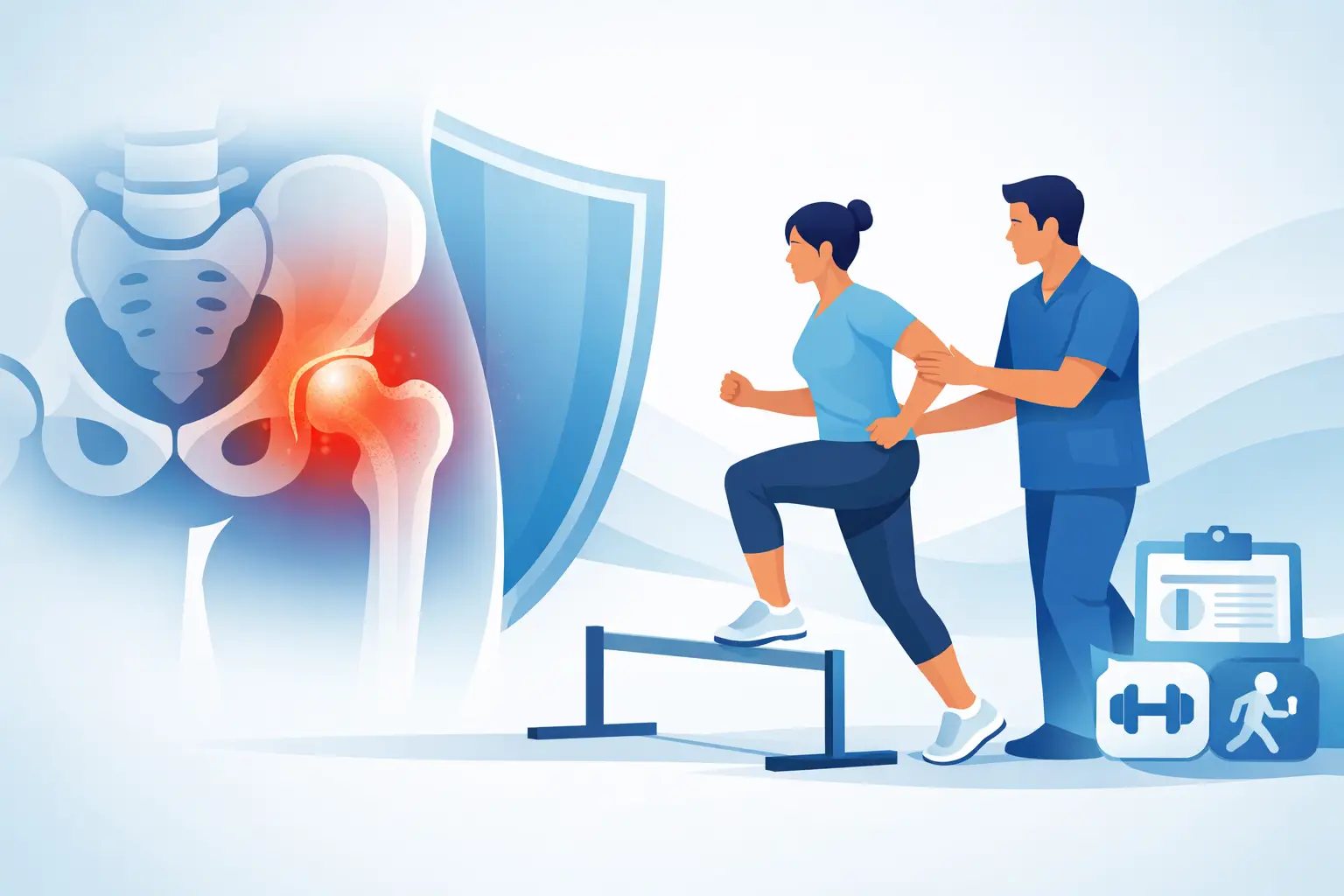
Hip Arthritis Treatment That Protects Movement
A short walk that used to clear your head can become something you plan around. You may hesitate before stairs, avoid getting down to the floor with grandchildren, or wake when rolling onto one side. Hip arthritis often changes daily life gradually, but persistent pain and reduced movement do not have to mean giving up the activities that matter to you.
The right plan depends on your symptoms, strength, movement habits, overall health, and goals. While arthritis cannot be reversed, conservative care can often reduce pain, improve confidence with movement, and help you maintain independence for longer.
What hip arthritis feels like
Hip arthritis occurs when the joint surfaces in the hip change over time. The hip is a ball-and-socket joint designed to carry substantial load while allowing you to walk, sit, bend, turn, and climb. When cartilage becomes thinner or joint tissues become irritated, movement may become painful or stiff.
Pain is commonly felt in the groin, front of the thigh, buttock, or outer hip. Some people are surprised to learn that knee pain can also be related to the hip. Symptoms may be most noticeable when rising from a chair, putting on socks or shoes, walking uphill, getting in and out of a vehicle, or standing for a long period.
Stiffness after sitting or first thing in the morning is also common. It often improves after gentle movement, although a more irritated joint may hurt more as activity continues. Clicking or grinding can occur, but those sounds alone do not tell us how much arthritis is present or how serious it is.
Why hip pain needs an individual assessment
Not all hip pain is arthritis, and not everyone with X-ray changes has severe symptoms. Tendon irritation around the hip, lower back referral, bursitis, muscle strain, a labral injury, and some pelvic or abdominal conditions can produce similar discomfort. An accurate assessment helps prevent treatment from being based on assumptions.
A physiotherapist will look at how you walk, how your hip and lower back move, where strength is limited, and which activities reproduce your symptoms. They will also consider recent changes in training, work demands, a fall, past injuries, and whether one side of the body is taking on more load than the other. Imaging may be useful in some cases, but it is only one part of the picture.
This approach also identifies when you need prompt medical attention. Sudden inability to bear weight, severe pain after a fall, fever or feeling unwell with a hot swollen joint, unexplained weight loss, or new numbness and weakness should be assessed urgently. These symptoms are not typical signs to simply work through.
Physiotherapy for hip arthritis
Physiotherapy does not promise to erase arthritis. Its purpose is more practical: help the joint and surrounding muscles tolerate everyday demands with less pain and better control. For many people, that begins with understanding which movements are helpful, which loads are currently too much, and how to build capacity without triggering a major flare.
Your plan may include hands-on treatment to address painful muscle tension or restricted movement, but active rehabilitation is usually central to lasting progress. Targeted exercises can improve hip strength, leg control, balance, and mobility. Stronger gluteal muscles, thighs, and trunk muscles can help share load more effectively during walking, stairs, and transfers.
Exercises should be chosen for your starting point. Someone who has stopped walking because of pain may begin with gentle range-of-motion work, supported sit-to-stands, and short, manageable walks. A golfer, runner, or active worker may need a more progressive strength and movement program that reflects the demands of their sport or job. The best exercise is not necessarily the hardest one. It is the one you can perform correctly, consistently, and progress over time.
At Panorama Physiotherapy and Chiropractic Clinic, care can also be coordinated across relevant services when symptoms are influenced by back pain, an old injury, workplace demands, or a recent accident. The focus remains on a clear plan that supports meaningful movement rather than temporary relief alone.
Managing activity without becoming inactive
When the hip hurts, doing less can feel like the safest choice. Rest can be useful during a sharp flare, especially after an unusual increase in activity. However, avoiding movement for too long can lead to more stiffness, muscle weakness, and lower confidence. The goal is usually to adjust activity, not abandon it.
A useful starting point is to notice your response during activity and over the following 24 hours. Mild discomfort that settles quickly may be acceptable for some people. Sharp pain, limping that continues, swelling, or symptoms that remain noticeably worse the next day suggest the activity was too much for the joint’s current capacity.
Walking on level ground, cycling with an appropriate seat height, water exercise, and strength training are often well tolerated, but there is no universal “best” exercise for arthritis. If deep hip bending aggravates your symptoms, a clinician can modify the movement or range rather than asking you to force through it. If walking is your priority, the plan should build walking tolerance progressively.
Simple changes can also reduce unnecessary strain. Supportive footwear, breaking long tasks into shorter blocks, using a handrail on stairs, and avoiding repeated low chairs during a flare may help. A cane or walking pole can be a useful short-term tool for some people, particularly when pain causes a limp. Used on the side opposite the painful hip, it can reduce joint load and make walking feel more secure.
When other treatment may be appropriate
Pain management may involve your primary care provider, who can discuss medication options based on your health history. Injections are sometimes considered when symptoms remain limiting despite an appropriate rehabilitation plan, although their benefits, risks, and duration vary. An injection may create a window for more comfortable exercise, but it is not a replacement for rebuilding strength and movement tolerance.
Hip replacement can be an excellent option for people with advanced joint changes and pain that continues to seriously limit sleep, work, self-care, or valued activities. It is generally considered after non-surgical care has not provided enough benefit, not simply because an X-ray shows arthritis. A physiotherapy assessment can help you prepare for surgery if it becomes appropriate and support recovery afterward.
Start with goals that matter to you
A meaningful hip arthritis plan is built around the life you want to keep living. For one person, success may be walking through the grocery store without stopping. For another, it may be returning to pickleball, managing stairs at work, or sleeping more comfortably. Those goals guide the exercises, pacing, and progression.
If hip pain is narrowing your routine, a professional assessment can give you a clearer path forward. Small, well-chosen changes in movement and strength can add up to more comfortable days and greater confidence in your body.