
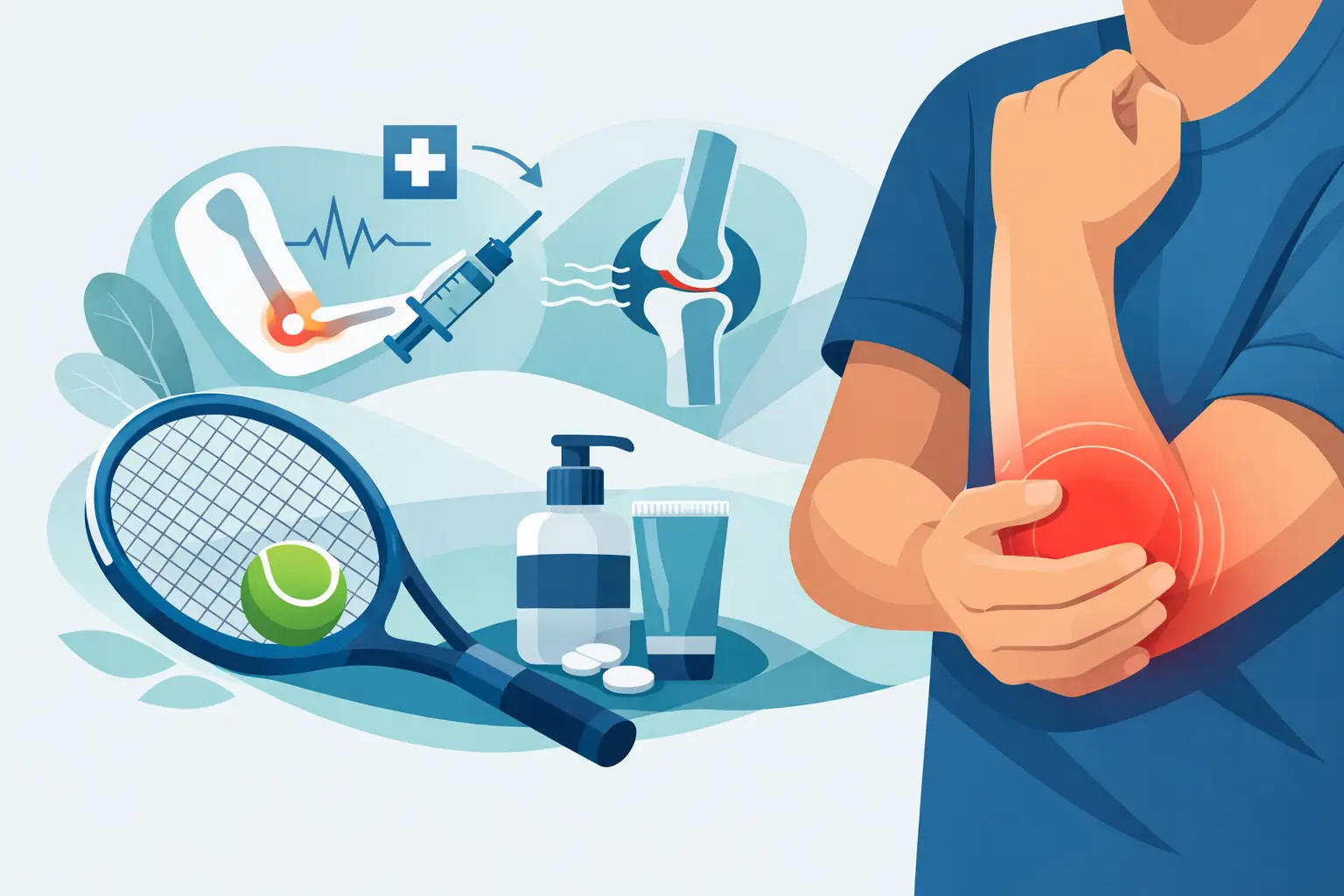
Best Treatment for Tennis Elbow That Lasts
A coffee mug that suddenly feels too heavy, pain when shaking hands, or an ache after a day at the keyboard can all point to tennis elbow. The best treatment for tennis elbow is rarely a single procedure or a few days of rest. Lasting improvement comes from identifying what is overloading the tendon, calming symptoms enough to keep you moving, and progressively rebuilding the arm’s capacity for work, sport, and daily life.
Despite its name, tennis elbow affects far more than tennis players. It is common in tradespeople, office workers, parents, golfers, racquet-sport athletes, and anyone whose routine involves frequent gripping, lifting, twisting, or repetitive wrist motion.
What tennis elbow actually involves
Tennis elbow, also called lateral epicondylitis or lateral elbow tendinopathy, causes pain on the outside of the elbow. The discomfort usually involves the tendons that connect the forearm extensor muscles to the bony outer part of the elbow. These muscles help lift the wrist, extend the fingers, and stabilize the hand during gripping.
Tendon pain is not always a sign that the tissue is torn or permanently damaged. More often, the tendon has become sensitive and less able to tolerate its current workload. A sudden increase in tennis, a new job task, prolonged mouse use, heavy yard work, or returning to lifting too quickly can all be enough to trigger symptoms.
The pattern matters. Pain that travels from the neck, tingling or numbness in the hand, marked weakness, or persistent night pain may indicate another issue, such as nerve irritation or referred pain. That is why a professional assessment is more useful than treating every outer-elbow ache the same way.
Best treatment for tennis elbow starts with assessment
An effective care plan begins by looking beyond the sore spot. A physiotherapist can assess elbow and wrist movement, grip strength, tendon loading tolerance, shoulder and neck function, posture, work demands, and sport technique. This helps distinguish tennis elbow from conditions with similar symptoms, including radial tunnel irritation, arthritis, neck-related pain, or a ligament injury.
The assessment also establishes a starting point. Can you lift a pan? Use a screwdriver? Type for an hour? Serve a tennis ball? Meaningful treatment goals are based on the activities that matter to you, not simply on whether the elbow feels tender during an exam.
For Calgary patients whose symptoms affect their job, training, or everyday independence, this individualized approach helps avoid two common problems: doing too little for too long or returning to demanding activity before the arm is ready.
Reduce aggravation without completely resting the arm
Complete rest can temporarily reduce pain, but avoiding all use for weeks may lower forearm strength and make the tendon more sensitive when activity resumes. The better approach is relative rest: reduce or modify the movements that reliably flare symptoms while staying active within a tolerable range.
That may mean using two hands for heavier pans, changing the grip on tools, taking shorter keyboard or mouse breaks, lowering the weight used at the gym, or pausing high-volume backhand practice. Small adjustments can make a significant difference because they reduce repeated strain without removing normal movement from your day.
A counterforce strap or wrist support may provide short-term comfort for some people, particularly during a task that cannot be avoided. It is not a cure, and it should not replace rehabilitation. If a brace increases pain, numbness, or hand weakness, it needs to be adjusted or discontinued.
Cold packs can help ease soreness after activity, while heat may feel better before movement. Neither changes tendon capacity on its own, but symptom relief can make it easier to complete the exercises that do.
Progressive exercise is the foundation of recovery
The strongest long-term treatment plans for tennis elbow include progressive loading. This means gradually exercising the wrist and forearm muscles so the tendon can tolerate more force over time. The right starting level depends on irritability, current strength, and the activities you need to return to.
Early in recovery, isometric exercises may be appropriate. These involve contracting the forearm muscles without moving the wrist, such as gently pressing the back of the hand into resistance. They can help some patients manage pain while maintaining muscle activation.
As symptoms settle, the program typically progresses to slow wrist extension exercises with a light weight or resistance band. Grip training, forearm rotation, and shoulder blade strengthening may also be added. The shoulder and trunk influence how force travels through the arm, especially during racquet sports, lifting, and repetitive work.
The goal is not to push through sharp pain. Mild, manageable discomfort during an exercise can be acceptable, provided it settles and does not create a significant flare that lasts into the next day. Your provider can help you find the right dosage and adjust the plan as strength improves.
Consistency matters more than intensity. A customized program performed regularly is usually more helpful than occasional hard workouts followed by several painful days.
Why stretching alone is usually not enough
Forearm stretches can feel relieving when the muscles are tight, and they may be included in a program. However, stretching does not adequately prepare a tendon for repeated gripping, lifting, or impact. If tennis elbow developed because the arm cannot currently handle a particular demand, recovery needs strengthening and a gradual return to that demand.
Hands-on care can support movement and pain relief
Physiotherapy often combines exercise with manual therapy when it is clinically appropriate. Joint mobilization of the elbow, wrist, shoulder, or upper back may improve movement and reduce pain in the short term. Soft tissue techniques can address protective muscle tension in the forearm, while education helps patients understand how to manage flare-ups confidently.
Some patients may benefit from complementary options such as functional dry needling, acupuncture, Graston Technique, cupping, or cold laser therapy. These treatments can be considered as part of a broader plan, particularly when pain is limiting exercise or normal function. Their value is greatest when they help you move more comfortably and progress your rehabilitation, not when they are used as a stand-alone solution.
A multidisciplinary clinic can be helpful when neck, shoulder, spinal, or nerve-related factors are contributing to elbow symptoms. Coordinated care allows treatment to address the full movement picture rather than focusing only on the painful tendon.
Return to work, lifting, or sport gradually
Feeling better does not always mean the elbow is ready for its previous workload. Tendons often improve in stages: daily tasks become easier first, then heavier chores, then repeated or high-speed activity. A gradual return plan protects that progress.
For a worker, this may involve modifying tool use, reducing repetition, changing task rotation, or building lifting tolerance before a full return. For an athlete, it may mean starting with shorter practice sessions, lower-intensity serves, or fewer backhands before adding volume and speed. A gym program may need temporary changes to pulling exercises, curls, deadlifts, or gripping-heavy movements.
Technique and equipment are worth reviewing when symptoms are tied to a specific activity. Racquet grip size, string tension, work-station setup, tool vibration, and lifting mechanics can all influence load at the elbow. These details do not replace strengthening, but they can prevent the same overload from recurring.
When to seek professional care
Many mild cases improve with sensible activity changes and progressive exercise, but it is wise to seek an assessment when pain is not improving after a few weeks, keeps returning, affects sleep, causes loss of grip strength, or prevents you from doing essential work or self-care tasks. Prompt care is also appropriate after a fall, direct injury, sudden pop, visible swelling, or loss of motion.
Injections, medications, or surgical consultation may occasionally be considered for persistent cases, but they are not usually the first answer. Short-term pain relief can be useful in selected situations, yet the underlying capacity of the arm still needs to be rebuilt. A clinician can discuss the potential benefits, limitations, and timing of these options based on your presentation.
Tennis elbow can be frustrating precisely because so many ordinary tasks depend on a strong, comfortable grip. With a clear diagnosis, appropriate load management, and a plan that progresses as your arm gets stronger, recovery can become a practical process instead of a cycle of temporary relief and repeated flare-ups.