
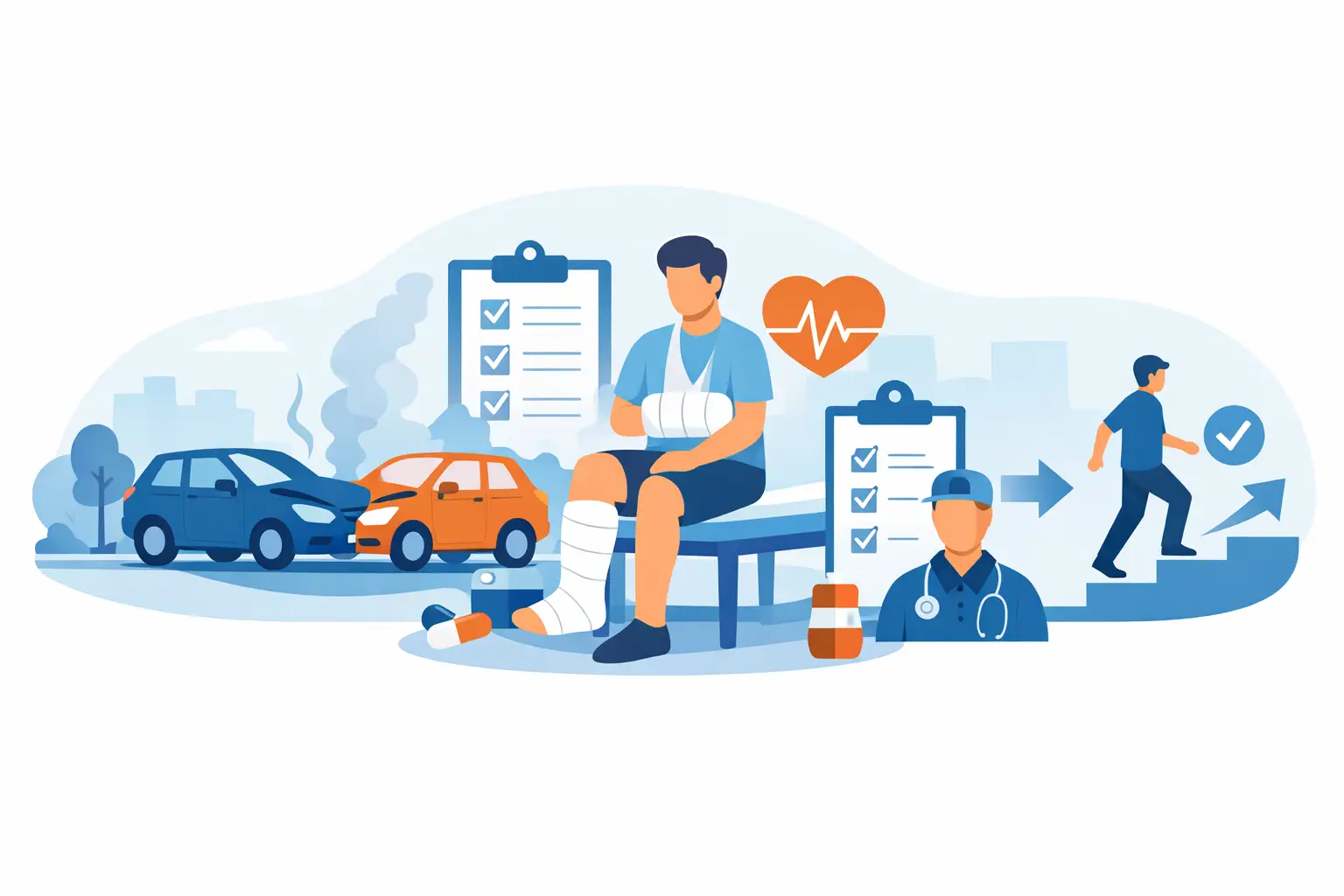
Recovery Plan After Car Accident Steps
The day after a crash is often harder than the day of the crash. Adrenaline fades, stiffness sets in, and simple movements like turning your head, getting out of bed, or sitting at your desk can suddenly feel difficult. A recovery plan after car accident injuries gives structure to a time that often feels uncertain. It helps you understand what to do first, what symptoms to watch, and how to move from pain and disruption back to steady function.
Car accident recovery is rarely one-size-fits-all. Two people can be in similar collisions and have very different symptoms. One may develop neck and back pain. Another may deal with headaches, dizziness, jaw tension, or balance problems. That is why a good plan is not just about resting and waiting. It is about getting the right assessment, starting the right treatment at the right time, and adjusting care as your body responds.
What a recovery plan after car accident injuries should include
A strong recovery plan starts with a clear picture of what was injured and how those injuries affect daily life. That means looking beyond pain alone. A proper assessment should consider range of motion, strength, joint mobility, nerve symptoms, balance, headaches, sleep, and your ability to work, drive, exercise, or care for your family.
This matters because car accident injuries are not always obvious at first. Whiplash, soft tissue strain, concussion-related symptoms, and vestibular issues may take hours or days to fully appear. If your only plan is to wait for the pain to pass, recovery can drag on longer than it should.
In most cases, an effective plan includes early assessment, symptom monitoring, pain management, guided movement, and follow-up treatment. For some patients, it also includes chiropractic care, physiotherapy, manual therapy, vestibular rehabilitation, or concussion-focused treatment. The right combination depends on the injury pattern, severity, and how your symptoms change over time.
Start with a thorough assessment, not guesswork
One of the biggest mistakes after a collision is assuming soreness is minor because you were able to walk away from the accident. Many musculoskeletal injuries do not show their full impact immediately. Neck strain can worsen over 48 to 72 hours. Back pain may build gradually. Headaches and dizziness may not seem connected until they start interfering with concentration, sleep, or screen time.
A thorough assessment helps identify what needs attention now and what may need to be monitored. It also creates a baseline, which is important for tracking progress. If your pain shifts, your mobility improves, or new symptoms appear, your treatment plan can be adjusted based on something measurable rather than guesswork.
For example, neck pain after a crash may involve more than muscle tightness. It can include joint restriction, nerve irritation, postural compensation, jaw tension, and headaches triggered by limited cervical movement. Treating only one piece of that problem may give short-term relief without solving the reason symptoms keep returning.
The first phase of care is about calming things down
In the early stage, the goal is not to push through pain. It is to reduce irritation, protect healing tissues, and prevent minor issues from becoming persistent ones. That usually means a mix of symptom relief and gentle, guided activity.
Depending on the case, treatment may focus on reducing muscle guarding, improving joint mobility, managing inflammation, and restoring safe movement. Hands-on treatment can help, but so can specific exercises, posture advice, and activity modifications. If you are dealing with dizziness, visual sensitivity, or concussion symptoms, the plan may also need to address the nervous system rather than just the neck or back.
This is where individualized care matters. Rest can be helpful in the short term, but too much rest often leads to more stiffness, weakness, and delayed recovery. On the other hand, returning to normal activity too quickly can keep tissues irritated. The right approach usually sits between those extremes.
When symptoms are more than neck and back pain
Many people expect soreness after a crash. Fewer expect dizziness in grocery store aisles, headaches that worsen on a computer, ringing in the ears, jaw pain, or a sense that their balance is off. Yet these symptoms are common after motor vehicle accidents and often require a broader treatment plan.
If dizziness or vertigo is present, vestibular rehabilitation may be appropriate. If headaches, light sensitivity, fatigue, and brain fog are ongoing, concussion care may need to be part of the recovery process. If jaw pain or facial tension started after impact, TMJ-related treatment may also be relevant. These issues can overlap, which is one reason a multidisciplinary clinic can be useful. Instead of treating each symptom in isolation, care can be coordinated around how your body is functioning as a whole.
That coordination also helps with cases where pain spreads. A patient may start with neck pain, then develop mid-back tightness, shoulder limitation, sleep disruption, and reduced tolerance for work tasks. That does not always mean a new injury occurred. Sometimes it means the body is compensating, and the plan needs to change before those patterns become more ingrained.
Building the active phase of your recovery plan after car accident trauma
Once acute irritation starts to settle, treatment should shift toward restoring movement, strength, and confidence. This is the phase where many patients feel better and assume they are done. Sometimes that is true. Often, it is not.
Pain reduction is only one marker of recovery. You also want to regain the ability to turn your head comfortably, lift without guarding, sit for longer periods, tolerate exercise, and return to work or parenting tasks without flare-ups. If those functions are still limited, stopping care too early can lead to setbacks.
The active phase of care may include mobility work, strengthening, postural retraining, balance exercises, and progressive return to usual activity. If your symptoms are work-related or sport-related, rehab should reflect those demands. A desk worker needs a different progression than a tradesperson. A senior with balance concerns needs a different plan than a teen athlete. Good treatment meets you where you are and builds toward what your life actually requires.
Why timelines vary more than people expect
Patients often want a simple answer to one question: how long will recovery take? The honest answer is that it depends. Recovery timelines vary based on injury severity, previous health history, age, stress levels, sleep quality, and how quickly treatment begins.
A mild soft tissue injury may improve relatively quickly with the right care. A more complex case involving whiplash, low back pain, concussion symptoms, or dizziness may take longer and require more than one type of treatment. Delayed assessment can also lengthen recovery because compensatory patterns have more time to settle in.
Progress is not always linear either. It is common to feel better for a week, then notice soreness after returning to work, driving longer distances, or lifting more than usual. That does not always mean you are back at the start. It may just mean your plan needs the next level of progression.
What to look for in a treatment provider
After a car accident, convenience matters, but so does clinical judgment. You want a provider who listens carefully, explains findings clearly, and builds a plan around your symptoms, goals, and response to care. You also want someone who knows when a symptom pattern points beyond routine strain.
Multidisciplinary care can be especially helpful when injuries overlap. Physiotherapy may address mobility, strength, and functional rehab. Chiropractic care may help restore joint motion and reduce mechanical restriction. Manual therapy, dry needling, vestibular rehab, or concussion-focused treatment may all have a role depending on the case. The benefit is not in receiving every service. The benefit is receiving the right service at the right stage.
For patients in North Calgary, Panorama Physiotherapy and Chiropractic Clinic takes this kind of coordinated approach, which can make recovery feel more manageable when symptoms are affecting several parts of daily life.
Small decisions that support better recovery
What you do between appointments matters. That does not mean doing everything perfectly. It means being consistent with the pieces that support healing. Attending follow-up visits, doing prescribed exercises, pacing activity, and reporting changes early all make treatment more effective.
It also helps to pay attention to practical triggers. Long drives, poor sleep, extended screen time, heavy lifting, and stress can all increase symptoms after a crash. Identifying those patterns does not mean avoiding life. It means adjusting your plan so recovery keeps moving forward instead of stalling.
If your body feels different after a collision, trust that signal. Pain, dizziness, stiffness, headaches, and reduced mobility are not problems to simply push through. With a personalized recovery plan and the right support, most people can make meaningful progress and return to the routines that matter most.