
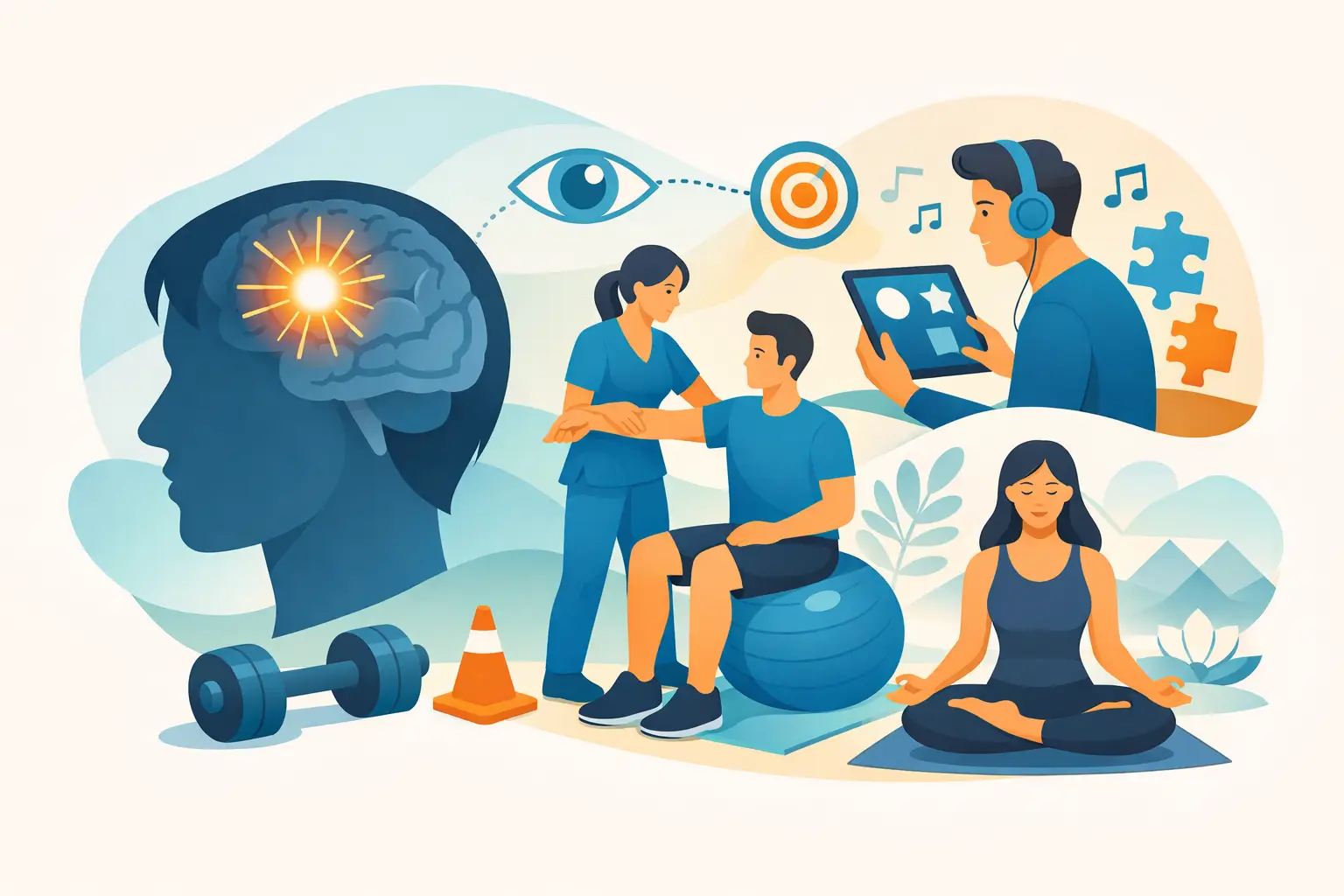
Top Rehabilitation Methods After Concussion
A concussion can turn ordinary tasks into a problem. Reading a screen may trigger a headache, grocery shopping can feel overwhelming, and a short walk might leave you drained or dizzy. That is why understanding the top rehabilitation methods after concussion matters. Recovery is rarely about waiting it out alone. The right treatment plan helps calm symptoms, restore function, and reduce the risk of prolonged problems.
Why concussion rehab needs an individualized plan
No two concussions look exactly the same. One person may struggle with dizziness and balance. Another may deal with headaches, neck pain, fatigue, light sensitivity, or trouble concentrating. Some people improve within days, while others continue to have symptoms for weeks or months.
That variation is exactly why good concussion care starts with assessment, not guesswork. A clinician should look at symptom patterns, balance, eye tracking, neck function, activity tolerance, and day-to-day limitations. From there, treatment can be matched to the systems that are actually affected. This approach is more effective than relying on rest alone or pushing through symptoms without guidance.
Early rest, but not too much
One of the most misunderstood parts of concussion recovery is rest. In the first 24 to 48 hours, reducing physical and cognitive strain is usually appropriate. That may mean limiting intense exercise, screen time, loud environments, heavy work demands, and anything that clearly worsens symptoms.
But prolonged complete rest is usually not the goal. Staying in a dark room for days or weeks can sometimes slow progress, increase deconditioning, and make it harder to return to normal life. After the early phase, many patients do better with a gradual return to activity that stays below the level that significantly flares symptoms.
This is where professional guidance helps. The right balance is not total shutdown and not full-speed return. It is controlled, progressive reintroduction.
Top rehabilitation methods after concussion
Graded aerobic exercise
For many patients, one of the top rehabilitation methods after concussion is sub-symptom aerobic exercise. This means light to moderate activity, often walking, cycling, or treadmill work, done at an intensity that does not provoke a major symptom spike.
Research and clinical experience both support this approach when used properly. Gentle aerobic exercise can improve blood flow regulation, reduce deconditioning, and help the nervous system tolerate activity again. The key is dosing. Too little may not move recovery forward. Too much can set symptoms back.
A rehabilitation professional may guide heart rate targets, session length, and progression over time. This can be especially helpful for athletes, active adults, and patients eager to return to work or sport safely.
Vestibular rehabilitation for dizziness and balance problems
If you feel off balance, motion-sensitive, or dizzy after a concussion, vestibular rehabilitation is often a central part of care. The vestibular system helps your brain interpret movement and maintain balance. After a concussion, it may become less efficient, especially when combined with visual sensitivity or neck dysfunction.
Vestibular rehab uses targeted exercises to improve gaze stability, balance, head movement tolerance, and motion sensitivity. At first, these drills can feel challenging because they expose the system to mild symptom triggers in a controlled way. Over time, the goal is to reduce dizziness and improve confidence with walking, turning, bending, or moving through busy environments.
This method is highly effective for the right patient, but it should be tailored carefully. Someone with severe acute symptoms may need a gentler starting point than someone further along in recovery.
Vision and oculomotor rehabilitation
Some concussion symptoms are tied less to the eyes themselves and more to how the brain controls visual movement and processing. If reading causes headaches, lines of text seem to move, or focusing between near and far objects feels difficult, oculomotor dysfunction may be part of the picture.
Vision-based rehabilitation may include exercises for eye tracking, convergence, focus shifts, and coordination between eye movements and head movements. These treatments can help reduce strain during reading, computer work, school tasks, and driving-related visual demands.
Because visual symptoms can overlap with vestibular issues, they are often addressed together. That is one reason multidisciplinary care can be valuable. A patient may not need just one therapy category. They may need a coordinated plan that addresses several systems at once.
Cervical spine treatment
Headaches after concussion are not always driven only by the brain injury itself. The neck often plays a role, especially after a sports collision, fall, or motor vehicle accident. Stiffness, reduced mobility, muscle guarding, and joint irritation in the cervical spine can all contribute to headache, dizziness, and even visual discomfort.
Treatment may include manual therapy, guided mobility work, posture correction, and exercises to improve deep neck muscle control. When neck dysfunction is present, addressing it can make a noticeable difference in symptom intensity and recovery speed.
This is an area that is sometimes overlooked. Patients may focus on the concussion diagnosis and not realize that concurrent neck injury is adding to the problem. A thorough physical assessment helps separate those pieces and treat both.
Return-to-work, return-to-school, and return-to-sport planning
A good rehab program is not just about reducing symptoms in the clinic. It also needs to prepare you for real life. That often means a staged return to work, school, exercise, and sport.
For students, that may involve reduced screen time, shorter study blocks, extra breaks, or temporary academic adjustments. For working adults, it may mean modified duties, less time under bright lights, reduced multitasking, or shorter shifts at first. For athletes, it means progressing through sport-specific activity only when symptoms and objective findings support that step.
The trade-off here is patience versus pressure. Returning too quickly can aggravate symptoms. Waiting too long without a plan can create anxiety and loss of conditioning. Structured progression gives patients a safer middle path.
Symptom management is part of rehabilitation too
Concussion recovery often improves faster when common aggravating factors are addressed early. Sleep disruption, stress, poor pacing, dehydration, and irregular routines can all keep symptoms going longer than expected.
That does not mean symptoms are just stress-related. It means the nervous system recovers better when the basics are supported. Clinicians may help patients build routines around sleep hygiene, hydration, gradual activity exposure, and pacing strategies that reduce boom-and-bust cycles.
This part of care can seem simple, but it matters. A patient who does too much on a good day and crashes the next day often feels stuck, even when improvement is possible.
When multidisciplinary care makes a difference
Concussion symptoms often cross categories. A patient may have neck pain, dizziness, reduced exercise tolerance, and difficulty concentrating all at once. In those cases, seeing just one piece of the problem can leave progress incomplete.
A multidisciplinary clinic can coordinate physiotherapy, vestibular rehabilitation, manual therapy, and related treatment strategies under one roof. That can be especially helpful when recovery is more complicated or when symptoms stem from overlapping causes. At Panorama Physiotherapy and Chiropractic Clinic, that kind of coordinated approach is often what helps patients move from symptom management toward fuller function.
When to seek professional help
If symptoms are severe, worsening, or not improving as expected, assessment should not be delayed. Persistent headaches, dizziness, nausea, visual difficulty, balance issues, neck pain, sensitivity to light or noise, and trouble with concentration are all reasons to get evaluated.
Even if the concussion seemed mild at first, lingering symptoms deserve attention. The earlier the right impairments are identified, the sooner treatment can become specific instead of general.
Recovery after concussion is often less about finding one magic treatment and more about matching the right methods to the right patient at the right time. With a thoughtful plan, progress is usually built step by step, and those steps add up.