
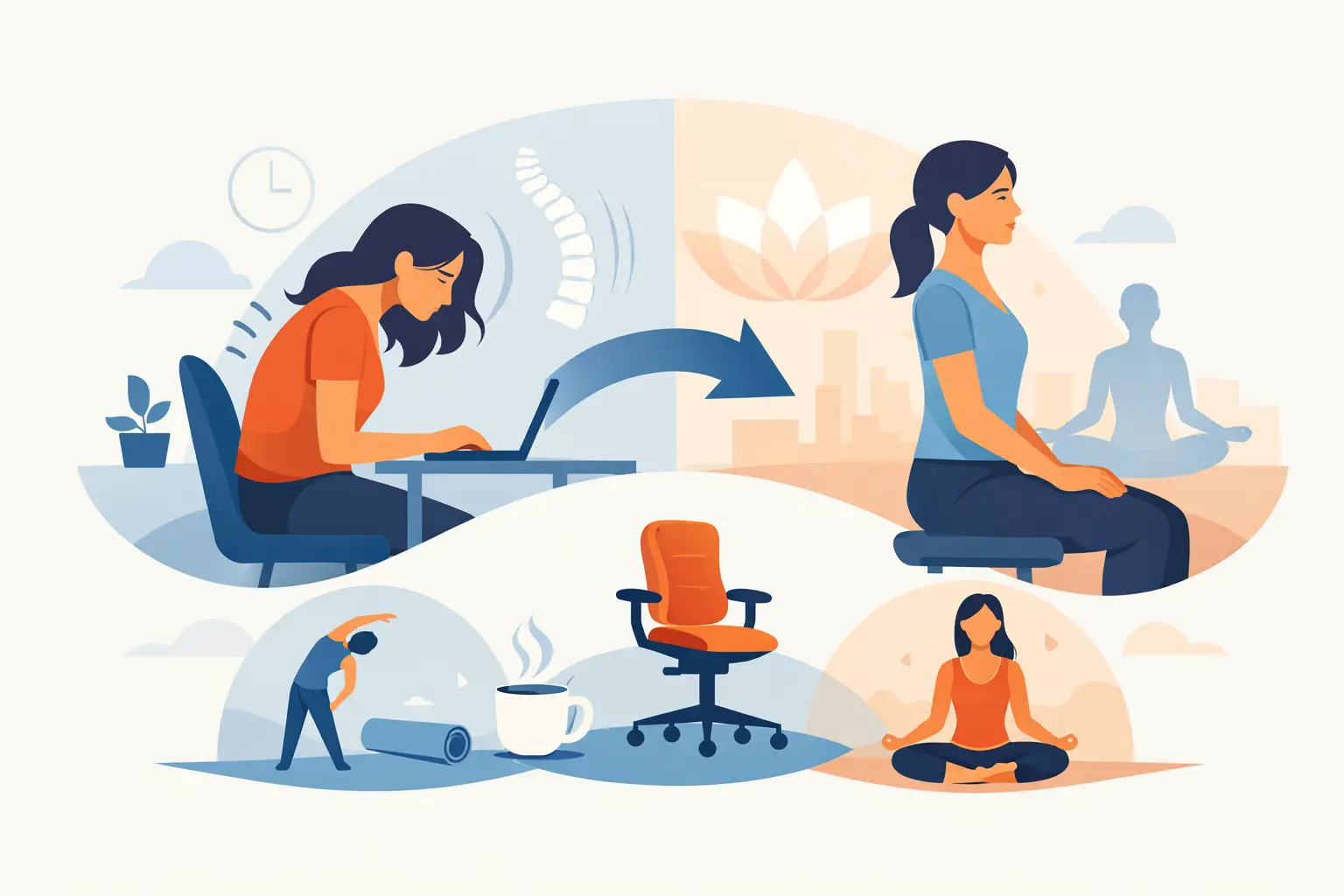
How to Fix Poor Posture Without Forcing a Perfect Pose
A posture problem rarely starts because someone forgot to “sit up straight.” More often, it shows up after hours at a desk, long drives, an old injury, stress, reduced activity, or pain that has quietly changed the way the body moves. Learning how to fix poor posture is less about holding a rigid position all day and more about restoring strength, mobility, comfort, and movement options.
Posture matters because the positions you use most can influence how your muscles and joints feel. A forward head position may contribute to neck tension or headaches. Rounded shoulders can make upper-back and shoulder discomfort more noticeable. Slumping through the lower back may aggravate existing back pain. But posture is not a diagnosis, and there is no single “perfect” posture that every person must maintain.
The goal is to help your body tolerate daily life with less strain – whether that means working comfortably, lifting your child, playing a sport, recovering from an accident, or walking without feeling stiff.
Start by looking for the real reason your posture changed
Before trying to correct your posture, consider what may be driving it. Pain, weakness, stiffness, fatigue, vision changes, stress, and work demands can all affect how you sit and stand. Someone with a sore shoulder may round forward to protect it. Someone with low back pain may shift their weight to one side. After a motor vehicle accident or sports injury, the body may adopt guarded positions long after the original injury.
This is why forcing your shoulders back or pulling your chin in all day can be frustrating. It may create more tension if the underlying issue is a stiff upper back, limited shoulder mobility, weak endurance, or an irritated joint.
A useful starting point is to notice patterns. Do symptoms increase after computer work? Do you feel worse after standing in one place, carrying a bag on one shoulder, or looking down at a phone? Does your posture change only when you are tired? These details help identify where a practical solution should begin.
How to fix poor posture with movement, not constant tension
The most helpful posture is often the next posture. Your body is designed to move, and even an ideal sitting position can become uncomfortable when held for too long. Rather than trying to maintain a stiff, upright pose, build short movement breaks into your day.
Every 30 to 60 minutes, stand up, walk briefly, change positions, or perform a few gentle movements. This does not need to interrupt your workday. A two-minute reset can be enough to reduce stiffness and improve circulation.
Try a simple sequence: slowly roll your shoulders, reach your arms overhead, rotate your upper body gently from side to side, and take several relaxed breaths. If prolonged sitting bothers your hips or lower back, add a few comfortable bodyweight squats or a short walk. The right movement is the one you can perform consistently without increasing symptoms.
If an exercise causes sharp pain, numbness, dizziness, or symptoms that linger after you stop, do not push through it. Pain is useful information, not a test of willpower.
Build strength where you need endurance
Many posture-related complaints are connected to low endurance rather than a lack of effort. The muscles around the upper back, neck, shoulders, hips, and trunk need enough capacity to support daily tasks. Strengthening these areas can help, but the program should match your needs and current condition.
For example, a person who spends much of the day at a computer may benefit from exercises that build upper-back and shoulder-blade control. Someone whose posture collapses during long walks may need hip, core, and leg strengthening. An athlete returning from injury may need more demanding, sport-specific work.
Common exercises may include rows, wall slides, controlled chin tucks, bridges, squats, and trunk-strengthening movements. However, the same exercise can be helpful for one person and irritating for another. Technique, range of motion, resistance, and medical history all matter. A physiotherapist can assess which muscles are underperforming, which areas are overworking, and how to progress safely.
Restore mobility without over-stretching
Tightness often contributes to a feeling of poor posture, particularly through the chest, upper back, hips, and calves. Gentle mobility work can make it easier to move into more comfortable positions. But stretching alone is rarely a complete fix.
If you repeatedly stretch your chest but still return to rounded shoulders, your body may need upper-back strength, better desk setup, or treatment for a painful shoulder. Similarly, aggressive stretching can aggravate a sensitive neck or low back. Aim for controlled, comfortable motion rather than forcing a deeper stretch.
Slow upper-back extensions over a chair, gentle doorway chest stretches, hip flexor stretches, and thoracic rotation exercises can be useful starting points. Hold stretches at a mild intensity, breathe normally, and stop if symptoms worsen.
Adjust your workstation for the work you actually do
Ergonomics can reduce unnecessary strain, but an expensive chair will not solve a movement problem on its own. The most effective setup is one that supports your body while allowing you to change positions regularly.
Start with your screen. The top portion of the monitor should generally be near eye level so you are not repeatedly bending your neck down. Keep your keyboard and mouse close enough that your shoulders can stay relaxed, and avoid reaching forward for your mouse throughout the day.
When seated, let your feet rest on the floor or a stable footrest. Your hips and knees should be comfortable, not forced into a precise angle. Use the chair’s back support if it feels good, but avoid treating it as a brace that keeps you still for eight hours.
Laptop users often struggle because the screen and keyboard are attached. If you work from a laptop for extended periods, raising the screen and using an external keyboard and mouse can make a meaningful difference. For standing desks, alternate between sitting and standing rather than trying to stand all day. Prolonged standing can also cause fatigue and low back discomfort.
Pay attention to everyday posture habits
Your work setup is only part of the picture. The way you sleep, drive, lift, exercise, and use your phone can all add up.
When driving, sit close enough to reach the pedals and steering wheel without locking your arms or leaning forward. On your phone, bring the screen closer to eye level when possible and take breaks from prolonged scrolling. When carrying groceries, sports equipment, or a child, distribute weight when you can and avoid twisting under load.
Sleep position is more individual. Some people feel best on their side with a pillow between their knees; others are more comfortable on their back with support under the knees. The best position is one that allows you to rest without repeatedly waking from pain. If you wake with neck discomfort, your pillow height and sleeping position may be worth assessing.
When poor posture needs professional care
Self-care is appropriate for many mild posture concerns, particularly when symptoms improve with movement and workstation changes. However, recurring pain, limited motion, headaches, radiating symptoms, dizziness, weakness, or numbness deserve a professional assessment.
You should also seek care after an accident, workplace injury, concussion, or sports injury if your posture has changed alongside pain or loss of function. In these cases, the concern may be more than muscle tightness. A thorough evaluation can identify joint restrictions, soft-tissue irritation, balance issues, nerve involvement, movement compensation, or other factors that need targeted care.
At Panorama Physiotherapy and Chiropractic Clinic, treatment may combine physiotherapy, chiropractic care, manual therapy, functional dry needling, acupuncture, or individualized rehabilitation depending on your assessment and goals. The purpose is not to make you hold a picture-perfect posture. It is to reduce pain, improve movement, and help you return to the activities that matter to you.
Give your body time to adapt
Posture changes do not usually happen overnight, and durable improvement takes more than a single stretch or treatment. Small, repeatable actions tend to work best: move more often, strengthen gradually, adjust the activities that provoke symptoms, and get help when pain is limiting your progress.
A more comfortable posture is not one you have to constantly police. It is one your body can return to naturally because it has the mobility, strength, and confidence to keep moving well.